
Legacy of Carol P. Christ: When Violence is Normal and Normalized

This was originally posted on January 14, 2019

Warning: this blog discusses spanking and bodily violence
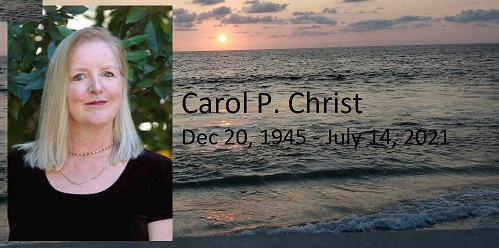
“No Whips, No Punishments, No Threats: Women’s Control of Social Life” is the title of one of the chapters in Iroquoian Women, Barbara Alice Mann’s stunning reconstruction of female power in a matrilineal society. According to Mann, the European settlers were “unsettled” by the lack of strict punishment systems for children in Indian societies. “Spare the rod and spoil the child” was the backbone of European child-rearing practices. The settlers viewed Indian children as naughty, disobedient, disrespectful, and horror of horrors: self-possessed.

It is perhaps no coincidence that after reading this chapter, bodily memories of violence inflicted on me as a child began to resurface. My strongest bodily memory is of being hit repeatedly on my left upper arm by my younger brother’s fist. It is as if my arm is still stinging in that particular place. My mother wanted us to play together, but when we did, we usually ended up fighting. My brother, who was two and a half years younger, was later diagnosed with dyslexia and given “little red pills” to help him control his temper. I was a quiet child (there must have been reasons for that too), and though I soon realized that if I hit back I would only be hurt more, I learned to use my tongue against my brother. This too was a form of violence and my brother remembers my cruelty to this day. Once when I asked my mother what she wanted for her birthday, she responded, “Two children who do not fight.” I didn’t even try to give her that because I didn’t know another way.

Continue reading “Legacy of Carol P. Christ: When Violence is Normal and Normalized”

Longing to Heal Family in our Differences and Distances by Elisabeth Schilling

I can’t even save myself. I make bad decisions just like the ones in the world – bombs and wars and the industrial revolution with chains of greed. But then I go on and, without even knowing any part of the story, want to save others. Carol Christ’s post yesterday on family brought me to tears and I instantly had to write a poem. First, it made me think of the memory of my own mother telling me to wait for my dad to get a belt and him saying it will hurt him more than it does me.

Except when I told my mom this, she said it never happened, so I don’t understand the vivid visions in my head that I have being little and hearing the words and being afraid, and why the sight of men’s work belts make me nauseous. I believe my mother. It doesn’t matter either way, I guess, now, in my opinion about my own experience. What I mean by that is I don’t want to do the work of being suspicious or thinking about what is at stake at the moment. I’m okay with shelving it. Let’s just say I believe and don’t feel like trying to explain those visions. I suppose everyone will have an opinion about my decision and perspective on this. Feel free to voice it if it makes you feel better. Continue reading “Longing to Heal Family in our Differences and Distances by Elisabeth Schilling”

When Violence is Normal and Normalized by Carol P. Christ

Warning: this blog discusses spanking and bodily violence

“No Whips, No Punishments, No Threats: Women’s Control of Social Life” is the title of one of the chapters in Iroquoian Women, Barbara Alice Mann’s stunning reconstruction of female power in a matrilineal society. According to Mann, the European settlers were “unsettled” by the lack of strict punishment systems for children in Indian societies. “Spare the rod and spoil the child” was the backbone of European child-rearing practices. The settlers viewed Indian children as naughty, disobedient, disrespectful, and horror of horrors: self-possessed.

It is perhaps no coincidence that after reading this chapter, bodily memories of violence inflicted on me as a child began to resurface. My strongest bodily memory is of being hit repeatedly on my left upper arm by my younger brother’s fist. It is as if my arm is still stinging in that particular place. My mother wanted us to play together, but when we did, we usually ended up fighting. My brother, who was two and a half years younger, was later diagnosed with dyslexia and given “little red pills” to help him control his temper. I was a quiet child (there must have been reasons for that too), and though I soon realized that if I hit back I would only be hurt more, I learned to use my tongue against my brother. This too was a form of violence and my brother remembers my cruelty to this day. Once when I asked my mother what she wanted for her birthday, she responded, “Two children who do not fight.” I didn’t even try to give her that because I didn’t know another way. Continue reading “When Violence is Normal and Normalized by Carol P. Christ”