
Legacy of Carol Christ: Can You Kill the Spirit? What Happened to Female Imagery for God in Christian Worship? by Carol P. Christ

When I first began to think about female language and images for God I imagined that changing God-He to God-She and speaking of God as Mother some of the time would be a widespread practice in churches and synagogues by now. I was more worried about whether or not images of God as a dominating Other would remain intact. Would God-She be imaged as a Queen or a Woman of War who at Her whim or will could wreak havoc on Her own people?

Forty years later, very little progress has been made on the question of female imagery for God. I suspect that most people in the pews today have never even had to confront prayers to Sophia, God the Mother, or God-She. Most people consider the issue of female language in the churches to have been resolved with inclusive language liturgies and translations of the Bible that use gender neutral rather than female inclusive language.

In her new book, Women, Ritual, and Power: Placing Female Imagery of God in Christian Worship, Elizabeth Ursic states that one of the reasons that the issue of female language seems less pressing than it once did is because those for whom the issue was important have for the most part left the church. But the question is why.

Continue reading “Legacy of Carol Christ: Can You Kill the Spirit? What Happened to Female Imagery for God in Christian Worship? by Carol P. Christ”
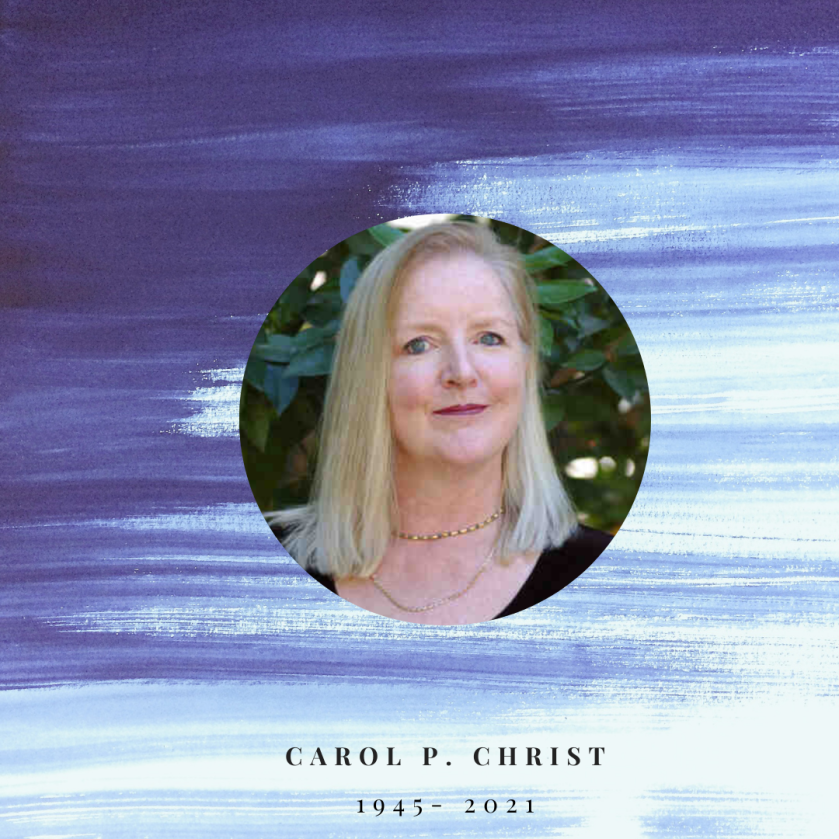
Legacy of Carol P. Christ: EASTER OF THE GODDESS: A VIEW FROM GREECE

This was originally posted on April 16, 2012

On Good Friday, Easter Saturday, Easter Sunday, and Easter Monday the blogs on feminismandreligion.com celebrated mothers and God the Mother.*

 This is my body, given for you.
This is my blood, given for you.

While these words are the center of a Christian liturgy celebrating the sacrifice of Jesus as the Christ, they are more appropriately spoken of our own mothers. Your mother and my mother and all mothers, human and other than human, mammalian, avian, and reptilian, give their bodies and blood so their offspring might have life. True, mothers do not always make conscious choices to get pregnant, but almost all mothers affirm life in their willingness to nurture the young who emerge from their bodies and from their nests. Had mothers—human and other than human–not been giving their bodies and their blood from time immemorial, you and I would not be here.

Continue reading “Legacy of Carol P. Christ: EASTER OF THE GODDESS: A VIEW FROM GREECE”

Legacy of Carol P. Christ: Can You Kill the Spirit? What Happened to Female Imagery for God in Christian Worship?

This was originally posted March 16, 2015

When I first began to think about female language and images for God I imagined that changing God-He to God-She and speaking of God as Mother some of the time would be a widespread practice in churches and synagogues by now. I was more worried about whether or not images of God as a dominating Other would remain intact. Would God-She be imaged as a Queen or a Woman of War who at Her whim or will could wreak havoc on Her own people?

Forty years later, very little progress has been made on the question of female imagery for God. I suspect that most people in the pews today have never even had to confront prayers to Sophia, God the Mother, or God-She. Most people consider the issue of female language in the churches to have been resolved with inclusive language liturgies and translations of the Bible that use gender neutral rather than female inclusive language.

Continue reading “Legacy of Carol P. Christ: Can You Kill the Spirit? What Happened to Female Imagery for God in Christian Worship?”

Can You Kill the Spirit? What Happened to Female Imagery for God in Christian Worship? by Carol P. Christ

carol at green party 2014 croppedWhen I first began to think about female language and images for God I imagined that changing God-He to God-She and speaking of God as Mother some of the time would be a widespread practice in churches and synagogues by now. I was more worried about whether or not images of God as a dominating Other would remain intact. Would God-She be imaged as a Queen or a Woman of War who at Her whim or will could wreak havoc on Her own people?

Forty years later, very little progress has been made on the question of female imagery for God. I suspect that most people in the pews today have never even had to confront prayers to Sophia, God the Mother, or God-She. Most people consider the issue of female language in the churches to have been resolved with inclusive language liturgies and translations of the Bible that use gender neutral rather than female inclusive language.

In her new book, Women, Ritual, and Power: Placing Female Imagery of God in Christian Worship, Elizabeth Ursic states that one of the reasons that the issue of female language seems less pressing than it once did is because those for whom the issue was important have for the most part left the church. But the question is why. Continue reading “Can You Kill the Spirit? What Happened to Female Imagery for God in Christian Worship? by Carol P. Christ”

Mormonism’s Heavenly Mother: Why I Stand By Her by Caroline Kline

Unlike the amorphous God of other Judeo-Christian faith traditions, Mormonism’s Heavenly Father is literally, anatomically male. He is the god Mormons pray to, worship, and reference. However, within the Mormon tradition are teachings about Heavenly Mother, an embodied, perfect goddess, the wife of Heavenly Father and mother to all the spirits who are eventually born into bodies here on earth.

Mormon feminists such as myself embrace the existence of Heavenly Mother. We do our best to keep her alive and present in Mormon discourse and memory, despite the fact that our Church leaders and fellow members rarely mention her and despite the fact that some Mormon feminists in the 1990’s and 2000’s were excommunicated at least in part because of their refusal to stop writing and talking about Heavenly Mother. Mormon feminists like me recognize that equality for women within the Mormon tradition can never be achieved until our Mother receives recognition on par with the Father.  Mary Daly once famously said, “If God is male, then male is God.” Amen to that. Raising up Heavenly Mother in the consciousness of Mormons is a significant way to dismantle that association between maleness and godhood. Continue reading “Mormonism’s Heavenly Mother: Why I Stand By Her by Caroline Kline”

EASTER OF THE GODDESS: A VIEW FROM GREECE by Carol P. Christ

On Good Friday, Easter Saturday, Easter Sunday, and Easter Monday the blogs on feminismandreligion.com celebrated mothers and God the Mother.*

 This is my body, given for you.

This is my blood, given for you.

While these words are the center of a Christian liturgy celebrating the sacrifice of Jesus as the Christ, they are more appropriately spoken of our own mothers. Your mother and my mother and all mothers, human and other than human, mammalian, avian, and reptilian, give their bodies and blood so their offspring might have life. True, mothers do not always make conscious choices to get pregnant, but almost all mothers affirm life in their willingness to nurture the young who emerge from their bodies and from their nests. Had mothers—human and other than human–not been giving their bodies and their blood from time immemorial, you and I would not be here.

The Easter liturgy fails to acknowledge that the original offering of body and blood is the mother’s offering. Christianity “stole” the imagery associated with birth and attributed it to a male savior. If that was all Christians had done, it would have been bad enough. In most countries today there are laws against theft. Christian theologians and liturgists should also be given an “F” for plagiarism–defined as presenting the ideas of others as if they are one’s own. Z Budapest was right when she famously famously opined, “Christianity didn’t have any original ideas.

Continue reading “EASTER OF THE GODDESS: A VIEW FROM GREECE by Carol P. Christ”