

Moderator’s Note: We are breaking into our hiatus because of the importance of what is happening in Minnesota. FAR is not designed for breaking news but we do look at underlying patterns about what is going on in the world and what we are seeing is patriarchy in action. We think it important to bear witness and to understand the trends of what is occurring. This piece by Beth Bartlett does both.
Author’s Note: I live in Duluth, Minnesota, 150 miles north of the Twin Cities where “Operation Metro Surge” is being conducted by ICE agents. Since first writing this, the invasion and siege against the Twin Cities has increased. The Department of Homeland Security has sent 1000 more ICE agents to Minnesota, making the total over 3000. Constitutional observers and people simply driving through an area or being at gas station or parking lots are being pepper sprayed or detained. ICE agents are smashing car windows and dragging people from their cars. ICE agents have targeted schools and daycare centers. They are going door to door. The brutality they have unleashed is indescribable. No one is safe. But the resistance is strong; the mutual aid efforts even stronger. People are caring for each other. …. And as I write this, ICE agents have arrived in force in my city.
“This city will be wiped out, and upon its ruins history will expire at last. . . .”
–Albert Camus, State of Siege
“Loving the daylight that injustice leaves unscathed. . . I found an ancient beauty, a young sky. . . in the worst years of our madness the memory of this sky never left me. It was this that in the end had saved me from despair.”
–Albert Camus, State of Siege
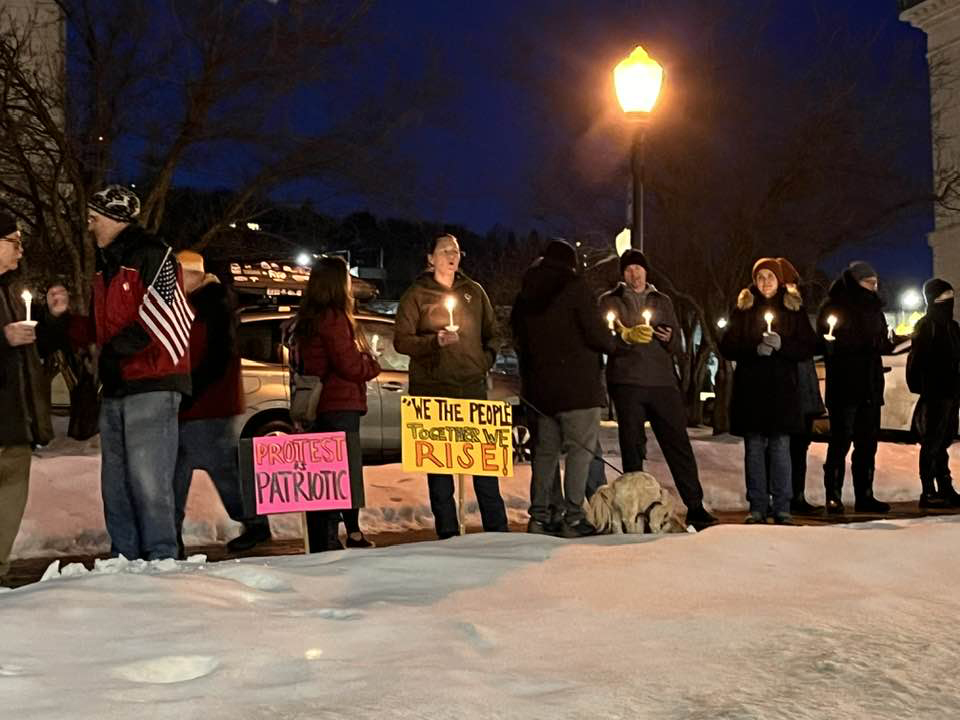
The scene as I drove to the protest and vigil against yet another of the government’s actions and agents was a bit surreal. Juxtaposed against the violence and state repression lay the backdrop of a strikingly beautiful sunset, the sky streaked with pink and purple, peach and blue, and then ahead of me as I passed the hospital, in glowing neon red, the words ”EMERGENCY/TRAUMA.” Yes. We are facing an emergency in this country and trauma of epic proportions. Violence and beauty, rage and tenderness – both. Among the fellow vigilers — friends, former students, long-time comrades in the struggle. We hugged and cried, lit candles, shared our hopes, our fears, our sorrows. Together in this moment we found community in each other.
Continue reading “State of Siege by Beth Bartlett”


 Feminism and Religion