Miriam MacGillis Discusses Thomas Berry’s View of the Universe, part 2 Transcribed by Janet Rudolph

Introduction: Miriam MacGillis is a modern-day prophet who not only holds a broad understanding of cosmology but brilliantly expresses it. She was an early colleague of Thomas Berry, introducing many people to the Story of the Universe. I have had the great honor of transcribing the eight tapes of her lecture series called Education for a Small Planet from 1986. Excerpts from tape 1A can be read here and here.
She was a protégé of Thomas Berry and on these tapes spoke about three principles which have been at the heart of the unfolding of the universe from the beginning. As she says, They are very simple and can’t be separated. I’m just separating them now [to discuss them]. In reality they’re three in one. They are extremely simple. Very often, the simplest things are the hardest things to grasp. But once we really begin to reflect on them and their implications, it’s so logical, so clear, so simple.

The first is the principle of differentiation. I posted Miriam’s discussion of differentiation here.

Below is the long delayed 2nd part, where she discusses the next two principles; interiority and communion. Her words have been lightly edited.

Second principle. The principle of interiority. Or subjectivity. And all that means is that whether we’re speaking about this particular atom or whether this is Harry or Henry or Homer or horse, or hippo, each is its own unique articulation of the universe, its own integrity. It has its own inner spaces, which are unique to itself. Hydrogen is hydrogen, it is not helium. And it is hydrogen because as you probe the inner spaces of that, whatever causes that to be hydrogen in those inner spaces has an integrity that will always unfold hydrogen. And the universe only can be at any moment, the sum total of all of that. And because each is what it is, it’s different.

Continue reading “Miriam MacGillis Discusses Thomas Berry’s View of the Universe, part 2 Transcribed by Janet Rudolph”

Move Your Spirituality: Transforming Symbols into Embodied Knowing

A question I’ve been exploring for most of my life is: what changes when we move our spirituality, or let movement become our spiritual practice? In this essay I offer some characteristics of a moving spirituality that I explored in my PhD and later in my book Dancing in the Muddy Temple: A Moving Spirituality of Land and Body.

Dove in the Branches. Image by Andy Murray

Movement is about Connection & Transformation

First of all, movement adds a different language for encountering the sacred. It’s not just ‘sitting still and emptying the mind’, or ‘dancing ecstatically’ (did you know that ecstasy means something like ‘having the god within’?).

Instead, it is a way of searching for and communicating with the layers of the seen and unseen world.… Recently I even start to see it as a way of encountering the mystery in the space between, between objects, emotions and thoughts.

Continue reading “Move Your Spirituality: Transforming Symbols into Embodied Knowing”

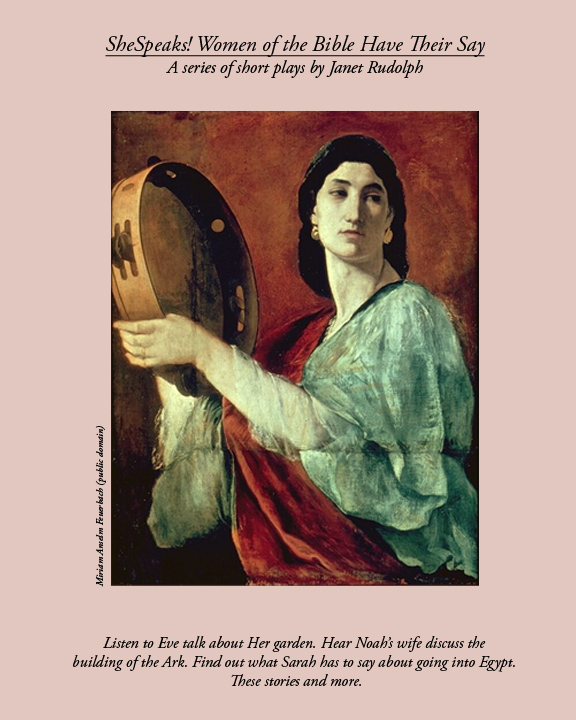
SheSpeaks! Women of the Bible Have Their Say by Janet Rudolph

Author’s Note: I have been working on this project for about 3 years now. It is based on almost 30 years of research. I have written about some of the vignettes here on FAR before. With each re-telling and each performance the story deepens and comes more alive. On Thursday, Sept. 24th at 11:00 am NY time, the SheSpeaks!Ensemble will be doing a one hour live/zoom, free performance of the arc called EveSpeaks! You can access the zoom link on the 24th through this webpage. (Scroll to the bottom of the page for the link.)

The storyteller holds great power to both reflect the culture and to give it further shape and form. This is especially true for stories of the Bible which are foundational to our world. Whether we see them as mythological, historical, divinely inspired, wisdom teachings or simple folktales, they have shaped our beliefs and values. People see all different faces of God. If we look to the movies, God has looked like George Burns (Oh God, 1977), a vengeful John Huston (The Bible, 1966), Morgan Freeman (Bruce Almighty, 2003) and even Groucho Marks (Skidoo, 1968). There aren’t a lot of women although Alanis Morrisette did play a silent God (Dogma, 1999). If most people were asked to describe God, they would most likely picture a Charlton Heston-like figure (The Ten Commandments, 1956) when he played Moses reflecting the vehemence of God’s anger.

But . . . alas . . .biblical women’s history is most like Alanis – mute. Women’s voices have been diminished and even silenced. Female deities, female voices have either been translated out of reach or turned into purveyors of “evil” or curses.

Continue reading “SheSpeaks! Women of the Bible Have Their Say by Janet Rudolph”

A CALL TO CELEBRATE TREES by Janet M Rudolph

Olive Tree from the studio of Judith Shaw. Judith has a special offer to purchase this artwork as a giclee print through August 24th. Details below.

With the trees burning around the world, in Canada and the US as well as in Europe and Africa, Asia, South America and more, it seems to be an especially important time to be with the trees, to recognize our kinship, and to celebrate them.  

To see just how bad the fires are around the world, below are the links to two maps that are kept in real time.
NASA Greenpeace

I don’t know when and where the initial hatred of trees began, but I would tag the Bible as an early and influential proponent of destroying trees.

The viciousness against trees appears to have grown out of a desire to erase Goddess worship in Biblical lands. The terms for Goddess groves were Asherot and Ashereem named after the Goddess Ashera. An individual tree was called an Ashera. The charge given to the people was to cut down everyone. 

And ye shall overthrow their altars, and break their pillars, and burn their groves (Ashereem) with fire; and ye shall hew down the graven images of their gods, and destroy the names of them out of that place.
Deuteronomy 12:3 KJV

But ye shall destroy their altars, break their images, and cut down their groves:
Exodus 34:13 KJV

Continue reading “A CALL TO CELEBRATE TREES by Janet M Rudolph”

Miriam MacGillis Discusses Thomas Berry’s View of the Universe, Transcribed by Janet Rudolph

Introduction: Miriam MacGillis is a modern-day prophet who not only holds a broad understanding of cosmology but brilliantly expresses it. She was an early colleague of Thomas Berry, introducing many people to the Story of the Universe. I have had the great honor of transcribing the tapes of her lecture series called Education for a Small Planet from 1986. Below is an excerpt from Tape 1B. It is edited for clarity. Excerpts from tape 1A can be read here and here.

***

Thomas Berry speaks about three principles which have been at the heart of the unfolding of the universe from the beginning. They are very simple and can’t be separated. I’m just separating them now [to discuss them]. In reality they’re three in one. They are extremely simple. Very often, the simplest things are the hardest things to grasp. But once we really begin to reflect on them and their implications, it’s so logical, so clear, so simple.

The first is the principle of differentiation. When we talk about the universe and its guidance system, this principle becomes even more highly articulated when we get to the Earth. It’s a very simple dynamic. Literally, all it means is that from the very beginning everything that is, is differentiated. You couldn’t have a universe unless there was differentiation of its elements. Because hydrogen and helium and carbon or whatever, grow into more complex structures . .  it’s because they are different that they interact with each other and in that interaction cause each other to change. They cause each other to break down from being what they are in their simple state. In the dying of what they were in their simple state, they change and become transformed into something more complex.

Continue reading “Miriam MacGillis Discusses Thomas Berry’s View of the Universe, Transcribed by Janet Rudolph”

Patriarchy Unbound by Janet Maika’i Rudolph

Some new terms in our language have been after people. Both the terms sadism and masochism were so named according to etymologyonline.

Here is what the site says about sadism: “love of cruelty,” especially as evidence of a subconscious lust that the cruelty satisfies, 1888, from French sadisme, from the name of Count Donatien A.F. de Sade (1740-1815). Not a marquis, though usually now called one, he was notorious for the cruel sexual practices described in his novels.”

And here is what the site says about masochism: “The word masochism originates from the name of Leopold von Sacher-Masoch, an Austrian novelist best known for his 1869 novel Venus in Furs, which explored themes of submissive sexuality and domination.”

I have a new term to add that I would like to add to our vocabulary: Robertism to be named after John Roberts. Here is my definition: love of cruelty, not just cruelty by itself but by spreading cruel acts as widely and far as possible while giving them the authority of legality. Robertism encourages the most base and ugly parts of human behavior, brings them to the surface to be expressed in actions that are given permission through legal cover. 

Continue reading “Patriarchy Unbound by Janet Maika’i Rudolph”

Miriam MacGillis and Cosmology Revisited, part 2 by Janet Maika’i Rudolph

Part 1 was posted yesterday. Miriam MacGillis’ words from Education for a Small Planet continue:

“And those implications, have been the unspoken assumptions which lie at the heart of the way western civilization evolved, distinctly different from eastern civilization or from tribal civilizations. That’s why we look so different. That’s why in 300 years where I live, our ancestors totally, totally altered the natural world. Their obsession with development is outside themselves.

“So, what has transpired in the unfolding of western civilization has been this extra-ordinary capacity of the human in its rational, linear, analytical mode of knowing, to understand, to probe, to analyze, to uncover, to discover, to alter, to change, to redesign and to bring about a better state of affairs than what was. Whether it was the discovery of fire, or the wheel or the printing press or the computer, always the real issue behind the technology is not the technology itself, it’s the vision of bringing about development, the perfection of.

“Now ironically, it’s because of that very detachment from the world that the western mind was free to do that. “If this is just matter, you can do anything you want with it.” That’s not really where there is any moral dimension. Moral development happens between humans, human/human, human groupings and human/god. That is why the whole unfolding of western civilization, we were able to probe to such a depth of the physical energies of the world that in this century we were able to do what we did.  

Continue reading “Miriam MacGillis and Cosmology Revisited, part 2 by Janet Maika’i Rudolph”

Miriam MacGillis and Cosmology Revisited, part 1 by Janet Maika’i Rudolph

Author’s Note: When my mother died in 2018, I became the custodian of her voluminous files. I found some gems inside them. My mother lived in NJ not too far from a place called Genesis Farms and its founder and proprietress was/is Sister Miriam MacGillis. There was a whole file on the farms.

Included in these files was a binder of cassette tapes from a workshop Miriam MacGillis gave in 1986 called “Education for a Small Planet.” There are 4 double-sided cassettes.  When I first saw them, I was afraid to even touch them as 40-year-old cassette tapes are not known for their sturdiness. A friend helped me find an agency that agreed to digitize them. Since then, I have had the great honor of transcribing the tapes. It took me several months, but I have now completed the transcription. (They are a little rough as I added punctuation as I went.) I have been in touch with Miriam about them and she agrees that the message from 1986 is still important, in fact, likely more important now and they should have as wide an audience as possible. 

Miriam MacGillis is a modern-day prophet who not only holds a broad understanding of cosmology but brilliantly expresses it. She was an early colleague of Thomas Berry, introducing many people to the Story of the Universe.

I believe these tapes need to be studied and shared and I am happy to make them available to anyone who is interested.  Below is a taste of their wisdom. It is from Tape #1A (first tape, first side), lightly edited. This is really just an introduction and it will be in two parts.

***

Continue reading “Miriam MacGillis and Cosmology Revisited, part 1 by Janet Maika’i Rudolph”

People Power by Janet Maika’i Rudolph

Wikimedia Commons, credit: Bengt Oberger

I am an unapologetic newspaper clipper. Now when my husband and I are involved in a process of cleaning out our long-time home, I am finding numerous clippings going back to the 1990s. Some of them are gems. They are generally painful to read, though because they illuminate the many threads of recent history that have brought us to the point we are at now.  

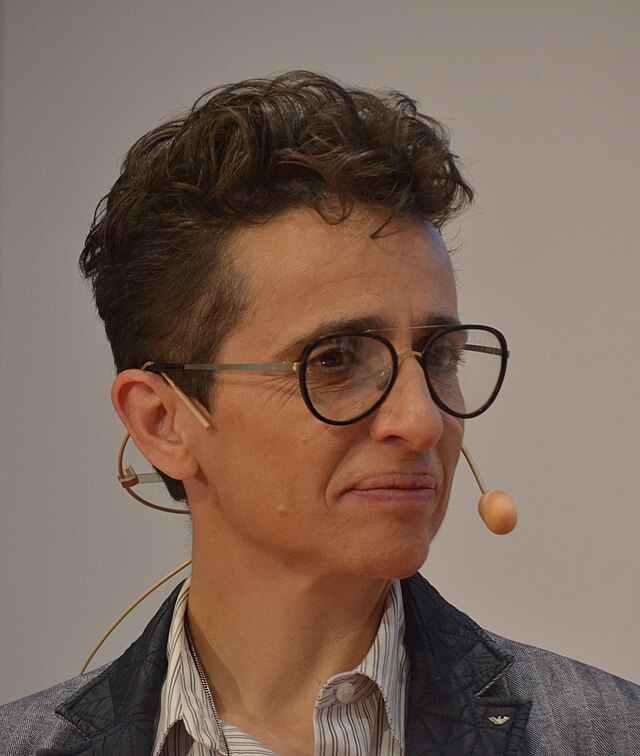
M. Gessen (once writing under Masha Gessen they/them) is a fairly new columnist at the NY Times. When they write, though, I sit up and take notice. I have saved several of their editorials because Gessen has a unique perspective not only from an intellectual point of view but also personal. They were born in Russia, moved to the US when they were a teen-ager through the U.S. Refugee Resettlement Program. Gessen is trans and in a gay marriage. They had returned to Russia pursuing work in journalism but had to leave when the government began talking about removing children from gay parents. With their partner, they have 3 children.

Continue reading “People Power by Janet Maika’i Rudolph”

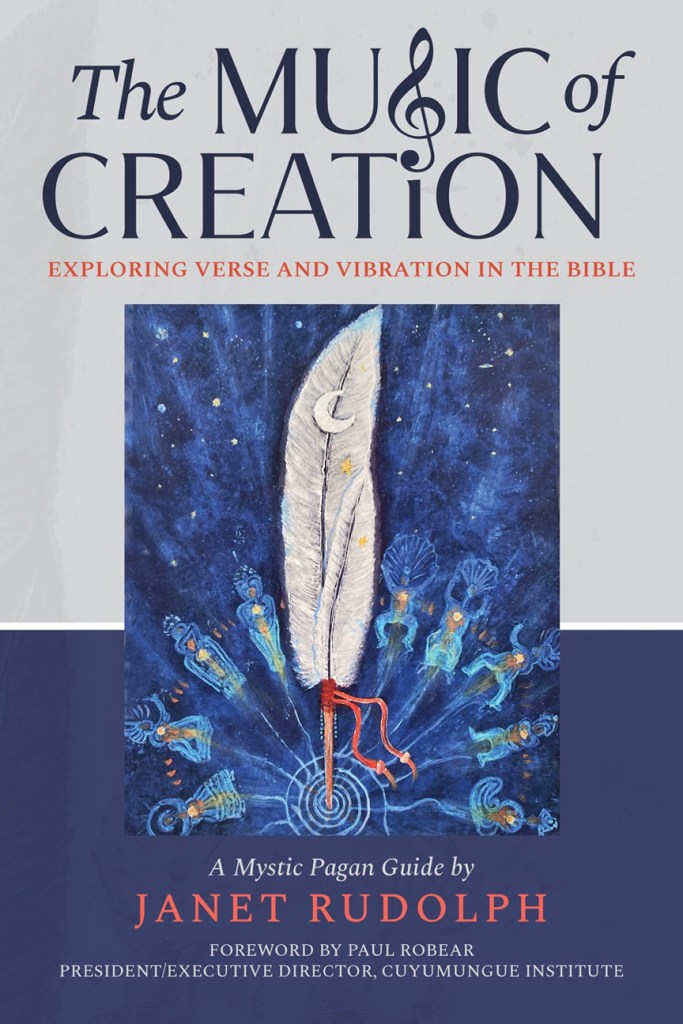
The Music of Creation: Exploring Verse and Vibration in the Bible by Janet Rudolph, Book Review by Carolyn Lee Boyd

“What if the teachings within the Bible were not dualistic, but taught of oneness, connection, and the flow of energy?” (9) In The Music of Creation: Exploring Verse and Vibration in the Bible, Janet Rudolph (whom FAR readers already know as a FAR co-weaver) explores the definitions and vibrational elements of the sounds of original Hebrew words in the Bible. This is her latest book. In this book, Janet creates retranslations that express the energy, flow, dynamism and movement of the verses. She also discusses ways for readers to experience the power and potential of the verses for themselves. As she notes, Hebrew is a “sacred language” so that “the words themselves carry a vibrational element that we, as human beings, find meaningful and compelling” (3). In doing so, her retranslations revive the energy of “nature and its cyclical wisdom” (4). These are remnants of the original teachings, bringing forth their fresh beauty, inspiration, and world perspective we so need now.

Continue reading “The Music of Creation: Exploring Verse and Vibration in the Bible by Janet Rudolph, Book Review by Carolyn Lee Boyd”