
The Wisdom of the Beguines: The Forgotten Story of a Medieval Women’s Movement by Laura Swan, part 2 by Theresa C. Dintino 

Part 1 was posted yesterday

Praying people out of purgatory

Beguines excelled at this. By the Middle Ages, the belief in many Christian circles was that one did not go directly to heaven but to a sort of “holding place” after death to be cleansed of their sins before being allowed into heaven. Eventually “the medieval church also taught that people could pray for the souls in purgatory and that their prayers would effectively aid those souls in their transition from purgatory to heaven”(108).
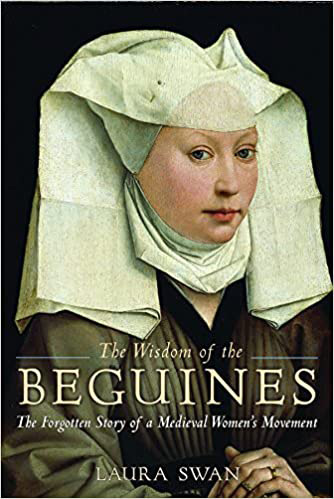
It’s important to note that these women were esteemed by the communities they lived in as spiritually gifted, able to intercede with God on their own without permission from the church, clergy or men. This is radical for the time.

“Beguines, as we have seen, were understood to have extraordinary spiritual powers. People believed that having a beguine intercede before God on their behalf was an assurance that their petition was heard by God—and perhaps in no instance more than for “those poor souls in purgatory.” And beguines believed that they did indeed exercise the authority to release countless souls from purgatory. Many of the stories included in the vitae of beguines grapple with the fate of the deceased in purgatory (or hell)”(109).

Continue reading “The Wisdom of the Beguines: The Forgotten Story of a Medieval Women’s Movement by Laura Swan, part 2 by Theresa C. Dintino “

The Wisdom of the Beguines: The Forgotten Story of a Medieval Women’s Movement by Laura Swan, part 1 by Theresa C. Dintino 

Moderator’s Note: This piece is in co-operation with The Nasty Women Writers Project, a site dedicated to highlighting and amplifying the voices and visions of powerful women. The site was founded by sisters Theresa and Maria Dintino. To quote Theresa, “by doing this work we are expanding our own writer’s web for nourishment and support.” This was originally posted on their site on July 5, 2022. You can see more of their posts here. 

Around 1200 AD in Europe, communities of women often called beguines began to form. These women were not nuns, they were devout and devoted to the tenets of Christianity but did not belong to any church. They were independent communities of women who often created their own industry, trade or other means to produce income. They were self-sufficient and generally concerned with helping the poor, especially women. They lived in convents. This was the origin of that word.

“These women were essentially self-defined, in opposition to the many attempts to control and define them. They lived by themselves or together in so-called beguinages, which could be single houses for as few as a handful of beguines or, as in Brugge, walled-in rows of houses enclosing a central court with a chapel where over a thousand beguines might live—a village of women within a medieval town or city”(2).

Continue reading “The Wisdom of the Beguines: The Forgotten Story of a Medieval Women’s Movement by Laura Swan, part 1 by Theresa C. Dintino “