Happiness is Analog by Mary Sharratt

I hate Fakebook.

Social media depletes my energy. It depresses me. It’s designed to create a sense of anxiety, comparison, envy, and lack as we compare our rough edges with the carefully curated images of other people’s lives. Images that only reveal the surface of things, because social media has no time for depth.

Social media kills authenticity. You have to be so careful what you post because you never know who might be trolling you or what kind of backlash you might get, especially if you’re female.

Continue reading “Happiness is Analog by Mary Sharratt”

The Dark Heart of Winter

I have long struggled with winter. I grew in Minnesota where winters were long and brutally cold. I remember hauling myself through hip-deep snowdrifts on my walk to elementary school and that was in the suburbs! The North of England, where I lived for nearly twenty years, has a much milder climate. But being so far north, I was plunged into infernal darkness from Halloween to Candlemas. It started getting dark at 3:30 in the afternoon and by 4:00 it was pitch dark. Remember those horror movies where it’s dark ALL THE TIME?? That’s Lancashire in midwinter. I felt I was trapped inside some brooding gothic novel.  

Now that I’ve moved to the Silver Coast of Portugal, I get a lot more daylight in winter, but also storm winds and torrential rain. My Welsh pony is not impressed!

Continue reading “The Dark Heart of Winter”

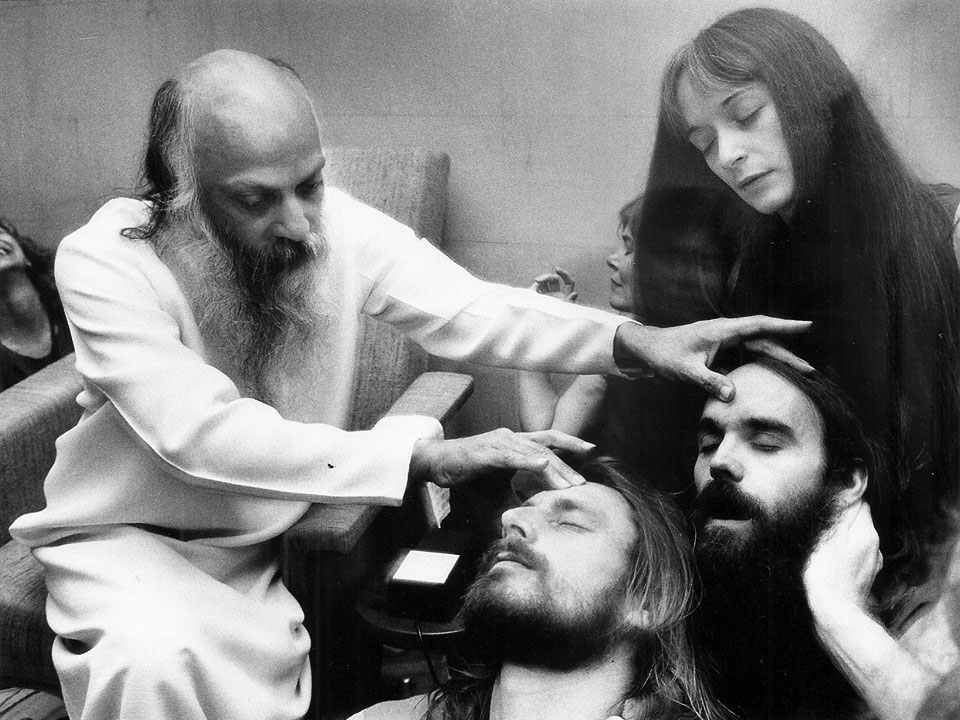
The Guru Question: Are Spiritual Hierarchies Inherently Oppressive?

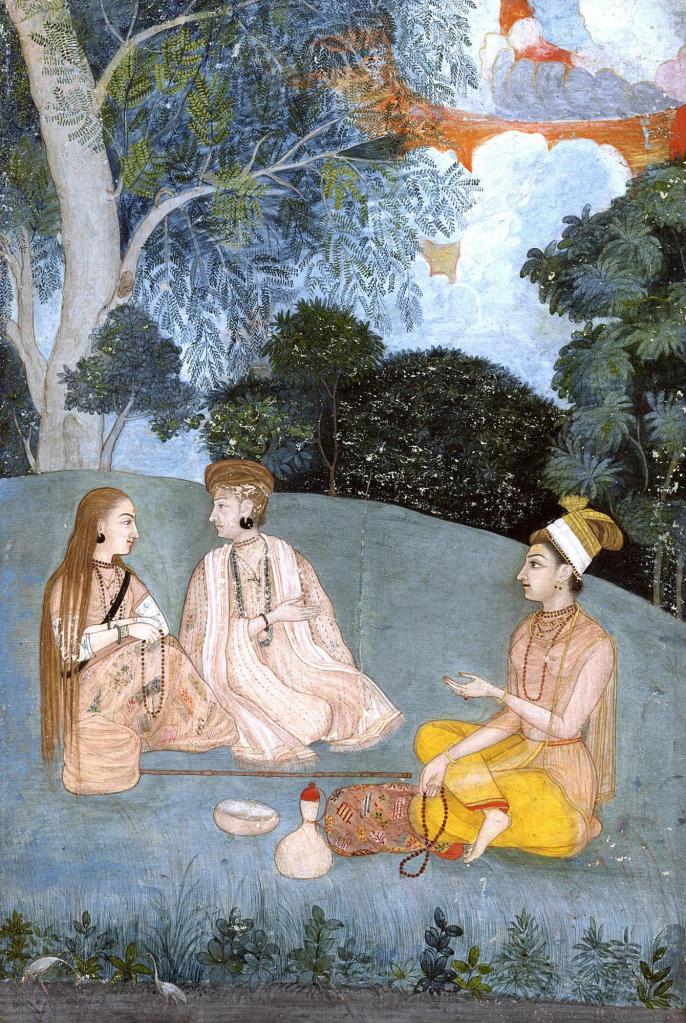
Painting of a noblewoman seeking counsel from two Tantric yoginis, in the Mughal style, about 1750. From the British Museum’s recent exhibition, Tantra: Enlightenment to Revolution. A beautiful starting point to learn about Indian spirituality in its original context. May all our paths be crossed by wise teachers.

I’ve received a tremendous response to my essay on cults, published on Feminism and Religion in December last year. The topic continues to be a burning issue as more and more survivors break their silence on the spiritual abuse they suffered. Cults are a feminist issue because women and girls suffer the worst abuses at the hands of male cult leaders.

To fully understand how this cult dynamic works, I highly recommend watching Dan Shaw’s lecture on the subject, in which he explains how cult leaders are traumatizing narcissists whose goal is to subjugate their followers and “purify” them by utterly destroying their sense of self. Yet for me, the most haunting moment of his presentation came just near the end, during the Q & A session. An audience member and survivor of Siddha Yoga, the same cult that Shaw once belonged to, asked, “Are there gurus that people can trust?” She asked if guru-driven spirituality was “inherently subjugating.”  

Shaw, perhaps understandably not wanting to come across as a white man casting judgement on another culture’s deeply-rooted spiritual traditions, wiggled out of answering by saying that it was up to the individual to discern if a particular guru was safe or not.  

But I think this anonymous woman’s question deserves a more nuanced answer.

In Hinduism, since the age of the Upanishads, gurus have played a crucial role in preserving wisdom teachings in a religion with no centralized authority figure or governing body. The teachings are passed on orally to disciples who worship the guru as a divine being in order to realize their own innate divinity. I would love to hear from Indian feminists on how this guru-disciple relationship plays out in India today, particularly with female practitioners.

However legitimate and honorable these systems might be in their original cultural context, I think it’s fair to say something gets lost in translation when Eastern spirituality moves West. Great abuses have come to light. Katy Butler, in her article, “Encountering the Shadow in Buddhist America,” writes that guru abuse has become so prevalent due to the “unhealthy marriage of Asian hierarchy and American license that distorts the student-teacher relationship.”

It’s pertinent to point out that many of these misbehaving gurus, lamas, and swamis are white men. Spiritual hierarchies can be abusive across cultures—look at the sex abuse scandals in the Catholic Church. Cults are not necessarily “Eastern” or “foreign.” There are plenty of Christian cults, self help cults, and wellness cults.

Another thing that often gets lost in translation is what Eastern spirituality actually intends to offer the student. Many Western students turn to Eastern disciplines like meditation and mindfulness for stress reduction, but that is not their original purpose. These disciplines are intended to liberate the practitioner from the wheel of death and rebirth, to transcend this world of suffering and our worldly attachments, in order to enter an enlightened state—i.e. not to be reincarnated again, a goal some Western people might find world-denying and nihilistic.

Dr Willoughby Britton, professor of psychiatry at Brown University, speaking to Rachel Bernstein on IndoctriNation podcast asks, “How problematic or paradoxical is it if you believe that enlightenment is a destination that someone else can take you to? What dependence does that create?”

The goal is unmeasurable and the endpoint keeps shifting according to the power dynamics. You become much more dependent on the teacher who decides if you have reached this invisible destination. If you’re being charged a lot for the teachings, the teacher may decide that you don’t achieve the end result for a very long time.

Willoughby says practitioners can empower themselves by asking themselves the following questions:

Where do you want to go with this practice?

If you are seeking enlightenment, what does that mean for you?

You get to define your own outcomes and measure your success by what you want to show up in your life, i.e. better sleep, reduced anxiety, improved relationships, and inner peace.

In evaluating teachers and spiritual groups, ask yourself:

What were you initially promised?

Has it been achieved after all your hard work?

Do you feel you are closer to your goal?

Or have your initial reasons been shifted by the teacher into their reasons and their goals that are no longer yours?

Are you under pressure to perform for and please the teacher?

Are you expected to use scripted, stilted language to describe your experience?

If you question the teacher and the teacher retaliates, that’s your tipping point, says Britton. If you say that a practice isn’t working for you and the response you get is, “Well, that’s because you don’t have the right karmas/aren’t dedicated enough/haven’t reached the right level of spiritual maturity”  etc., you need to leave and find a different group.

In order for anyone to have a healthy experience with a teacher, you need the freedom to say, “I think this isn’t working for me, and, in fact, it’s hurting me and I need to move on.” Depending on how people respond to you setting your boundary, you’ll know if you’re in a healthy space or not.

As Dan Lawton says on another episode of IndoctriNation Podcast, a spiritual practice can only be as healthy as the person teaching you that practice. The endgame for a lot of teachers is often building a personal brand around the supremacy of a certain spiritual practice. Once you’re locked into that box, there are a lot of things you’re not going to be able to see and there’s a possibility of doing real harm to your students.

Good, ethical teachers, whether they call themselves gurus or not, are deserving of deep respect. But they need to be vetted and held accountable. And maybe in the West, at least, the obligation to see the teacher as enlightened or divine is indeed too subjugating. Maybe it would much healthier to look up to them as a wise elder or mentor. Surrendering our agency to another human is always going to be subjugating.

Perhaps we can follow the example of the female seeker in the 18th century painting above, who is taking counsel from two yoginis, female practitioners who live in the forest, outside the strictures and hierarchies of patriarchal society. Instead of placing all our hopes in one exalted individual, why not instead seek the deep wisdom of the female collective?

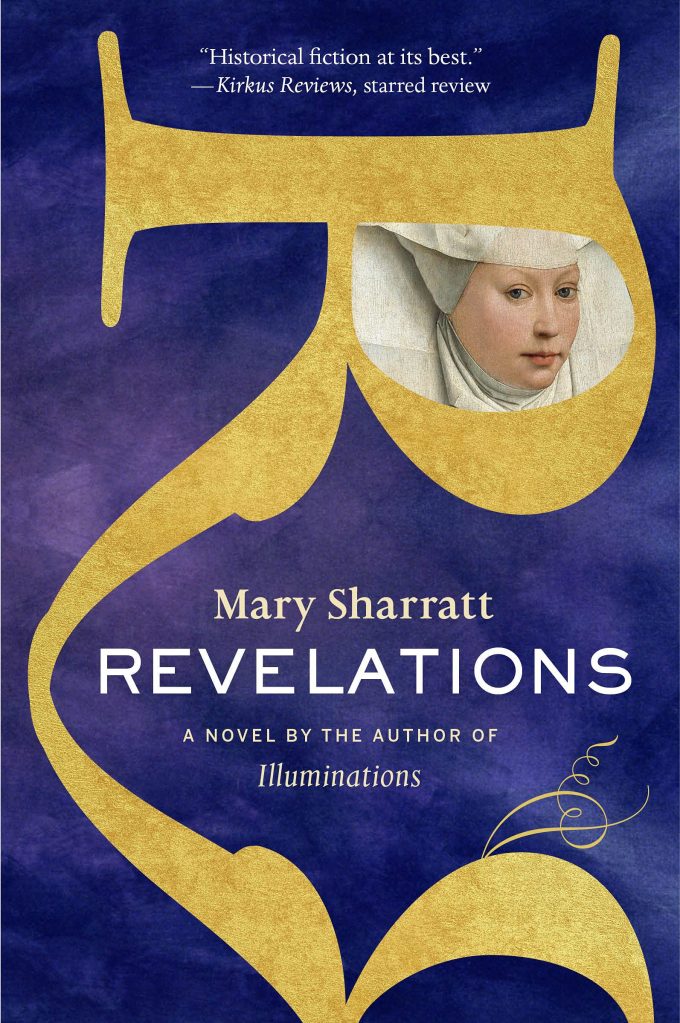
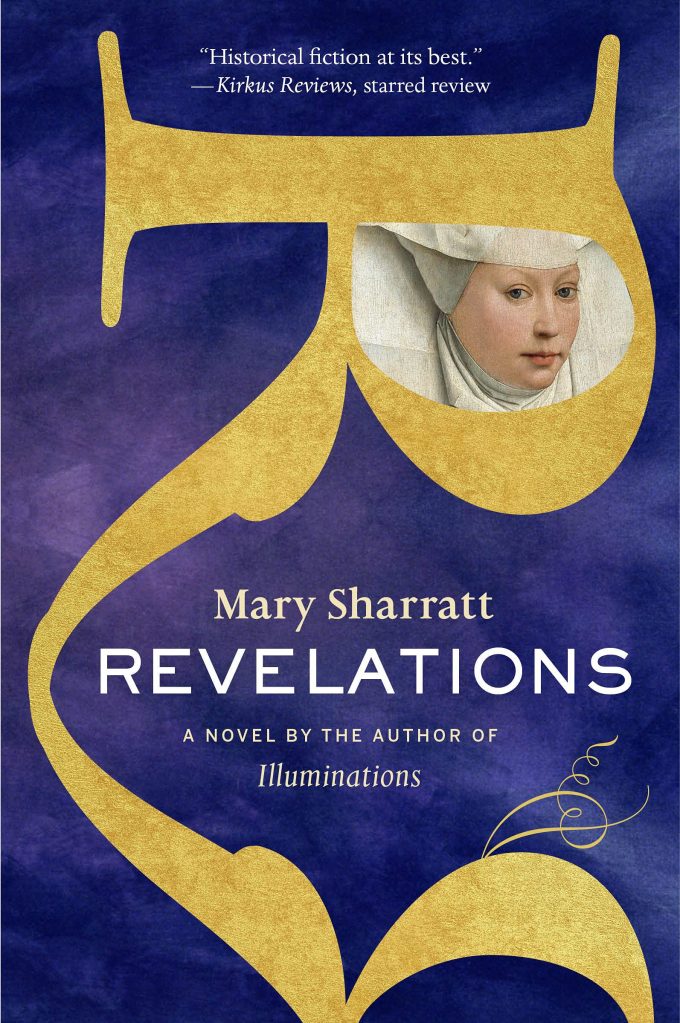
Mary Sharratt is committed to telling women’s stories. Please check out her acclaimed novel Illuminations, drawn from the dramatic life of Hildegard von Bingen, and her new novel Revelationsabout the mystical pilgrim Margery Kempe and her friendship with Julian of Norwich. Visit her website.

Women of Power: the Pendle Witches

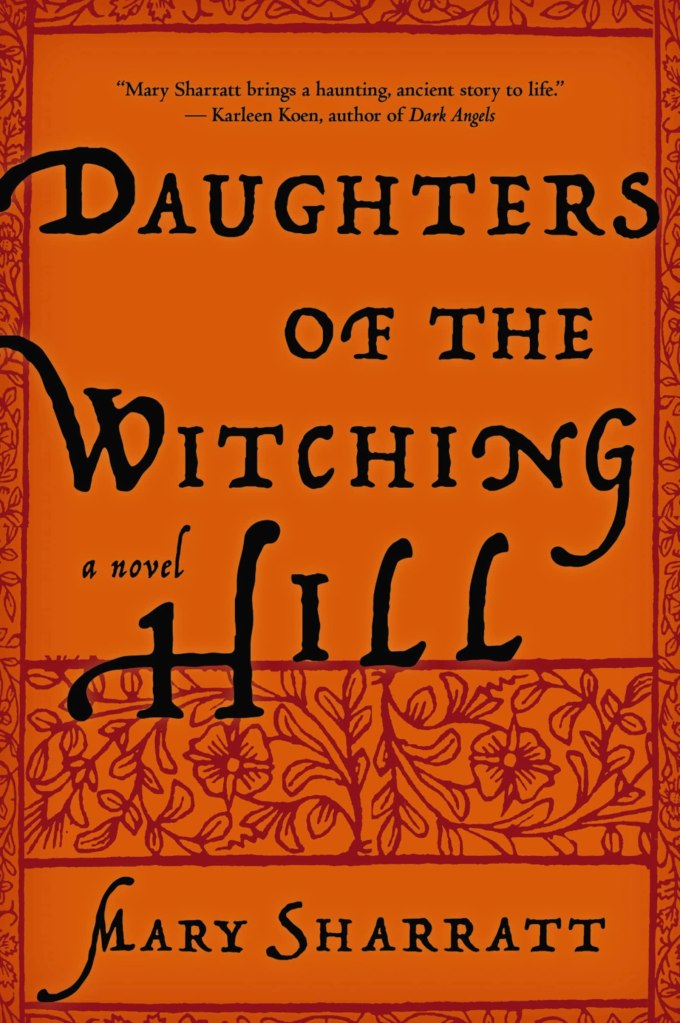
Twelve years ago, I published my novel Daughters of the Witching Hill, drawn from the true story of the Pendle Witches of 1612. The story of these wisewomen and healers still haunts and enchants me to this day.

Currently the book is on offer for only $1.99 for a limited time only, so now is your chance to get a bargain basement taste of witchy goodness.

Continue reading “Women of Power: the Pendle Witches”

From the Archives: Embracing Fierceness by Mary Sharratt

This was originally published on September 9, 2015

This essay is inspired by Donna Henes’s brilliant post, I am Mad. Too often as spiritual women, we are told we have to perform niceness all the time, even if it means compromising our boundaries and principles.

Mainstream religions tell us we must forgive those who mistreat us. Too many women in very abusive situations literally turn the other cheek–to their extreme detriment. As Sherrie Campbell points out in her essay The 5 Faults of Forgiveness, the obligation of forgiveness oppresses survivors of abuse because it makes it all about the perpetrator and not about the healing, dignity, or boundaries of the survivor.

In my own Catholic upbringing I learned to swallow my anger and rage until it erupted in depression and burning bladder infections. My background did not teach me to skillfully dance with anger and it’s been a difficult learning curve for me. But I learned the hard way that owning my anger was crucial if I wanted to stand in my power and speak my truth.

Once when I felt a particularly strong need to break out of a dysfunctional situation, I had a powerful dream of a black snake, as beautiful as it was terrifying. In the course of the dream, I realized that the huge black snake was my own repressed anger, power, and strength. The beautiful inner self longing to be claimed.

black snake

Meek and mild women don’t make history. Hildegard von Bingen, whose feast is coming up on September 17, famously spoke her mind and ferociously stuck up for what she thought was right, famously locking horns with Emperor Barbarossa himself. She also defied her archbishop and suffered an interdict as a consequence, nearly dying an excommunicant. But she was a strong woman who would not be silenced. We should all be so brave and bold.

Claiming our true spiritual power means claiming each part of ourselves, including our fierceness. Our scary side.

Fierceness means embracing our gut wisdom. Voicing the sacred NO to protect ourselves and our loved ones from compromising situations.

I see modern day women like holistic healer Susun Weed embodying this fierceness as she empowers women and girls to recognize the sacredness of their own bodies, the holy mysteries inherent in menstruation, childbirth, and menopause, which are too often pathologized in male-dominated medicine.

Over the years I’ve learned to trust and act on my own inner knowing and discernment. To know when to say NO. By using strong, no bullshit women like Hildegard and Susun Weed as my role models.

Each time I trusted myself enough to act on my gut wisdom, to trust the inner NO, and speak my truth, it has served me well, although it’s sometimes been a painful learning process.

Anger and fierceness wake us up to what is wrong and needs to be changed. There is so much energy in anger that can be harnessed for healing and transformation. Fierceness is the strongest, most protective form of love, the ferocity with which a mother bear defends her cubs.

Coiled inside each one of us is a snake of great power. Let us all dance in our power and strength.

minoan snake goddess

Minoan Snake Goddess, ca 1600 BCE, Knossos, Crete

Mary Sharratt is committed to telling women’s stories. Please check out her acclaimed novel Illuminations, drawn from the dramatic life of Hildegard von Bingen, and her new novel Revelationsabout the mystical pilgrim Margery Kempe and her friendship with Julian of Norwich. Visit her website.

A Visionary History of Women: Part 3

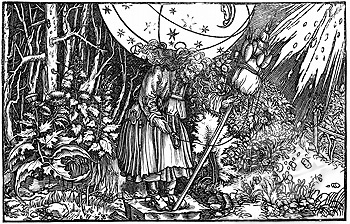
Old woman (witch or fairy) spinning. Woodcut attributed to Holbein from Boethius, De consolatione philosophiae 1547

The Pendle Witches

As a spiritual person, I am fascinated with women’s experience of the sacred. We women, for the past five-thousand years of patriarchy, have been side-lined and marginalized by every established religion in the world. But in every age, there have been women who have heroically rebelled against this patriarchal stranglehold to claim their authentic spiritual experience. Often it has involved looking within rather than without for spiritual guidance.

Thus far in my essay series, A Visionary History of Women, I’ve discussed Hildegard of Bingen and Margery Kempe who carved out their own woman-centered paths as mystics.

But what about women whose mystical experiences fell outside of the parameters of any organized religion?

One of the most important texts I have ever read was J. Kelly Gadol’s essay, “Did Women Have a Renaissance?” She points out that while elite European men were experiencing a Renaissance, women’s rights and lifestyle choices were becoming increasingly constricted during this period. The Renaissance was a very dangerous time to be female–women were the primary targets of the mass witch-hunting hysteria sweeping across Europe. Witchcraft persecutions were not a phenomenon of medieval superstition, as is commonly believed, but of the Renaissance and the Reformation, stretching up to the dawn of the Age of Enlightenment.

Anton Woensam’s idea of the perfect Renaissance woman: silent and obedient

The pre-Reformation Catholic Church, for all its problems and abuses, at least offered a space for female mystical and visionary experience. However, the hard-line Protestantism that followed the Reformation offered no space at all. If you saw visions or whispered prayer charms or left offerings at a holy well or lit a fire on midsummer eve to protect your cattle, you were suddenly seen as a witch, in league with the devil.

In winter 2002, I moved to Lancashire, in northern England. The back of my house looked out on Pendle Hill, famous for its legends of the Pendle Witches of 1612, the amazing real women at the heart of my novel Daughters of the Witching Hill.

In 1612, in one of the most meticulously documented witch trials in English history, seven women and two men from Pendle Forest were hanged as witches, based on testimony given by a nine-year-old girl.

The most notorious of the accused was Elizabeth Southerns, alias Old Demdike. Allow me to introduce you to a woman of power who changed my life forever.

This is how Thomas Potts describes her in The Wonderfull Discoverie of Witches in the Countie of Lancaster, the official trial transcripts.

She was a very old woman, about the age of Foure-score yeares, and had

been a Witch for fiftie yeares. Shee dwelt in the Forrest of Pendle, a vast

place, fitte for her profession: What shee committed in her time, no man

knows. . . . Shee was a generall agent for the Devill in all these partes: no

man escaped her, or her Furies.


Bess Southerns was a wisewoman of longstanding repute. What fascinated me was not that she had been arrested on witchcraft charges, but that she practiced her craft for decades before anyone dared to interfere with her or stand in her way. Cunning craft, the art of using charms to heal both humans and livestock was her family trade. When interrogated by her magistrate, she freely admitted to being a wisewoman and healer, even bragged about her familiar spirit Tibb, who appeared to her in the likeness of a beautiful young man.

At the time of her arrest, she lived in a place called Malkin Tower. Widow and matriarch of her clan, she lived with her widowed daughter and her three grandchildren, the most promising one being Alizon, a teenager who showed every promise of becoming a wisewoman as mighty of her grandmother.

In England, as opposed to Scotland and Continental Europe, witchcraft persecutions had been rare. Bess had been able to practice her craft in peace. This all changed when the Scottish King James I ascended to the English throne. King James was obsessed with the occult and had even written a book called Daemonologie—a witchhunter’s handbook—that his magistrates were expected to read.

The tide was turning for Bess and her family.

When a pedlar suffered a stroke after exchanging harsh words with Bess’s granddaughter Alizon, the local magistrate, eager to make his name as a witchfinder, played neighbors and family members against each other until suspicion and paranoia reached frenzied heights.

Alizon, first to be arrested, was the last to be tried at Lancaster in August, 1612. Her final recorded words on the day before she was hanged for witchcraft are a passionate tribute to her grandmother’s power as a healer. John Law, the pedlar Alizon had supposedly lamed, appeared before her. John Law, perhaps pitying the condemned young woman, said that if she had the power to lame him, she must also have the power to cure him. Alizon sadly told him that she lacked the powers to do so, but that if her grandmother, Old Mother Demdike, had lived, she could and would have healed him and restored him to full health. 

Other novels have been written about the Pendle Witches, but mine is the only one to tell the story from Bess and Alizon’s point of view. I longed to give these women what their own world denied them—their own voice, their own story.

May the voices and visions of our motherline guide us to claim our own voice, our own story, our own vision, our own power. May we all be wisewomen walking forward.

Mary Sharratt is committed to telling women’s stories. If you enjoyed this article, you might want to check out her novel Daughters of the Witching Hill and visit her website.

A Visionary History of Women: Part 2

You can read my essay: A Visionary History of Women: Part 1 here.

I’m on a mission to write women back into history, because, to a large extent, women have been written out of history. Their lives and deeds have become lost to us. To uncover their buried stories, we must act as detectives, studying the sparse clues that have been handed down to us. We must learn to read between the lines and fill in the blanks. My writer’s journey is about reclaiming the lost heroines of history and giving voice to that lost motherline.

Many of my novels address spiritual themes.  As a spiritual person, I’m very interested in women’s experience of the sacred. As well as being written out of history, we women, for the past five-thousand years of patriarchy, have been side-lined and marginalized by every established religion in the world. Even in alternative spiritual movements, male teachers and leaders have abused their authority over their female students and followers.

But in every age, there have been women who have heroically rebelled against this patriarchal stranglehold to claim their authentic spiritual experience. Often it has involved looking within rather than without for spiritual guidance. Many of these women have been mystics.

What is a mystic?

The American Dictionary states that mysticism is the belief that it is possible to directly receive truth or achieve communication with the divine through prayer and contemplation. In other words, according to my personal definition, you don’t need a priest or other authority figure. The divine mysteries are within your own heart.

Some of the most famous mystics of the Western spiritual tradition have been women who plunged deep within their souls for spiritual guidance and emerged with ecstatic, prophetic, and radical insights.

Many of us imagine female mystics as cloistered women, like Hildegard of Bingen, but what would it be like to be a married woman with children and experience divine visions when you’re in the middle of making dinner or doing the laundry?

One of the most eccentric mystics of the late Middle Ages was a desperate housewife and failed businesswoman from Norfolk, England, named Margery Kempe (c. 1373 – after 1438). She is the heroine of my novel Revelations.

She ran a brewery and then a horse mill to grind grain, but both businesses failed. Around the age of 40, Margery had reached her breaking point. She was done. The mother of fourteen children, she feared that another pregnancy might kill her, but she couldn’t trust her husband to leave her alone, because canon law upheld his right to sexual congress without her consent. More than anything, Margery wanted to literally walk away from her marriage and go on pilgrimage to Jerusalem.

Since divorce wasn’t an option, she traveled to nearby Norwich to seek spiritual counsel from the anchoress Julian of Norwich, one of the greatest mystics of all time. Margery confessed to Julian that she had been haunted by visceral, body-seizing spiritual visions for the past twenty years. In my novel, Julian, recognizing Margery as a fellow mystic, made a confession of her own. She had written a secret book of her mystical visions, entitled Revelations of Divine Love, the first book in English written by a woman. In an age where heretics were burned at the stake, this was a dangerous text, describing an unconditionally loving God who appeared as Mother and threatened the established Church’s insistence on eternal damnation. Nearing the end of her life, Julian entrusted the book to Margery, who hid the manuscript in a secret compartment in her pilgrim’s staff.  

With Julian’s blessing, Margery set off on the adventure of a lifetime to spread Julian’s radical, female vision of the Divine. Her travels took her to Rome, Jerusalem, and Santiago de Compostela. When she returned to England, she was arrested and tried for heresy several times and came close to being burned at the stake. The authorities couldn’t seem to handle this independent woman who traveled on her own and who dared to preach to other women in public. She preserved her story for posterity in The Book of Margery Kempe, the first autobiography written in English.

Margery offers inspiration for those of us who seek to live as mystics and contemplatives in the full stream of worldly life.

Mary Sharratt is committed to telling women’s stories. Please check out her acclaimed novel Illuminations, drawn from the dramatic life of Hildegard von Bingen, and her new novel Revelationsabout the mystical pilgrim Margery Kempe and her friendship with Julian of Norwich. Visit her website.

A Visionary History of Women

Part One: Hildegard’s Holy Wisdom

I’m on a mission to write women back into history, because, to a large extent, women have been written out of history. Their lives and deeds have become lost to us. To uncover their buried stories, we must act as detectives, studying the sparse clues that have been handed down to us. We must learn to read between the lines and fill in the blanks. My writer’s journey is about reclaiming the lost heroines of history. My quest is to give voice to the ancestral memory of that lost motherline.

My novels address spiritual themes. As a spiritual person, I’m very interested in women’s experience of the sacred. As well as being written out of history, we women, for the past five-thousand years of patriarchy, have been side-lined and marginalized by every established religion in the world. Even in alternative spiritual movements, male teachers and leaders have abused their authority over their female students and followers.


But in every age, there have been women who have heroically rebelled against this patriarchal stranglehold to claim their authentic spiritual experience. Often it has involved looking within rather than without for spiritual guidance.


One of these women was Hildegard of Bingen, the heroine of my novel Illuminations.
Born in the lush green Rhineland in present day Germany, Hildegard (who lived from 1098–1179) was a Benedictine abbess and one of the most accomplished people of her time. She founded two monastic communities for women, composed an entire corpus of sacred music, and wrote nine books on subjects as diverse as theology, cosmology, botany, medicine, linguistics, and human sexuality, an intellectual outpouring that was unprecedented for a 12th-century woman. Her prophecies earned her the title Sybil of the Rhine.

Hildegard’s vision of Sapientia, Divine Wisdom.


An outspoken critic of Church corruption, she courted controversy. Though women were forbidden to preach, Hildegard embarked on four preaching tours in which she delivered apocalyptic sermons warning her male superiors in the Church that they must reform their evil ways or suffer divine wrath. But she had to pay the price for being so outspoken. Late in her life, she and her nuns were the subject of an interdict (a collective excommunication) that was lifted only a few months before her death. Hildegard nearly died an outcast, her fate hauntingly similar to that of many canceled women in our contemporary cancel culture.


Hildegard’s theology of the Feminine Divine has made her a pivotal figure in feminist spirituality.


A key concept in her philosophy is Viriditas, or greening power, her revelation of the animating life force manifest in the natural world that infuses all creation with moisture and vitality. To her, the divine was manifest in every leaf and blade of grass. Just as a ray of sunlight is the sun, Hildegard believed that a flower or a stone was God, though not the whole of God. Creation revealed the face of the invisible creator. Hildegard celebrated the sacred in nature, something highly relevant for us in this age of climate change and the destruction of natural habitats.

I, the fiery life of divine essence, am aflame beyond the beauty of the meadows, I gleam in the waters, and I burn in the sun, moon and stars . . . . I awaken everything to life.
Hildegard von Bingen, Liber Divinorum (Book of Divine Works)

Hildegard’s philosophy of Viriditas went hand in hand with her celebration of the Feminine Divine. Although the established Church of her day could not have been more male-dominated, Hildegard called God Mother, and said that she could only bear to look upon divinity in her visions if God appeared to her in feminine form. Her visions revealed God as a cosmic egg, nurturing all of life like a womb. Masculine imagery of the creator tends to focus on God’s transcendence, but Hildegard’s revelations of the Feminine Divine celebrated immanence, of God being present in all things, in every aspect of this greening, burgeoning, blessed world.


According to Barbara Newman’s book Sister of Wisdom: St. Hildegard’s Theology of the Feminine, Hildegard’s Sapientia, or Divine Wisdom, creates the cosmos by existing within it.

O power of wisdom!
You encompassed the cosmos,
Encircling and embracing all in one living orbit
With your three wings:
One soars on high,
One distills the earth’s essence,
And the third hovers everywhere.

Hildegard von Bingen, O virtus sapientiae

This might be read as an ecstatic hymn to Sophia, the great Cosmic Mother.

Mary Sharratt is committed to telling women’s stories. Please check out her acclaimed novel Illuminations, drawn from the dramatic life of Hildegard von Bingen, and her new novel Revelationsabout the mystical pilgrim Margery Kempe and her friendship with Julian of Norwich. Visit her website.
All Shall Be Well: Hope in Hopeless Times

My novel Revelations, based on the intertwined lives of female mystics Margery Kempe and Julian of Norwich, will be released in paperback on April 19. You can order HERE.

“All shall be well, and all shall be well, and all manner of things shall be well.”

These words of Julian of Norwich, taken from her masterpiece of visionary theology, Revelations of Divine Love, seem almost tone deaf against our current backdrop of war and the ongoing pandemic. In a world like ours, with war criminals like Putin calling the shots, it’s so tempting to fall into either hardened cynicism or hopeless despair.

But Julian of Norwich was no naïve simpleton. Although an anchoress who had taken vows as a fully cognizant adult to wall herself into a cell built on to the back of Saint Julian’s Church in Norwich, England, she wasn’t living in some airy-fairy cloistered bubble. Her own age was riven by plague, war, and religious intolerance, which saw the burning of many perceived witches and heretics. Saint Julian’s Church (she took the name of the church, not the other way around) was located in a rough part of town near the river and the stinking tannery district where prostituted women and girls plied their trade.

Far from walling herself off from the world’s woes, Dame Julian had a window in her anchorage wall facing out into the street. Anyone might seek her counsel. She was famous throughout Britain for her sage advice. One of the many who poured her soul out to Julian was a desperate housewife and mother of fourteen children, who had finally plucked up the courage to walk away from an abusive marriage. This woman was none other than Margery Kempe, the heroine of my novel.

Margery had been experiencing sensual, visceral images of the divine for over twenty years. Now she had reached a crossroads in her life. She wanted to walk the mystic’s path and travel as a pilgrim to Jerusalem and Rome. But her choice to leave her family and travel the world as a solo woman was even more controversial and downright dangerous in her age than in ours.

It would have been so easy for a spiritual counselor to parrot the voice of conventional wisdom and tell Margery that her dream of pilgrimage was a self-indulgent folly and that her true calling was to serve her children as a conventional wife and mother.

Instead, Julian did something unheard of. She empowered Margery to trust herself, to trust the voice of spiritual wisdom within her own heart. She told Margery to set all her trust in the divine and not to worry too much what the world thought of her choice–if some people disliked Margery, perhaps that meant Margery was doing something right.

Julian didn’t promise Margery–or us, the readers of Revelations of Divine Love–an easy ride. In one of her searing visions, Julian received the message, “You shall not be overcome.” She wrote in her book, “Our Lord did not say, ‘You shall not be tormented, or troubled, or grieved’ but ‘You shall not be overcome.'”

Julian received her divine revelations around the age of thirty when she was deathly ill and thought she was going to die. Instead, she survived and dedicated the rest of her life to being a living witness to the exquisite divine love she had experienced.

We don’t have to be anchoresses or travel to Jerusalem to experience this deep love and wisdom. The deepest pilgrimage of all is the journey into the depths of our own hearts where divine love dwells eternally, in each one of us, regardless of our faith or spirituality. The sacred inside us can never taken from us.

The heart will always be there for us and it is only from the heart that we can bring peace and justice to our fractured world. By bringing our information-overloaded brains inline with the deep wisdom of the heart. By bringing our speech inline with the heart. By bringing all our deeds inline with the heart.

May we all be witnesses to the Divine Love within us.

“All shall be well and all shall be well, and all manner of things shall be well.”

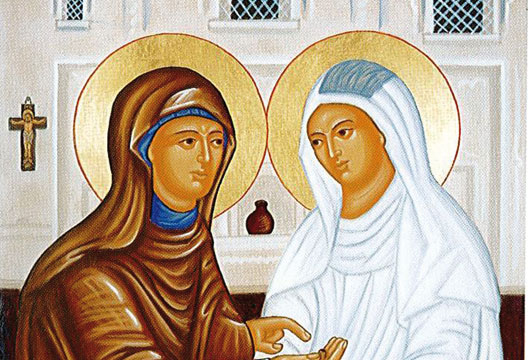
Julian of Norwich (left in her Benedictine habit) counsels Margery Kempe, who dressed all in white to mark her vocation as a mystic and pilgrim.

Mary Sharratt is committed to telling women’s stories. Please check out her acclaimed novel Illuminations, drawn from the dramatic life of Hildegard von Bingen, and her new novel Revelationsabout the mystical pilgrim Margery Kempe and her friendship with Julian of Norwich. Visit her website.
Fiction: Buddha and the Rocking Chair

Your ex-boyfriend gave you a solid brass Buddha, one foot high. You hate to think what he had to pay for it. Not knowing what else to do with it, you place it on your bookcase. You must admit that it’s a beautiful object, that it inspires a certain peace. But it leaves you cold, just like the crucifix hanging in your parents’ bedroom always left you cold.

Your ex-boyfriend gave you a solid brass Buddha, one foot high. You hate to think what he had to pay for it. Not knowing what else to do with it, you place it on your bookcase. You must admit that it’s a beautiful object, that it inspires a certain peace. But it leaves you cold, just like the crucifix hanging in your parents’ bedroom always left you cold. Only when you sit in your dead grandmother’s chair and rock yourself into a trance can you reach your world of wonder, that green and gold place where May sunshine washes through newly unfurled birch leaves, where shadow and light dance on the white bark you peel off like onionskin. Long ago, you think, people worshipped their ancestors.

You wake up to cold and gray, to a day so drab that it hurts like a permanent migraine. On the bus ride to the office, the commuters in their career clothes are scrying into their phones. No free seats so you grab the handrail and gaze out the window. Instead of city buildings and dirty snow, you see an old farmhouse at the edge of an apple orchard. A gaggle of geese guards that house. They rush towards you, flapping their wings and hissing. But you walk resolutely on until you reach the veranda, and then the front door, propped open by a pair of gardening shoes. Stepping into the hall, you breathe in the mixture of baking bread and boiled coffee. A woman comes to you, a woman like your grandmother, but older. Her thin silver hair reaches her knees. Her face is so wrinkled, you can hardly see where her glittering eyes end and her crow’s feet begin.

Cocking her head, she says, “What took you so long?” And taking your hand, she marches you into her kitchen where a cat sleeps on the windowsill. She sits you down and serves you elderflower wine in an old jam jar. You take one sip and the kitchen reels around you.

You hear a rushing sound, a pounding, and then you are alone on a beach holding a piece of driftwood shaped like a goose in flight. A strange new weight pulls at your shoulder blades. Craning your neck to investigate, you see the wings sprouting there, blue-black crow wings. Of their own volition, they stretch and flap until you are airborne. Heading out over the waves, the tips of your bare toes graze the water.

“You dream too much,” your ex informs you. “You live on another planet. When’s the last time you watched the news? When’s the last time you voted? You can’t just spend your whole life with your head in the sand.”

Your ex is an activist. He majored in queer theory. He worked on Bernie Sander’s election campaign. He buys everything organic and volunteers one day a month at the soup kitchen. You are humbled by his social engagement, but when he sends you links to articles and videos overflowing with the world’s misery, the weight is too heavy for you to bear. You find yourself wondering how many homeless people he could have fed for the price of that solid brass Buddha.

Your grandmother lived until she was ninety-nine. She quarreled bitterly with everyone who came to visit and expressed concern about the farm falling into disrepair around her. She told them she just wanted to be left in peace. Then one day she died of a stroke while chopping wood on that old farm where she had lived alone for fifty-six years. She died instantly—no lingering pain, hospital gowns, or stench of bedpans or disinfectant. That’s how it is on your mother’s side of the family—the women are widowed early and seem to live forever until the day they suddenly drop dead.

After her death, her children sold her farm to a developer, who tore down her Victorian house to build rows and rows of condos. They left only three of her apple trees standing. Those trees are as old and gnarled as she was when she died. Like old women, they no longer bear fruit but stand and bear witness to what once was, but is no longer.

You pack the brass Buddha away in old newspapers, stick it in a cardboard box. You’ve decided to donate it to a drug rehabilitation center. Maybe it will bring the people there peace and clarity. Then you brew a pot of tea and sit in the rocking chair, huddled in an afghan your grandmother crocheted before you were born. You close your eyes and you are far out over the ocean, sometimes floating, sometimes flying. A blast of salt wind fills your shiny black wings, lifting you even higher. Opening your beak wide, you cackle and caw.

Mary Sharratt is committed to telling women’s stories. If you enjoyed this short piece, please check out her acclaimed novel Illuminations, drawn from the dramatic life of Hildegard von Bingen, and her new novel Revelationsabout the mystical pilgrim Margery Kempe and her friendship with Julian of Norwich. Visit her website.