
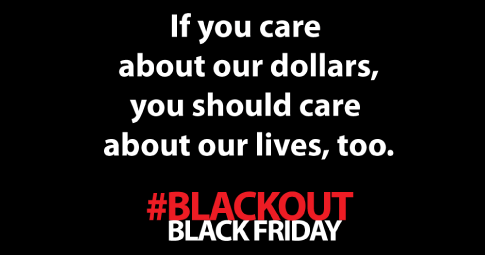
Stick It to the Man and Black OUT Friday by Caryn MacGrandle

Before I go any farther, I want to clarify that I am not speaking of all men.  There are a lot of good, strong, protector-type, kind, compassionate men out there.

But I am speaking of THE MAN – an archetypal dominator who has held the purse strings and the control the past few thousand years.

THE MAN who puts the almighty dollar above all else and doesn’t care who he has to step on in order to do so.

I’m sure  you can think about quite a few.  I would also include some women who behave like THE [DOMINATOR]  MAN.  The prevalence of this thinking has led to the spot we currently find ourselves in.

Black Friday is one of the most crucial sales periods for many retailers, with some earning a significant portion of their annual revenue during the holiday season.  Black Friday and Cyber Monday 2024 alone generated billions of dollars in online sales.

Continue reading “Stick It to the Man and Black OUT Friday by Caryn MacGrandle”
Jewish Folklore and Women’s Clothing: When Things are the Text by Jill Hammer

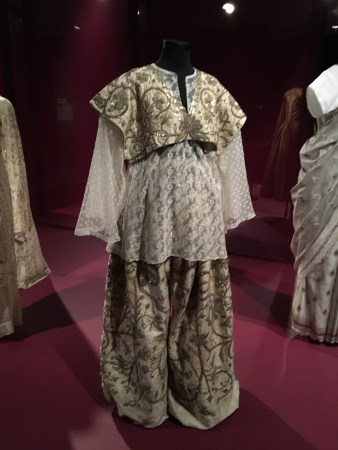
Two weekends ago, I had the pleasure of visiting the Jewish Museum on Fifth Avenue in Manhattan.  The Jewish Museum has long been a favorite museum for me.  My wife and I took our daughter to this particular exhibit because we knew she’d like it.  The exhibit is entitled “Veiled Meanings: Fashioning Jewish Dress from the Collection of the Israel Museum, Jerusalem.”  It consists of many, many garments created and worn by Jews, from Moroccan wedding clothes to German prayer shawls to Yemenite amuletic (meant to protect the wearer) dresses.  Accompanying the garments were placards explaining the folk traditions giving rise to the various garments.  What I realized (again) after viewing the exhibition was how much I could learn about the culture of Jewish women, and Jewish culture in general, by looking at things, not texts.

The sacred texts and laws central to Jewish life, while they certainly discuss Jewish women, tend not to be created by or for Jewish women.  This means many aspects of how Jewish women thought or acted (before the present day) are obscured. However, these garments were created by and often for Jewish women, and their shapes and symbols tell a great deal.  For example, the Moroccan Jewish wedding clothes I mentioned were embroidered with spirals, representing (according to the accompanying written material) the spiral of life.  These spirals were also found on Jewish tombstones. The spirals resembled, to me, the spirals I’d seen carved on stone at Newgrange and Knowth in Ireland—the ancient symbols of life and journey.  I was amazed to see them in a Jewish context.  Another dress that mixed Sephardic and Moroccan style also had spirals featured prominently.

Continue reading “Jewish Folklore and Women’s Clothing: When Things are the Text by Jill Hammer”