
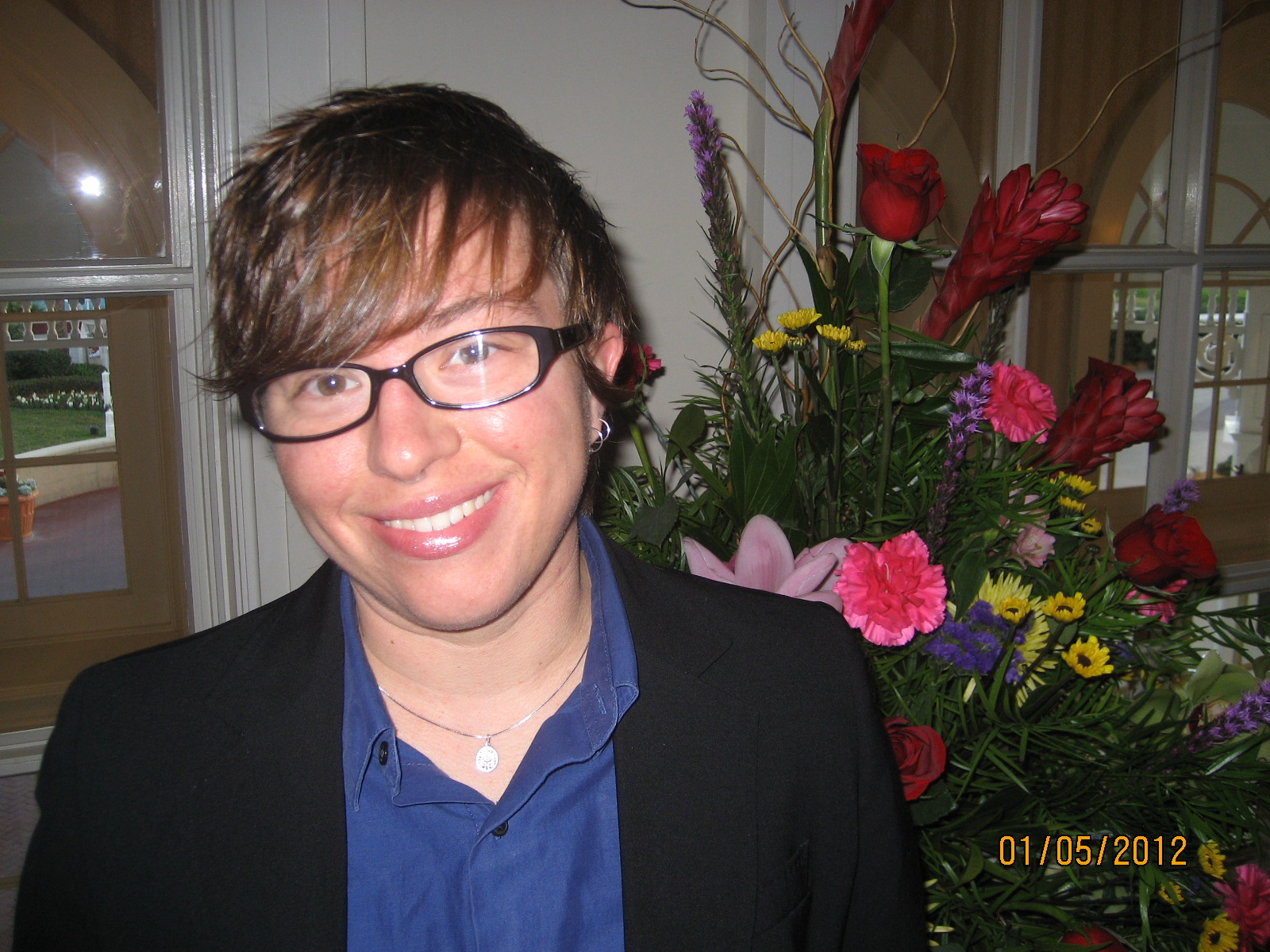
RE-SOULING ON SHABBAT BY IVY HELMAN

I attended a service at Congregation Shalom in Chelmsford, MA two Fridays ago.  During the service, Rabbi Shoshana Perry spent a few minutes addressing the last word of a Hebrew prayer found in the Reform siddur, Mishkan T’filah.  It was translated in the siddur as “God rested” but the Hebrew word used was vayinafash, which comes from the word nefesh, or soul.  The prayer emphasizes on the seventh day that God did not rest as much as God took time out to re-soul.  Rabbi Perry believes that our Shabbat should be spent doing things that help us also re-soul.

Initially, I spent quite a long time considering why God would need to re-soul and what exactly God would do to re-soul.  When I realized the futility of trying to sort that out, I moved a little closer to home: what do I do on Shabbat to re-soul?  I was quite overwhelmed trying to answer this question as well.

Traditionally, Shabbat is about study, rest, prayer and family among other things.  In fact, many Jews avoid creative processes like writing, cooking, painting, driving and working because God rested from creative work on the seventh day.  (Incidentally, our creativity is also how we are considered to be made in the image of God).  Part of the reason this idea struck me so deeply is because I often find painting, cooking and writing rejuvenating. Continue reading “RE-SOULING ON SHABBAT BY IVY HELMAN”

How to Talk to a Deity* By Barbara Ardinger, Ph.D.

Originally, when ritual was still part of everyday life and everybody talked to gods and goddesses all the time, we spoke to them in everyday words. As time went on and priests assumed more power, however, exalted language and fulsome invocations arose, and pretty soon only the High Priest could speak to God Most High. We common folks were allowed to pray, of course, but the important prayers were uttered by the priests.

During the European Renaissance and all the way up to the 19th-century occult revival, it was thought that the gods spoke Hebrew and Latin. Ceremonial magicians wrote rituals in these languages or made up other highly esoteric languages like crypto-Egyptian, quasi-Sanskrit, and Enochian (the “angelic language” of the Elizabethan Dr. Dee). If you read books on high occultism, you’ll see scripts in these languages. Trying to pronounce the words can be like trying to unscrew the inscrutable.

Fortunately, we discovered that it can be dangerous to invoke an invisible power in a language we can neither understand nor enunciate properly nor improvise in. As anyone who has ever studied a foreign language knows, boners come easily and can be very embarrassing. Worse, some powers may become angry if we mispronounce their names … or we may not get who we intended to call. Like the modern Roman Catholic Church, occultists, ceremonial magicians, and witches have generally adopted the vernacular. Continue reading “How to Talk to a Deity* By Barbara Ardinger, Ph.D.”

The Postures of Prayer by Caroline Kline

I’m not generally an eye closer during prayers. Nor am I an arm folder. If I’m in a public space like my Mormon church, I tend to slightly bow my head so as to not make any other non-eye closers uncomfortable. I’m not a very consistent personal prayer, but when they do happen, most of them occur as I lie in bed before I sleep. I’m not a kneeler, either.

I’ve not ever thought much about this before, but now that we have a five year old, I’m seeing my child being taught prayer postures by his Sunday School teachers that don’t resonate with me personally. It’s caused me to think a little more deeply about why I don’t conform to typical Mormon prayer posturing.

I found an article* about eye positioning during prayer helpful as I thought about this question. According to the author Thomas Ellis, members of Abrahamic religions tend to view deity as an “intra-tribal rank superior.” In other words, the same way these ancient people approached their social superiors with supplications, they approach their deity with supplication. This usually involves lowering the eyes and head in order to not appear challenging or demanding. Contemporary Mormonism seems to fall into this category.

Prayer Tree by Janet Chui

One exception to this generalization about Abrahamic religions is Marian worship. Catholic or Eastern Orthodox adherents tend to approach Mary with a direct gaze, seeking out visual reciprocity. They often look at icons and pray to her simultaneously. The submissive lowering of head and eyes is not present. Ellis postulates that this is because these adherents are approaching deity not as an “intra-tribal rank superior” but instead as an “attachment figure,” just as babies and young children approach with eyes open the loving mother or father.

Interesting. Does my lack of desire to close my eyes and bow my head mean that I think of deity more like Catholics think of Mary? Do I approach deity as loving parents**, rather than social superiors? Do I want to emphasize our similarities and talk to them as loving friends, rather than focus on the vast difference of our hierarchical positions?

Yes, I think I do.

*Natural Gazes, Non-Natural Agents: The Biology of Religion’s Ocular Behaviors” by Thomas B. Ellis in the book The Biology of Religious Behavior

**Mormons believe in both a Heavenly Father and a Heavenly Mother, though Mormons are instructed to not worship her or pray to her.