From the Archives: Where Did the Gods Come From? by Barbara Ardinger

This was originally posted on June 10, 2012

A man in the group leaned forward and asked, “But how did the Goddess get overcome?” So I told him. Young “warrior heroes” came galloping out of the Russian steppes and the Caucasus Mountains, including Afghanistan, which no one (not even Alexander the so-called Great) has ever conquered. The boys were carrying their thunder-solar-sky gods with them.

Continue reading “From the Archives: Where Did the Gods Come From? by Barbara Ardinger”

Where Does Poetry Come From? By Barbara Ardinger

Poetry is a gift from our ever-creating goddess, but you know what? She also has a major sense of humor. Nearly every night, I go to bed, pet the cats awhile, and think I’m going to go right to sleep. And what happens? Words happen. Beginnings of blogs. (This one. Last night.) Lines of dialogue or description that will end up in my revisionist fairy tales. First lines of poems. Most nights, I “talk” myself to sleep.

 Because the Goddess is endlessly, continuously creative and her art is our blessed planet, so are all her children creative, and so am I also creative and kinda artsy, too. I learned to embroider when I was about seven years old. I learned to sew, I learned to knit, I learned to crochet. For years I crocheted granny-square afghans, but I ran out of people to give them to about ten years ago. As a child, I sat on my father’s workbench and learned to work a little with wood. I started taking piano lessons the day after my sixth birthday. Although my mother and my brother were artists, I missed out on that talent, but made up for it by taking a right-brain drawing class and doing a magnificent contour drawing of a brussels sprout. I don’t remember when I couldn’t read, and I’m told that I started writing fiction when I saw seven years old and wrote a story for my daddy. Along the way, of course, I’ve also learned a lot of very practical creative skills, of course, like touch typing. Continue reading “Where Does Poetry Come From? By Barbara Ardinger”

The Language of Flowers by Barbara Ardinger

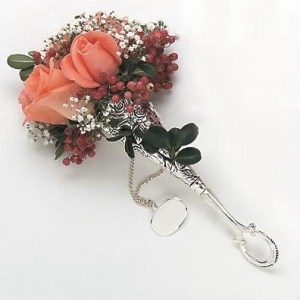
Instead of sending a billet-doux to your honey, present a tussie-mussie, a small bouquet wrapped in a lace doily or a fancier holder. Say you have a friend having a birthday and he already has too many neckties and she already has too many kitchen gadgets. Give them flowers or potted plants. The white camellia signifies “unpretending excellence.” Ivy, “with its clinging habit, is a feminine symbol” (sic., p. 53). The lily means purity. The peony symbolizes abundance. The primrose is a token of affection and respect. Get the idea? Your friends will be delighted by the flowery language.

William Shakespeare, The Winter’s Tale
A fancy tussie-mussie

     Here’s flowers for you:
Hot lavender, mints, savory, marjoram,
The marigold, that goes to bed wi’ the sun,
And with him rises weeping: these are flowers
Of middle summer….
          —William Shakespeare, The Winter’s Tale Continue reading “The Language of Flowers by Barbara Ardinger”

Thank You, Goddess By Barbara Ardinger

Actually, it’s very hard to say what the Goddess is. She’s ineffable. She’s both abstract and concrete at the same time. She created the universe, but she also brings destruction to beings and things whose time has ended. Even as she is (perhaps) the earth embodied and is (perhaps) a sort of universal spirit of loving-kindness and is (perhaps) the powers of life, death, and rebirth, she is as global as the oxygen we must breathe to live.

I do my end-of-the-month spending tables and balance my checkbook and find that there’s enough for me to send donations to politicians and nonprofits I want to support, like the Brady Campaign to Prevent Gun Violence. I write a couple checks, put stamps on the envelopes, and as I drop them in the mailbox, I say, “Thank you, Goddess.” Everybody who lives in Long Beach knows there is no place to park in the whole city. I rent a parking space in a driveway across the street. Thank you, Goddess. I have nice little chats with strangers in adjacent seats during the intermissions of Les Miserables and Spamalot. Thank you, Goddess. I’m breathing every day, I live with two friendly cats, I earn my living doing something I enjoy doing and that’s useful to the people I do it with. Thank you, Goddess.

Does the Goddess run my life? Not the way you may be thinking. Please don’t think I think the Goddess is a big fat woman wearing a crown and sitting on a big fat throne up in the sky and sending little goddessettes and superheros and superheras down to earth to chase editing clients to me, puff my lungs full of oxygen, and carefully arrange that I sit next to nice folks at the theater or find places to park when I need them. (I have a Magic Parking Place Word for that last item.) That’s not the Goddess. She’s not the Boss of the Universe, she doesn’t live “up there,” she doesn’t dictate how I should live my life. Continue reading “Thank You, Goddess By Barbara Ardinger”

Where Did the Gods Come From? by Barbara Ardinger

A man in the group leaned forward and asked, “But how did the Goddess get overcome?” So I told him. Young “warrior heroes” came galloping out of the Russian steppes and the Caucasus Mountains, including Afghanistan, which no one (not even Alexander the so-called Great) has ever conquered. The boys were carrying their thunder-solar-sky gods with them.

I attended a book club at a beautiful metaphysical bookstore a few weeks ago where we discussed the conquest of matrilineal civilizations by the patriarchy. A man in the group leaned forward and asked, “But how did the Goddess get overcome?” So I told him. As my friend Miriam Robbins Dexter writes in her essay in The Rule of Mars, young “warrior heroes” came galloping out of the Russian steppes and the Caucasus Mountains, including Afghanistan, which no one (not even Alexander the so-called Great) has ever conquered. The boys were carrying their thunder-solar-sky gods with them. Those gods included Jehovah, Zeus, Jupiter, and Ares. (Allah arrived later.) Some of these young “heroes” were outlaws “who live[d] at the edge of society and are connected in legend and myth to wolves, dogs, or other animals.”[1] Dexter does not use the term “biker gangs,” but that’s what they were. Testosterone-crazed invaders out to have a good time. They ran over every goddess and temple in their path, and to make themselves seem more legitimate, they “married” former Great Goddesses (like Hera) to their thunder gods (Zeus). Their gods are famous for hurling lightning bolts, enticing their generals to invade peaceful, Goddess-worshipping lands (like Canaan), and populating their new turf via rape, which is how the innumerable sons of Zeus were conceived. More recently, during the last two or three millennia, one of those gods has inspired his prophets and preachers to roar about sin and hell and idol-worship and punishment. The new gods and their carriers thus planted the seeds of warfare in society and its literature. I describe one such invasion in the prologue of Secret Lives, where after a horrific vision that causes her the blind herself, the shaman sends her people out into the world to escape the coming hooligans on their horses and become the secretive, dark “little people” of Europe. Continue reading “Where Did the Gods Come From? by Barbara Ardinger”

Magic Names by Barbara Ardinger

Many modern pagans adopt magical names. I think I’ve found one for myself. It’s a good motto, and even saying it aloud reminds me of the daily blessings of the Goddess to her children. The Latin name I’d choose is Beata elle. “Blessed is she.” 

When I attended a pagan studies conference recently to read from Secret Lives (and sign and sell a few copies), I listened very carefully to another presenter who spoke about magical names. When we go through an initiation, he said, we receive a new name. It’s a custom that is familiar to people through the ages and around the world. The presenter spoke about why people adopted magical names during the 19th-century European occult revival and why pagans still take magical names. And he set me to thinking. When you earn your Ph.D., you don’t get a new name. The Ph.D. is indeed an initiatory experience. Ask anyone who’s done it. You go through multitudinous ordeals both physical and intellectual. You face judges, speak what you’ve learned, and finally attain gnosis. But all you get for all your work and suffering are those nifty letters to put after your name. But I digress. Continue reading “Magic Names by Barbara Ardinger”