

This was originally posted on 1/30/12 and then again on 1/29/24. Moderator’s Note: We are posting Carol’s legacy post on Sunday this week rather than Monday because today is the Feast Day of St. Brigid. We also feel this is an important message in these difficult times.

May we remember Brigid on her day in the fullness of her connection to bountiful and life-giving earth by setting a bowl of milk on an altar or special place in the garden on her holy day. Who knows, a snake just might come to drink from it.
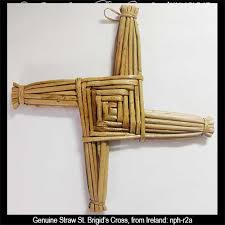
The Christian Feast Day of St. Brigid of Kildare, one of the two patron saints of Ireland, is held on February 1, the pre-Christian holiday known as Imbloc. It is well known that St. Brigid has the same name as a pre-Christian Goddess of Ireland, variously known as Brighid (pronounced “Breed”), Brigid, Brigit, Bride, or Bridie. The name Brigid is from the Celtic “Brig” meaning “High One” or “Exalted One.” Brigid like other Irish Goddesses was originally associated with a Mountain Mother, protectress of the people who lived within sight of her and of the flocks nurtured on her slopes.

Imbolc marked the day that cows and ewes give birth and begin to produce milk. It was also said to be the day when hibernating snakes (like groundhogs) first come out of their holes. In northern countries, Imbolc signals the beginning of the ending of winter. The days have begun to lengthen perceptibly after the winter solstice when the sun stands still and it seems that winter will never end. At Imbloc spring is not yet in full blossom. But if hibernating snakes come out of their holes, it is a sure sign that the processes of transformation will continue and warmer days will not be far off. As Marija Gimbutas says, “The awakening of the snakes meant the awakening of all of nature, the beginning of the life of the new year.”
Continue reading “The Legacy of Carol P. Christ: The Feast Day of St. Brigid”



 Feminism and Religion