
Reflections in a Winter Forest by Sara Wright

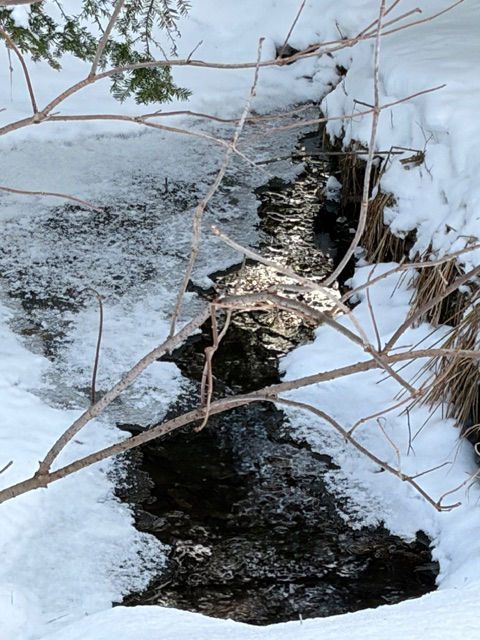
Shimmering Seep

Yesterday’s welcome sun and warm temperatures had me out the door to lay down another round of ashes before the next storm. After packing down our woodland paths with snowshoes we were off to our favorite forest. I had planned to look for liverworts but as usual nature had other plans nudging me to note which trees might be photosynthesizing  around these forest edges. At any given moment there are thousands of interactions between tree bark and ki’s environment that most of us take for granted. If you pay attention to bark you may, like me, develop a deep respect for the unparalleled beauty and for the protective skin of every tree. Especially during the winter months.

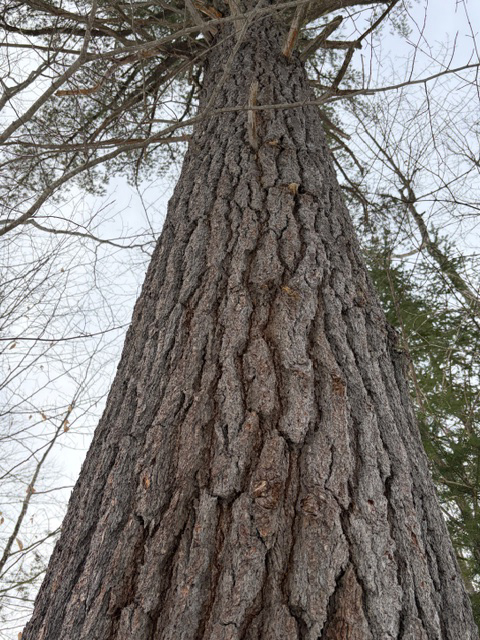
We know that bark protects the tree from insects and other damage, and the thick ridged bark of older pines or hemlocks also holds moisture in ki’s fissures as well as providing creaturely homes.

I feel compelled to stop to run my hands over these thick white pine trunks in gratitude and awe for their existence. I do the same thing at home in my modest sanctuary, but here the pines are older like the ones that once entirely covered the mountain behind me, all the way to the ledges…I remind myself that the waxy needles on conifers also photosynthesize on warm sunny days.

Continue reading “Reflections in a Winter Forest by Sara Wright”
White Pine Wonder by Sara Wright

Yesterday was mild (mid 40’s in January) so Coalie and I went to our favorite forest to walk. The roads were icy, but the seeps were brimming and ringed with footprints. Over one of my favorites (because declining wood frogs still lay eggs there in the spring), an elderberry bush arced over rippling water like some sort of plant protectoress.

Seeps fascinate me because they defy freezing weather bubbling up through deep in the earth. Water seeps in the forest are small wetland areas where groundwater naturally emerges at the surface, often at the bases of slopes. They create moist spots with lush plants in season (like elderberries) and serve as important habitats for wildlife by providing clean water sources all year-round. They form from underground layers of rock that force water to flow horizontally until it surfaces. Seeps care for their animal and bird neighbors by providing clear waters at any time of year. There were so many fox and partridge tracks leading to and from these pools that I was surprised we didn’t startle one of the latter. (At home I have a pair that are feasting on the last of the crabapple berries). A couple of chickadees were chirping from nearby maples probably annoyed because we were taking our time. Coalie was nosing every blade of grass in the area.

Continue reading “White Pine Wonder by Sara Wright”