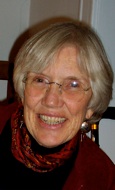
RESTORE THE REVENUE STREAMS! By Charlene Spretnak

Charlene Spretnak is one of the Founding Mothers of the Women’s Spirituality movement. She is the author of eight books, including most recently Relational Reality. She is a professor in the Women’s Spirituality graduate program in the Philosophy and Religion Department at the California Institute of Integral Studies. For further information about her books, see www.CharleneSpretnak.com. 

In the 1990s a broad coalition of Christian organizations and development NGOs mounted a successful international campaign known as Jubilee 2000, which pushed for a just resolution to a moral issue: the crushing interest payments on “Third World” development loans that had been forced on those countries in ways that had enriched the Northern banks and drained the South for decades. The campaign resulted in the Heavily Indebted Poor Countries (HIPC) initiative, which provides systematic debt relief for the poorest countries as well as new safeguards to assure that aid money is actually spent on the alleviation of poverty, and also the Multilateral Debt Relief Initiative (MDRI), which offers 100% cancellation of multilateral debts owed by HIPC countries to the World Bank, IMF, and African Development Bank. Continue reading “RESTORE THE REVENUE STREAMS! By Charlene Spretnak”

Charlene Spretnak’s “Relational Reality”: An Illuminating Read By Gina Messina-Dysert

I have long been interested in the work of women’s spirituality movement’s founding mother Charlene Spretnak; thus when her newest book, Relational Reality: New Discoveries of Interrelatedness that are Transforming the Modern World, was released I was anxious to read it.  To no surprise, I found it a brilliant, stimulating, and vital work.

In Relational Reality, Spretnak explains that we have “missed the way the world works” as a result of our cultural tendencies.  “The failure to notice that reality is inherently dynamic and interrelated at all levels – including substance and functioning – has caused a vast range of suffering” (1). Spretnak offers “snapshots” of the various crises we face within education and parenting, health and healthcare, community design and architecture, and the economy with purpose;  to name the suffering and hardship endured within the world and demonstrate that these crises are the result of anti-relational thinking.  She states these problems cannot be corrected until they are acknowledged; “Only then can we grasp the significance of the relational breakthroughs and solutions that are emerging” (20). Continue reading “Charlene Spretnak’s “Relational Reality”: An Illuminating Read By Gina Messina-Dysert”

On the Murders in Norway: The Need for a Multicultural Vision By Starhawk

The following is a guest post written by Starhawk, lifelong activist in peace and global justice movements, a leader in the feminist and earth-based spirituality movements, and author or coauthor of ten books, including The Spiral Dance, The Fifth Sacred Thing, Webs of Power: Notes from the Global Uprising, and her latest, The Last Wild Witch.

Cross posted at Dirt Worship.

This summer has been a whirlwind of teaching permaculture and working on making a movie from my novel, The Fifth Sacred Thing.  But a few days ago I took a break to attend a performance of Guys and Dolls put on by SF Arts Education, in which my fifteen-year old Goddess-child Kore was singing and dancing. SF Arts Ed runs a wonderful program where students from middle schools and high schools put on Broadway musicals, complete with singing, dancing, and a full jazz orchestra.  We had balcony seats behind the stage, so I was looking down on these bright and beautiful young people of all different backgrounds and ancestry, reflecting the multicultural nature of San Francisco itself.   They are a talented bunch, but I also know how hard they work, how much time they rehearse and the discipline they develop.  What a gift it is to have such wonderful youth growing up in our city! Continue reading “On the Murders in Norway: The Need for a Multicultural Vision By Starhawk”

This is What a Catholic Looks Like By Kate Conmy

The following is a guest post written by Kate Conmy, MA, Membership Coordinator for the Women’s Ordination Conference.  Kate celebrates spiritual activism, feminism, and human rights.  She currently works as the Membership Coordinator for the Women’s Ordination Conference and lives in Washington, DC.  She can be contacted at Kconmy@womensordination.org.

In my last semester as a Religion student at Mount Holyoke College I sat in my Feminist Theology seminar with only one question for our guest speaker: “Why are you still a Catholic?” A question I rarely dared to ask myself as I spent most of my studies concentrating on Buddhism, traveling abroad to Dharamsala, India, interning with the Buddhist Peace Fellowship in Berkeley, even learning Tibetan; by most observable assessments I had swapped the pew I grew up in for a zafu.  But Mary Hunt reminded me in such a simple and smart way that Catholicism is about community building and justice seeking. She said: “This is what a Catholic looks like. We have a responsibility to speak this language.”

In that moment I realized I had been resisting something that has always belonged to me. Raised in a Jesuit-educated Catholic family in Upstate, New York I felt less confirmed within the church, and more convinced that we were celebrating a god that was too small. One of the great mysteries for me growing up in a church-going family was the personal and religious reconciliation the Catholics I knew negotiated, sometimes weekly to make sense of their faith.  The dissonance between what was practiced during Mass, and what Catholicism meant at the dinner table seemed an exhausting spiritual dance of ambivalence.  It wasn’t until I began to identify as a feminist theologian that my spiritual worlds converged in a moment of satori: ambivalence is a virtue!  The sisters and daughters of Mary Daly gave me permission to re-claim my Catholicism with all of my questions as an extraordinary action of faith.  Ambivalence means courageously engaging the sacred to foster critique, conversation and innovation in the pursuit of knowing God. Just as Carter Heyward writes, “To love God is to un-do evil,” I so strongly believe that God must manifest as an expression of creative justice whereby inclusivity, “right-relation,” and the elimination of discrimination are central on the path toward a higher liberation. I graduated feeling empowered by women, activists, and radicals who claimed their faith and the responsibility to speak a language beyond the binary in order to celebrate the wisdom of all human and divine goodness.  Continue reading “This is What a Catholic Looks Like By Kate Conmy”

The Chispa* Carrier: Rosemary Radford Ruether By Renny Golden

The following is a guest post written by Renny Golden, Professor Emerita, Northeastern Illinois University.

The Chispa* Carrier: Rosemary Radford Ruether by Renny Golden

What kind of voice is breaking silence, and what kind of silence is being broken? Adrienne Rich

She came to prison with hidden keys. The way forward,

she said, is behind us. With only a spoon of history she

gutted a tunnel that ran below the plazas of Prince after Prince.

We sat waiting behind bars: mouldy histories, slop theologies

in mush bowls shoved under cell doors. Eat this or starve.

We prayed for deliverance we could not name.

We imagined her walking through deserts, our prophet

searching the sand for bones, pouring through ancient scripts,

gospels, archeologies, the dank stacks of basement libraries,

reliquaries with their throb of real blood, archives.

We rattled the bars with questions: Can she pick locks? Continue reading “The Chispa* Carrier: Rosemary Radford Ruether By Renny Golden”