“Now Sarah, Abraham’s wife, bore him no children”: On Experiencing Infertility By Gina Messina-Dysert

Gen 16: 1 reads “Now Sarah, Abraham’s wife, bore him no children.” The simplicity of this statement fails to communicate the complicated and devastating situation Sarah faced. The woman who became the matriarch of the Judeo-Christian tradition was barren, unable to fulfill the one duty that gave her worth within her community.  While women were already devalued by society, the social status of a woman struggling with infertility was even further diminished.

Sarah is a woman I have come to identify with. I share her plight of infertility and feel a hopelessness that can only be fully understood by women in a similar situation. Like Sarah I have been desperate to become a mother and although it is the 21st century, as a woman I have felt pressure to do so. Feelings of inadequacy and lack of worth have been overwhelming at times as family members and friend have felt it necessary to not only acknowledge my struggle but also offer commentary on what exactly they think is wrong with me. Continue reading ““Now Sarah, Abraham’s wife, bore him no children”: On Experiencing Infertility By Gina Messina-Dysert”

Feminist Imaginings in the Contemporary Kabbalah Movement By Amy Levin

Amy Levin is a graduate student in Religious Studies at New York University with an interdisciplinary focus on American religion, gender and queer theory, secularization, spirituality, and consumption. She is a regular contributor to The Revealer and a practicing feminist.

If Kabbalah has frequented the media’s gaze in the past decade, the name Madonna has most likely infused the headlines, along with perhaps Mick Jagger, Britney Spears, and “A-Rod,” among others. Unsurprisingly, most of the media coverage on Kabbalah and its famed celebrities tends to conceal its central teachings, focusing on only one contemporary Kabbalah movement: The Kabbalah Centre. Valorized as one of the most financially successful movements of its day, The Kabbalah Centre began in the early 1970s by Rabbi Philip Berg and his wife Karen Berg. The movement exists alongside many of the contemporary groups that seek to renew and reinvigorate an ancient Jewish tradition.

Kabbalah, which literally means, “to receive,” is an umbrella term for a particular set of ancient Jewish mystical practices and ideas, dating as far back as 13th century Spain, and possibly even farther. It is commonly noted that Kabbalah was an esoteric, and thus exclusive practice, studied by only highly educated Jewish men over the age of forty. Like most religious categories, the limits and boundaries of its definition of Kabbalah differ in the various historical and geographical contexts in which it flourished. Jody Myers, author of Kabbalah and the Spiritual Quest: The Kabbalah Centre in America, notes that one of the central tenants of the Kabbalah Centre is that while Kabbalah is useful for anyone and everyone, one should not be coerced into belief or practice, and it is solely up to the individual to choose it as his or her personal path. Another tenant in Berg’s teachings is a central belief that God is a form of energy, called “the Light.” This loving and spiritual light fills infinite space, and seeks to share its positive energy with anyone who desires it.  Berg’s noncoercive model is part of an overarching egalitarian structure that posits religion as authoritarian and conformist, and spirituality as individual and liberating. Continue reading “Feminist Imaginings in the Contemporary Kabbalah Movement By Amy Levin”

Women Created in the Image of God By Karen Torjesen

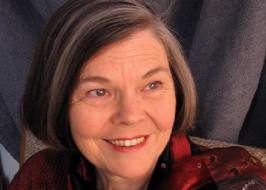
The following is a guest post written by Karen Torjesen, Ph.D., Margo L. Goldsmith Professor of Women’s Studies in Religion at Claremont Graduate University where she has helped establish graduate programs in Women’s Studies in Religion and Applied Women’s Studies. For ten years she served as Dean of the School of Religion, partnering with religious communities to create programs in comparative religion. She has published extensively on women, gender and sexuality within Christianity.

Originally posted at Huffington Post: http://www.huffingtonpost.com/karen-torjesen/torjesen-women-image-of-god_b_893367.html

Last month I preached — in South Africa — in Johannesburg — in a township — in a Pentecostal church. In Pentecostal worship, preaching is giving your testimony. So how do I translate my life into a testimony, find the threads that connect to their experience, speak in a spiritual vocabulary to these human needs, and be honest about the depths of my unknowing? I am an American academic, a historian of the early church, a professor of Women’s Studies. Where would I find the points of connection?

I could speak of my own struggling with what it meant to be a woman — inferior, valued less, silenced, excluded, constrained, exhorted to be submissive–and my discovery of the American women’s movement. However, for the context of African Christianities, where traditional tribal patriarchies merged with colonial European patriarchies, there would be little resonance. I would need an alternate framework to human rights feminism. Western notions of equality, individualism, and rights have little resonance in cultures with a strong sense of kinship and communal identity and of responsibilities based on age and gender rather than rights based on citizenship. Continue reading “Women Created in the Image of God By Karen Torjesen”

In Search of My Religious Identity By Gina Messina-Dysert

I try to avoid watching too much television – it feels like there are so many other things I should be focused on; but I was quite engrossed in the show Big Love during its run on HBO.  Its concluding season was by far my favorite because of its focus on women and faith.  In one of the final episodes the character Barbara Hendrickson struggled with whether or not to be baptized into a new church and it was a struggle I identified with greatly.  Although her faith had changed and she no longer felt connected to the doctrine of her previous church, moving on to a new community that fit her beliefs meant abandoning her family.

I was raised in a very traditional Italian/Sicilian Roman Catholic household, attended Catholic schools, and was married in the Catholic Church.  As a child, being Catholic offered me a sense of pride; however growing up I began to question the Church as I recognized the many ways it is abusive to women.  Becoming a graduate student of religion led me on a roller coaster journey that allowed me to further explore my religious identity. Continue reading “In Search of My Religious Identity By Gina Messina-Dysert”

In my defense against an abusive God… what I forget and what I am learning By Sara Frykenberg

I spent a great deal of my life believing that the smaller and smaller I made myself, the bigger God would be in my life and the more power He (sic) would have to do the good things He had planned.  If I could just get out of the way… If I could resist my humanness… If I could be “alive to Him and dead to me,” as one of the songs we sang in my college church group reminded me.  I stopped believing this when I felt I had become so small and lost so much of myself that I couldn’t bear it anymore.

I don’t know how to explain it otherwise, but I had a physically violent reaction to any more of myself disappearing.  I yelled and snapped at people like a wounded animal; and when I reached out to members of my Bible study for help, I remember one woman suggesting that maybe demons were involved in some way.  I’m not sure if she thought I was being possessed or attacked, but I remember feeling like she hadn’t heard me at all.

I didn’t understand… excuse me, couldn’t understand why the God I was always taught to believe in, the God who was in control of everything and the God who purposefully made things the way they were, would plan for all the suffering and loss I saw around me—for the loss I was experiencing.  A man who is my ally and my spirit friend listened to me explain this feeling.  He then looked up at me and asked, “You think that God is abusive, don’t you?”  And I replied, “I guess I do.” Continue reading “In my defense against an abusive God… what I forget and what I am learning By Sara Frykenberg”

M’rahemet Shel Olam: The Emwomber of the Universe By Theresa Yugar

The following is a guest post written by Theresa A. Yugar, Ph.D. Candidate in women studies in religion at Claremont Graduate University.

This poem was written modeled on a Hebrew understanding of the world and God. In contrast to an Occidental or Western understanding of God, which elevates the noun of a sentence, a Semitic understanding of God highlights the “verb” of a sentence. In this way, God is a more active presence in the creation of a more just world.

M’rahemet  Shel Olam: The Emwomber of the Universe

In the beginning the primal womb gave birth to all living creatures . . .

She gave birth to us . . . her daughters and her sons.

She is the great mother. Continue reading “M’rahemet Shel Olam: The Emwomber of the Universe By Theresa Yugar”

Exciting New Research on Matriarchal Societies By Carol P. Christ

The following is a guest post written by Carol Christ, Ph.D., a pioneer and founding mother of the Goddess, women’s spirituality, and feminist theology movements, and director of the Ariadne Institute.  She is also the author of multiple books including Rebirth of the Goddess.

Although there are some of us who disagree, the “party line” in the fields of Religious Studies and Archaeology—even among feminists– is that there never were any matriarchies and that claims about peaceful, matrifocal, sedentary, agricultural, Goddess-worshipping societies in Old Europe or elsewhere have been manufactured out of utopian longing.

I myself and most other English-speaking scholars defending Marija Gimbutas’s theories about Old Europe have studiously avoided the word “matriarchy” (speaking rather of “matrifocal, matrilineal, and matrilocal” societies) because the very word “matriarchy” conjures up the image of female-dominated societies where women ruled, waged wars, held men as slaves, and raped and abused men and boys. In fact, this fantasy tells us far more about patriarchy than about it does about matriarchy. Continue reading “Exciting New Research on Matriarchal Societies By Carol P. Christ”

Speaking of Sacrifice and Rape Culture…by Xochitl Alvizo

Recently Gina Messina-Dysert, on this blog, wrote about rape culture and the church’s role in preserving it instead of challenging the norm of violence against women and victim blaming. And in my last post, after having just watched the last installment of the Harry Potter movies, I wrote about Lily’s love for Harry as being what saves Harry and not the sacrifice of Lily’s life; my point being that we need to give more credit to love as salvific and redemptive and not to sacrifice or suffering. For too long within Christianity,  Jesus’ death and ‘sacrifice’ have been held up as the core, the essence, the heart of Christianity – wrongly giving it a necrophilic emphasis that I do not believe is actually faithful to the Christian tradition. All this reminds me of why feminism is critical to my ability to stay within Christianity and that without feminism I would not be able to be a Christian-identified woman.

Every day in both small and enormous ways I see the effects and embedded patterns that result from the long history and dominance of patriarchy/kyriarchy. Everything from sexism and racism, to capitalism and the destruction of our world, these destructive systems are part of our daily environment and affect the quality of all our lives in devastating ways. And perhaps it is because I am a woman and I am directly and existentially affected, but, sexism, misogyny and violence against women are the things that most crush my spirit and break my heart. As I see these insidiously at work in many aspects of our society, and see the effects these have on us, women and men alike, I am saddened and angered to a level for which I have yet to find words to express. I feel it, the insidious trauma of sexism, misogyny, and violence against women, I feel their effects on me and others, but do so usually in silence or in tears. Lump in my throat. No words to speak. All I can do is continue in my commitment to live in a way that is different from these – in a way that is biophilic and affirming of all people as sacred and divinely in-Spirited. Continue reading “Speaking of Sacrifice and Rape Culture…by Xochitl Alvizo”

Rape Culture and the Church By Gina Messina-Dysert

Rape culture – a culture where violence against women and victim blaming is the norm –  is alive and well in our society.   Women are taught from a young age that rape is the worst thing that could possibly happen in our lives.  As a patriarchal institution, the Church supports rape culture.  Although texts, traditions, and teachings can be a resource for women who have been victimized, they can also serve as a roadblock and encourage further victimization.

There has been a long history of women and girls being taught by the Church that their lives are of little value once their hymens are broken.  Citing the rape of Roman matron Lucretia, Church father Jerome stated that rape is the one exception for suicide. In fact, according to Jerome, “Although God is able to do all things, he cannot raise up a virgin after a fall.”*  Although he argued that at the time of the resurrection of the body every affliction and mutilation would be healed, Jerome claimed that not even the power of God could repair a broken hymen.  Likewise, Tertullian commended Lucretia for her suicide and claimed she was an example for Christian women.

Harmful ideas about women, rape, and victimization have been promoted by biblical rape texts and their interpretations.  These “rape texts” of the Bible have been utilized to typify how “real” rape victims behave and suggest that women who claim rape are suspect.  From the story of Ms. Potiphar (Genesis 39), that offers the image of a woman crying rape as one not to be trusted, to the story of Susanna (Daniel 13) that presents the notion that a rape victim should be silent, biblical texts set forth images of women and sexual violence that support rape culture. Continue reading “Rape Culture and the Church By Gina Messina-Dysert”

Catherina Halkes – In Memory and Appreciation By Mary Grey

The following is a guest post written by Mary Grey, Ph.D., Professor of Feminist Theology at St. Mary’s University College, in Twickenham, London, and author of thirteen books including A Cry for Dignity: Religion, Violence, and the Struggle of the Dalit Women in India.

On April 21, 2011  Catherina Halkes, the founding mother of Feminist Theology in Europe, inspiration to me and countless others,  prophet, mentor – and much else – died in her home city of Nijmegen, the Netherlands. She certainly changed my life: I arrived in Nijmegen desperately searching for books in Feminist Theology when writing my Ph.D. thesis. I had read everything that England had to offer, (not a lot in 1986!) I could not afford to go to America, so the Netherlands was my only option. Catherine Halkes, (or Tine, as we all called her), welcomed and encouraged me: later she would come to the public defence of my thesis in Louvain – after which I became her successor to the chair of Feminism and Christendom in Nijmegen, 1988. Life was never the same again!

Catherina Halkes

Tine blazed a trail  for women’s role in theology in the Roman Catholic Church, as well as for all women in Feminist Theology in Europe in its key developing stages. She embodied the hopes and dreams of countless women – and men- beyond the boundaries of her small country. She influenced the development of Women Studies as an academic subject in the Universities of the Netherlands and wider. Her influence cannot be restricted to a single category. Rooted in the progressive theology of the Second Vatican Council, she developed a wide-ranging pastoral theological influence on theology. It could be said  – although an evaluation is still too early-  that her legacy will be seen as opening up different areas of theology and related disciplines to the feminist lens, and being at the forefront of developments in many fields, always with a critical eyes of a Christian faith that has never wavered, despite continuing disappointment and personal suffering at the unflinchingly repressive attitudes of the Roman Catholic Church, to which she remained consistently loyal. Continue reading “Catherina Halkes – In Memory and Appreciation By Mary Grey”