KARAI KASANG: Rebirthing the Non-Patriarchal Image of God in Kachin Culture by Zau Sam

This  post is written in conjunction with the Feminist Ethics Course Dialogue project sponsored by Claremont School of Theology in the Claremont Lincoln University Consortium,  Claremont Graduate University, and directed by Grace Yia-Hei Kao.

Zau Sam is a first year MA student in Feminist Studies with interests in process theology, ecotheology, feminist and ecofeminist theologies.  He is ethnically Kachin (Jinghpaw) and from Myanmar (Burma). Zau is a minister at Yangon Kachin Baptist Church (in Myanmar) and Academic Dean of the Church-based Bible School there.  

Throughout our Feminist Ethics class, I have been thinking about Mary Daly’s concept of “Goddess” in her Gyn/Ecology: The Metaethics of Radical Feminism.  I don’t believe that there is any sound theological argument that the term “God” itself represents patriarchy. Theologically speaking, if we study the Bible systematically, particularly Genesis 1:27, it is unquestionable that God is associated with both feminine and masculine imagery.  God is imaged as both mother and father. In contrast to this nature, Mary Daly does not merely seek to erase masculine imagery from the term “God,” but the word “God” itself.  However, “Goddess” without the masculine imagery can no longer be the Perfect Goddess, just as “God” without the image of the feminine also remains imperfect.

Continue reading “KARAI KASANG: Rebirthing the Non-Patriarchal Image of God in Kachin Culture by Zau Sam”

Part I: Advent as the Active Wait By Cynthie Garrity-Bond

In the Advent reading of the Annunciation we are silent witnesses to the conversation between the Angel Gabriel and Mary  (Luke 1: 26- 40).

I would like to bring to the surface two ways of looking at the season of Advent though the scriptural story of the Annunciation.  Both require waiting, one in the stillness of surrender and the other in what I call the active wait. While we know that Advent is a season of waiting, it is also one of expectation and hope.  It is suggested we pullback from the busyness of our hectic lives, in the anticipation of renewing our connection to God and therefore ourselves in prayerful silence leading to interior excavation.  The 14th century mystic Meister Eckhart wrote, “We are celebrating the feast of the Eternal Birth which God the Father has borne and never ceases to bear in all eternity.  But if it takes place not in me, what avails it?”  And so like Mary, we wait for the Blessed Unknown to take shape within us. Continue reading “Part I: Advent as the Active Wait By Cynthie Garrity-Bond”

Dr. Mercy Oduyoye and the Ninth Annual Patricia Reif Lecture By Gina Messina-Dysert

Dr. Mercy Oduyoye is the Ninth Annual Patricia Reif Lecture speaker and will present “Women and Violence in Africa: the Plight of Widows and the Churches Response” on Monday, November 14, 2011 at 7pm at the Mudd Theater on the Claremont School of Theology campus.  Oduyoye is Africa’s foremost feminist theologian whose contributions have greatly impacted worldviews on gender and religion.  I am familiar with Oduyoye’s work and today had the honor to meet her in person and have a one on one conversation about violence against women, feminism, and religion.

Oduyoye was incredibly gracious and entertained all my questions about her work, her insights in regards to violence against women, and her thoughts about feminism and religion and where the field is going.  She explained that although some believe feminism is dead, the marginalization of women continues to be a serious issue.  Although the issues women face change over time, women continue to be oppressed.  According to Oduyoye, we must recognize that the issues women faced 50 years ago are different from the issues women face today; however this does not mean that gender-based inequalities have seized to exist.  Rather, it means that the culture has manifested itself in a new way.  We must come to recognize this and continue to work towards the eradication of gender-based violence.    Continue reading “Dr. Mercy Oduyoye and the Ninth Annual Patricia Reif Lecture By Gina Messina-Dysert”

LGBT Saints: Feminism Leads to a Queer Theology of Sainthood By Kittredge Cherry

Kittredge Cherry

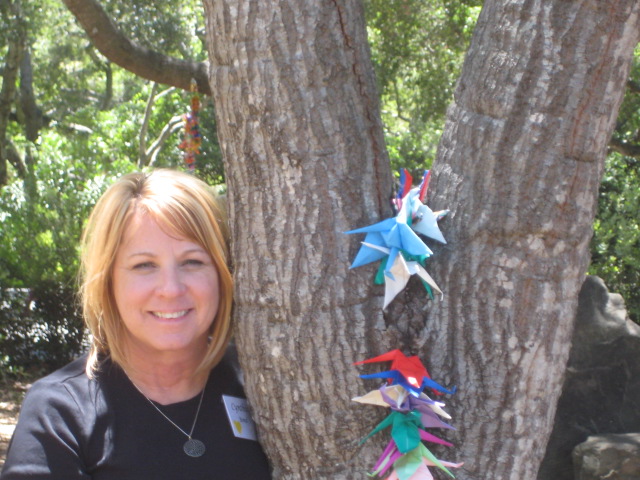
The following is a guest post written by Rev. Kittredge Cherry, lesbian Christian author and art historian who blogs about LGBT spirituality and the arts at the Jesus in Love Blog.  Her books include “Equal Rites” and “Art That Dares: Gay Jesus, Woman Christ, and More“.

Feminists have criticized saints as top-down tools of the dominant morality, but as a lesbian Christian I find that sometimes the opposite is true.  The desire for saints rises from the grassroots, and LGBT saints can shake up the status quo.  Feminist theology is helping me in a quest for new models of sainthood that lead to LGBT and queer saints.  The LGBT saints attract people with the quality of their love.  They show us not only THEIR place in history, but also OUR place — because we are all saints who are meant to embody love. Continue reading “LGBT Saints: Feminism Leads to a Queer Theology of Sainthood By Kittredge Cherry”

Forty Years and Counting: Women and Religion in the Academy By Carol P. Christ

Carol P. Christ is a founding mother in the study of women and religion, feminist theology, women’s spirituality, and the Goddess movement.  She teaches in the Women’s Spirituality program at CIIS and through Ariadne Institute offers Goddess Pilgrimages to Crete. Her books include She Who Changes and Rebirth of the Goddess and the widely used anthologies Womanspirit Rising and Weaving the Visions.

The receipt of an invitation to the Fortieth Anniversary Celebration of the Women’s Caucus in the American Academy of Religion and the Society for Biblical Literature this week, takes me back to the summer of 1971.  At the first meeting of Women Theologians at Alverno College (which was followed up at Grailville in succeeding years), I proposed that we form a feminist caucus in the field of religion, as had already been done by feminists in several other fields.

Since I was one of the few women at Alverno who had attended the annual meetings in the field of religion, I was delegated to call Harry Buck, then director of the AAR, to ask for space on the program.  Harry, who continued to support the work of women in the field through lecture series at Wilson College and the magazine Anima which he founded, offered not only space at the meetings, but a print-out of the names and addresses of all of the members of the AAR who were not obviously male.  I invited all of them to come to a feminist meeting at the AAR in Atlanta. It is hard to imagine now, but before 1971, the women who attended the AAR in any given year could probably have been counted on one hand. Continue reading “Forty Years and Counting: Women and Religion in the Academy By Carol P. Christ”

Pink Smoke, Call to Disobedience, and a Holy Shake-Up: Is it Time to Convene the Third Vatican Council? By Michele Stopera Freyhauf

This past August I wrote about the canonical warning that Fr. Roy received and the issue surrounding the exercise of conscience over church teaching.  For a more detailed explanation of the warning and the background regarding the ordination of women, please see my prior article.

October 17th (this past Tuesday), Fr. Roy Bourgeois, Erin Saiz Hanna (Executive Director of Women’s Ordination Council), Therese Koturbash (Coordinator of Canada’s Catholic Network for Women’s Equality), Nicole Sotelo (Call to Action), Miriam Duignan (Womenpriests), and about 14 other representativesof various other Catholic organizations from around the world went to the Vatican to

present a petition containing 15,000 signatures supporting full and equal participation of women as deacons, priests, and bishops in a renewed church. The group was not permitted in St. Peter’s Square because of their signs; they did not have the proper permit.  Access was also denied to the Women who wore albs/stole because their dress was considered a form of protest.  “We love our family, the Catholic Church,” stated Miriam Duignan of Women-Priests.  “We feel obliged in conscience to make our carefully considered reasons known.  In doing so, we fulfill our canon law duty to speak out, as our present Pope has encouraged us to do.”  Koturbash states “even though canon law invites our Church leaders to hear from the faithful, our leaders are silent when we try to engage.” Continue reading “Pink Smoke, Call to Disobedience, and a Holy Shake-Up: Is it Time to Convene the Third Vatican Council? By Michele Stopera Freyhauf”

Rosemary Radford Ruether’s Women and Redemption: A Theological History By Gina Messina-Dysert


Women and Redemption : A Theological History. 2nd ed. By Rosemary Radford Ruether.Minneapolis: Fortress Press. 2011.

Women and Redemption: A Theological History

Having been critically impacted by the work of Rosemary Radford Ruether, I was anxious for the release of the second edition of her crucial book, Women and Redemption: A Theological HistoryRedesigned with illustrative material, research questions, and suggested reading for further research, as well as the addition of a new chapter exploring recent developments in feminist theology, this text does not disappoint.

With this newest edition, Ruether acknowledges the ongoing journey in the field of feminist theology and emerging issues faced by women in religion and society. Examining the Christian claim of an inclusive and universal redemption in Christ, she traces paradigm shifts in understandings of gender over the last two millennia.  Ruether offers an historical exploration of women and redemption in the first five chapters followed by a global survey of contemporary feminist theologies in the final four chapters, which includes a concluding section that gives attention to “Fourth World” feminisms and post-colonialism in an effort to “bring this volume up to date” (xvii). Continue reading “Rosemary Radford Ruether’s Women and Redemption: A Theological History By Gina Messina-Dysert”

Occupying Feminism/Religion: Letting Community Consciousness Roam Free By Amy Levin

Becoming involved in the women’s movement means moving from isolation as a woman to community. Through telling my story, I reach out to other women. Through their hearing, which both affirms my story and makes it possible, they reach out to me. I am able to move, gradually, from defensiveness to openness, from fear of questioning to a deep and radical questioning of the premises from which I have lived my life. I experience relief; my anger has been heard, and I am not alone. But I am also frightened; I am undermining my own foundations. The walls come tumbling down. – Judith Plaskow, The Coming of Lilith

Lately, I’ve been thinking about this blog – what it does – in relation to my life, as it promotes the intersection between scholarship, activism, and community. I notice these three elements in most, if not all of the FAR posts, but I’ve been wondering what exactly it means to really embody a life that allows scholarship, activism, and community to mutually mix and inform each other.

Becoming involved in the women’s movement means moving from isolation as a woman to community. Through telling my story, I reach out to other women. Through their hearing, which both affirms my story and makes it possible, they reach out to me. I am able to move, gradually, from defensiveness to openness, from fear of questioning to a deep and radical questioning of the premises from which I have lived my life. I experience relief; my anger has been heard, and I am not alone. But I am also frightened; I am undermining my own foundations. The walls come tumbling down. – Judith Plaskow, The Coming of Lilith

Lately, I’ve been thinking about this blog – what it does – in relation to my life, as it promotes the intersection between scholarship, activism, and community. I notice these three elements in most, if not all of the FAR posts, but I’ve been wondering what exactly it means to really embody a life that allows scholarship, activism, and community to mutually mix and inform each other. Continue reading “Occupying Feminism/Religion: Letting Community Consciousness Roam Free By Amy Levin”

Does Christianity Open a New Space for Cambodian Women? By Katie Schubert

The following is a guest post written by Katie Schubert, a Ph.D. student in the Theology, Ethics, and Culture program at Claremont Graduate University.  Her academic interests include feminist ethics, postcolonial feminism, human rights and religion, and Southeast Asian Studies focusing on Cambodia.  Her work explores Cambodian women’s experience of empowerment through religion. 

Christianity has often been blasted (and understandably so) for its patriarchal character, for justifying violence, and for its instrumental use of power throughout its long history.  In transnational feminist literature the work of missionaries is often referred to as the epitome of problematic transnational work, automatically assumed to be evil, likely because of the history of missionaries’ collusion with violent invasion and attempted erasure of previously existing systems.

But can Christianity also be freeing, a vehicle for change, even a vehicle for feminism? Continue reading “Does Christianity Open a New Space for Cambodian Women? By Katie Schubert”

Diminished Quality of Catechesis as a Basis for Limiting the Role of a Catholic Theologian: An Examination of the Controversy Surrounding Elizabeth Johnson’s Book The Quest for the Living God By Michele Stopera Freyhauf

The biggest mistake people make is to use theology and catechesis interchangeably.  This is an important distinction that impacts the scholarly community of Catholic Theologians.  So what is the difference?  Catechesis in the Catholic tradition is an “echoing” of the faith.  Theology on the other hand, using St. Anselm’s definition, is “faith seeking understanding.”  Michael G. Lawler and Todd A. Salzman, in “Beyond Catechesis: What is the Proper Role of Theology”, states that catechesis can be included in theology, but theology is distinguished from catechesis because it “uses scholarly principles not only to communicate the truths of faith but also to explore the meanings of those truths and contemporary ways of articulating them.”  Also the theologians’ role is seen as mediator between the magisterium and the faithful. Richard P. McBrien states that the required role of a theologian is to investigate and examine the whole of the Christian tradition; what it means, how it fits, how it is developed, and how it relates to the outside the world in theory and in practice.   Ex Corde Ecclesiae also emphasizes community and dialogue, which is not always realized in practice.  Continue reading “Diminished Quality of Catechesis as a Basis for Limiting the Role of a Catholic Theologian: An Examination of the Controversy Surrounding Elizabeth Johnson’s Book The Quest for the Living God By Michele Stopera Freyhauf”