Samhain and the Goddess by Judith Shaw

The wheel of the year is turning us once again toward the dark half of the year. Here in the United States, the bright, shining days of youth and achievement receive the most attention. Death and darkness are rarely honored and often feared.

But the ancient Celts had a completely different view of their place in the world. With a strong belief in reincarnation, the Celts saw death as simply a point of transition in a very long series of lives. People honored the darkness of both night and winter as starting points. In the Celtic worldview a day began at sunset, not sunrise, and the New Year began on Samhain, October 31—the midpoint between Fall Equinox and Winter Solstice.

Samhain, one of the four great fire festivals of Celtic tradition, might have begun long before the Celts arrived in Ireland under the influence of an ancient goddess, Tlachtga (tclak ta). She was most likely from the time of the Fir Bolgs, (fair bolak) the Bronze Age inhabitants of Ireland from the East, and later incorporated into the Celtic pantheon.

Tlachtga--celtic-goddess-painting-by-judith-shaw
Tlachtga, Celtic Goddess of Sun & Lightning, gouache on paper
Continue reading “Samhain and the Goddess by Judith Shaw”

Keyvermestn by Janet Madden

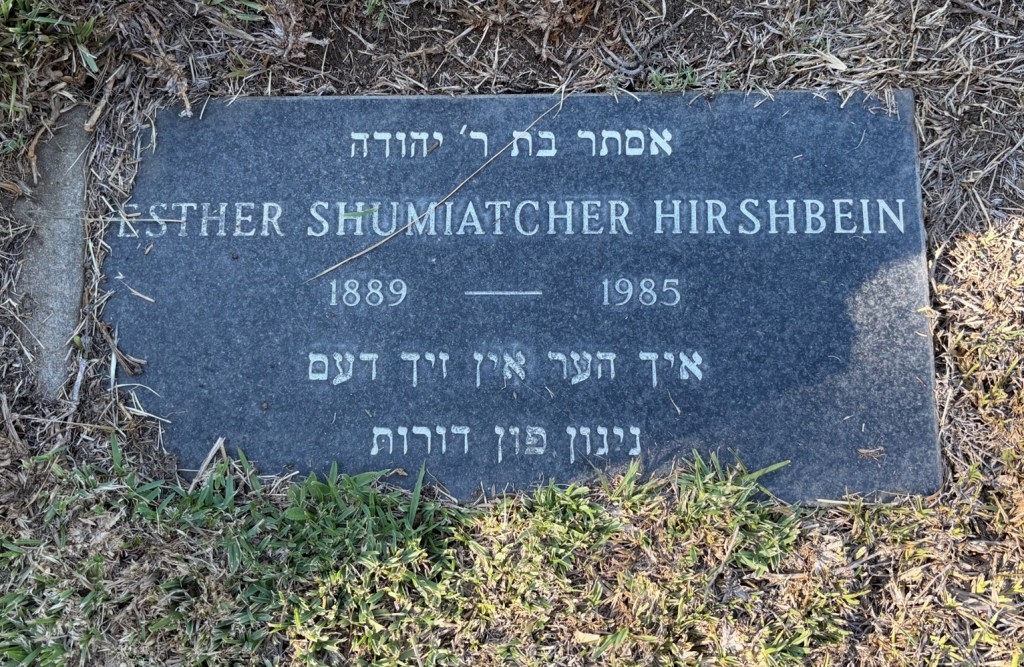
in memory of Esther Shumiatcher-Hirschbein

1.
On a sunny Elul afternoon
I kneel at your grave
a sprig of rue in my pocket.
I recite a tkhine for visiting the graveyard
and imagine that you know this ritual–
stretching string to calculate
the space your body inhabits.
The unspooling wick rests gentle
on rough-cut grass, touching
the edges of mortality,
its twists separating and connecting worlds:
the dead and the living
the past and the now
mine and yours,
a woman I never met,
a writer dead these 40 years.

Continue reading “Keyvermestn by Janet Madden”

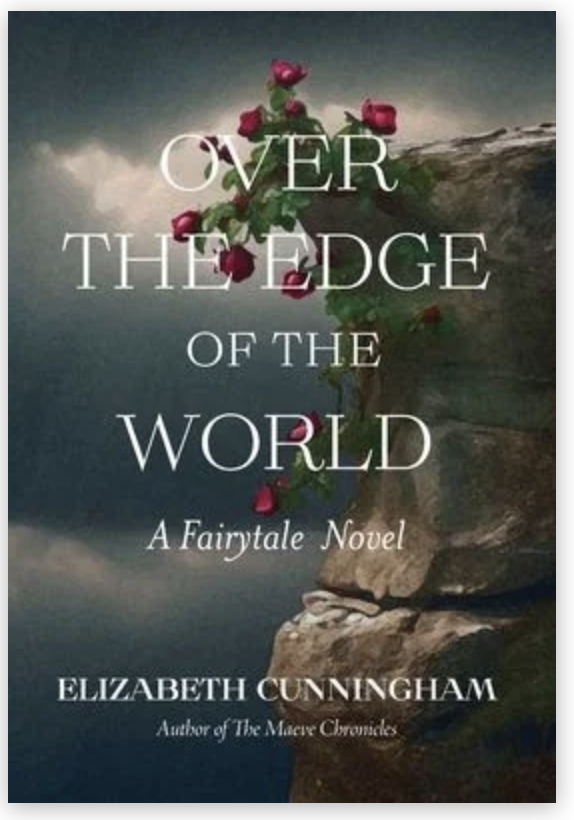
Elemental Grannies: Snippets from Over the Edge of the World, A Fairytale Novel by Elizabeth Cunningham

Introduction: An old woman, Rose begins spinning the tale the children never tire of hearing. Grannies Sweep, Spark, Dirt, and Brine, were old, so old, they forgot who they were and how they came to live where they did: a sheer pinnacle, a walking forest, an old shoe, a ship moored off a hidden shore.

But Rose has never told the whole story—to anyone. The story of a world these children have never seen, where the rich lived inside a vast dome, protected from heat and cold, rain, wind—and hunger. Nor do the children know about madness or cruelty. She has never told them about Noone, the power behind the dome, his obsession with immortality.

If she never tells these stories, who will remember the bravery of the beauty singers who daily risked the ultimate penalty—being thrown over the edge of world. Who will remember the intrepid children who danced defiantly on the dung heaps. If Rose does not tell her own story, who could imagine her birth deep inside the dome, the dangerous secret of her existence. A secret guarded her two huge aunties, once ragged outside boys, who became outrageous bodyguards in towering wigs and heels. To protect the new world and the people she loves, it is time for Rose to tell…

Continue reading “Elemental Grannies: Snippets from Over the Edge of the World, A Fairytale Novel by Elizabeth Cunningham”

Legacy of Carol P. Christ: THE CARELESS SPIRIT OF ANNIE CORLISS: TRUMPING DESPAIR IN THE NEW WORLD

This was originally posted on April 2, 2012 and updated on December 30, 2016

Annie Corliss was my great-great-grandmother. The Corliss name, also spelled Corlis, Corless, Corlies, Corlers, and Carlis, is derived from “careless” meaning someone who is “carefree” or “happy-go-lucky.”

Annie Corliss was the daughter of James and Mary Corliss, both born in Ireland. Her parents may have been tenant farmers, but given that their surname could refer to someone who doesn’t settle or own property, they may have been Irish Travellers– itinerant craft persons and traders, sometimes called tinkers because they mended cooking pots and farm implements.  “Irish Travellers are a traditionally nomadic people of ethnic Irish origin, who maintain a separate language and set of traditions. … Irish Travellers have their roots in a Celtic (and possibly pre Celtic) nomadic population in Ireland.”

Continue reading “Legacy of Carol P. Christ: THE CARELESS SPIRIT OF ANNIE CORLISS: TRUMPING DESPAIR IN THE NEW WORLD”

THE CARELESS SPIRIT OF ANNIE CORLISS: TRUMPING DESPAIR IN THE NEW WORLD by Carol P. Christ

Annie Corliss was my great-great-grandmother. The Corliss name, also spelled Corlis, Corless, Corlies, Corlers, and Carlis, is derived from “careless” meaning someone who is “carefree” or “happy-go-lucky.”

Annie Corliss was the daughter of James and Mary Corliss, both born in Ireland. Her parents may have been tenant farmers, but given that their surname could refer to someone who doesn’t settle or own property, they may have been Irish Travellers– itinerant craft persons and traders, sometimes called tinkers because they mended cooking pots and farm implements.  “Irish Travellers are a traditionally nomadic people of ethnic Irish origin, who maintain a separate language and set of traditions. … Irish Travellers have their roots in a Celtic (and possibly pre Celtic) nomadic population in Ireland.” Continue reading “THE CARELESS SPIRIT OF ANNIE CORLISS: TRUMPING DESPAIR IN THE NEW WORLD by Carol P. Christ”