
Seeking Enlightenment? Let’s Try Endarkenment by Barbara Ardinger

In the version of the calendar I follow, February 1 is the true beginning of spring. That’s because early February is when we can see the light coming back. We know spring is really coming. February opens with a holiday/holy day variously known as Imbolc, Brigid, and Groundhog Day. Imbolc is the name of a traditional Celtic festival. The word is related to milk, possibly ewes’ milk, as lambing starts around this time. Brigid, whose name means “bright one,” is a triple goddess and ruler of (1) the sun and fire (and smithcraft), (2) poetry and inspiration, and (3) healing and medicine. It’s said that the straw left over from making Brigid’s crosses and other charms has healing powers. The newer Brigid is the Catholic saint who refused to marry and became a nun. And, of course, Groundhog Day is a secular holiday that uses helpless animals to make silly predictions. (But the movie is good.)
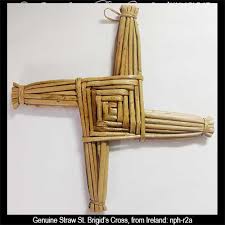
February (from the Latin word februa, which mean purification) gives us opportunities to become both enlightened and endarkened (yes, another word I invented).

ENLIGHTENMENT: “You light up my life.” A charismatic person “lights up the room.” When we become aware of something, the “lights go on” or we suddenly “see the light.” In cartoons, a light bulb turns on over the head of the guy who has the idea. Conversely, we call someone who isn’t enlightened “a dim bulb,” or maybe we say, “The lights are on but nobody’s home.”

Continue reading “Seeking Enlightenment? Let’s Try Endarkenment by Barbara Ardinger”

Religion, Race, and Feminism in an Era of Elusive Enlightenment by Salaam Green

The warrior spirit is not only the coherent ability to resist circumstances outside of one’s making; but the ability to fight the war within all of us thus managing discomfort and chaos with the force of authenticity.

Recently an enlightened friend on social media reminded me of the importance of not only portraying an awakened consciousness in the fight towards enlightened morays in an age of fascist’s dictatorships but actually waking up to unresolved veracities.

Hurriedly, I searched for a working definition of enlightenment consistent with my Christian beliefs. I finally found several however, none exactly measured up to the values that are interlaced within scriptures and thus are founding principles of Christianity and religious fundamentals.

Continue reading “Religion, Race, and Feminism in an Era of Elusive Enlightenment by Salaam Green”

Entering Winter, the Season of Darkness by Barbara Ardinger

Halloween used to be spelled “-e’en,” with the apostrophe replacing the V in “eve.” The N was probably added so the word ends in a consonant and we don’t have “hallow-wheee.” But people get lazy, and since the late 20th century, both the V and “eve” have disappeared. This holy day is the true beginning of winter. In pre-Christian Europe, it was celebrated by the wild Celts, who called October 31 Samhain (pronounced approximately SOW-un). Today it’s a major sabbat, or holy day, celebrated by most modern pagans. Although religious fundamentalists keep trying to convince us that Halloween is an evil pagan festival (emphasis on the evilness of pagans) and pressuring retailers not to sell little collectable witches, the name of this day is in fact Christian: it’s Hallowed (or Holy) Evening, or the Eve of Holy Days. In the olden days and still today in, for example, the Jewish calendar, a holy day begins when the moon rises on the evening before. October 31 precedes All Saints Day (November 1) and All Souls Day (November 2). Like Christmas Eve, it’s a holy (but seldom silent) night.

All Saints Day, the Catholic Encyclopedia informs us, was instituted in the fourth century when dioceses began to divide up and exchange the relics of martyr-saints. At first, only martyrs and St. John the Baptist were recognized, but in 609 Pope Boniface IV consecrated the Pantheon in Rome to the Blessed Virgin and all martyr-saints. The theological basis for All Souls Day is the doctrine that “souls that have not been perfectly cleansed from venial sin are debarred from the Beatific Vision.” With prayers, the living can help the dead pass through purgatory. To commemorate “the faithful departed,” the Catholic Encyclopedia further tells us, the priest recites the Office of the Dead and celebrates a Requiem Mass. The vigil for All Saints, or Hallows Eve, was also first celebrated in the fourth century. The Mexican version of this holiday is Día de los Muertos, which is also celebrated on November 1 and 2. That’s when we see the wonderful costumed skeleton figures and the sugar skulls. Like similar festivals in cultures around the globe, this is a celebration of family and ancestors.

Continue reading “Entering Winter, the Season of Darkness by Barbara Ardinger”