Yesterday the Greek people voted by an unexpectedly large margin of 6l.31% against the austerity programs insisted upon by the European creditors–despite threats from the creditors that Greece would be expelled from the European Union. This was a victory for democracy and for the 99% against the 1%. The blog I wrote on the eve of the referendum explains the situation.
Here in Greece, we are in a state of suspended animation and have been for the past 5 ½ months, since the new government of Alexis Tsipras began to negotiate with the European Commission, the European Central Bank, and the International Monetary Fund, popularly known as the Troika, regarding the Greek national debt. Each week we have heard: “a few days more and the crisis will be resolved.” We hold our breath and wait. Holding your breath for that long takes a toll on your health. Right now our banks are closed, and no one knows what the future will be.
In a previous article, I have described the devastating consequences of five years of austerity in Greece: soaring poverty, hunger, unemployment, infant mortality, pensioner deaths, malnourishment, sickness, and suicide.
Unemployment has exploded to over 25%, nearly 60% for young people. In contrast to other European nations, Greece provides virtually no unemployment benefits , and national healthcare is only available to those with a job.
The resulting humanitarian catastrophe, ruthlessly and knowingly imposed by Greece’s creditors, the IMF, EU and ECB, is unequaled by anything in European history in peacetime. People have only managed to survive thanks to the intrinsic values of Greek culture and civilisation: generosity, hospitality, connection, positivity, sustainability and mutual support.
These are the values which brought me to live in Greece; they are also the values of the traditional circle dances I have spent my life researching. And they are directly descended from the values of Old European culture as articulated by Marija Gimbutas, Carol P. Christ, and Riane Eisler.
When the economic crisis first struck in 2008, worsening every year since, I saw firsthand how deeply these values are embedded in Greek society.
Here, networks of families, neighbours and friends help one another, even when everyone is desperately struggling; this is how Greeks have managed to survive the terrible effects of the man-made ‘crisis’ until now. As family members have lost jobs, homes, businesses and prospects, often crucial support for the whole family is provided solely by one grandparent’s meager pension.
Laura and Magdalina, in northern Greece. In the course of my research, I have been welcomed in countless homes by Greek rural women. Many families may be materially poor by contemporary standards, but are rich in values of community, hospitality and sustainability. Here Magdalina is showing me samples of her peerless embroidery (featuring ancient Goddess motifs, for those who have eyes to see).
This picture of grandparents helping support their children and grandchildren throughout their lives is quite alien to western and northern Europeans, and yet it is firmly at the heart of Greek society. Elders are almost universally cared for within the family; old-age homes are extremely few. Like the sacred hospitality offered to guests and strangers since ancient times, elder care is considered a sacred responsibility, and elders themselves are universally treated with great respect.
This respect for elders is at the heart of the Greek resistance to further cuts to pensions. For the same reason, Greece does not wish to consider raising VAT (sales tax) on medicines and electricity bills, two further measures on which the lenders continue to insist, which will of course hit these vulnerable elderly the hardest. Continue reading “The Greek Crisis: Grandparents on the Table? by Laura Shannon”
Ten years ago, I went to live in Greece. I knew I would love living in a culture where everyone dances, and so it turned out. I also loved the generosity, hospitality, connection, mutual support, and positivity embodied by the dance, a set of values which goes back thousands of years to Old European culture as articulated by Marija Gimbutas, Carol P. Christ, and Riane Eisler. When the economic crisis struck in 2008, I saw firsthand how Greek people used these values to help each other survive.
On Sunday, Jan 25th, 2015, the Greek people decisively voted into power the anti-austerity party Syriza (SEER-ih-zah), after six years of intense suffering under brutal austerity measures imposed by the IMF, the EU and the European Central Bank.
These three powers together are known as the ‘troika’. The austerity measures required by them in return for the so-called ‘bailout’ loans have been devastating, causing soaring rates of poverty, hunger, unemployment, sickness, and suicide. Times are harder in Greece than in the US during the Great Depression, though you won’t hear the details in the mainstream media. And the cost of this humanitarian crisis is not being counted by anyone.
On January 26, 2015 Alexis Tsipras will be in the process of forming a new anti-austerity government in Greece. Some believe this will be a new beginning not only for Greece, but for the world–if others follow the Greeks in resisting the domination of their economies by the international monetary interests that represent the 1%.
The bondholders and the international press tend to portray the Greek economic crisis as a morality play in which foolish Greeks borrowed too much and must suffer the consequences to pay back their loans. If Greece were a lazy teenager appearing on Judge Judy, tough love might be the answer.


 Yesterday the Greek people voted by an unexpectedly large margin of 6l.31% against the austerity programs insisted upon by the European creditors–despite threats from the creditors that Greece would be expelled from the European Union. This was a victory for democracy and for the 99% against the 1%. The blog I wrote on the eve of the referendum explains the situation.
  In
In 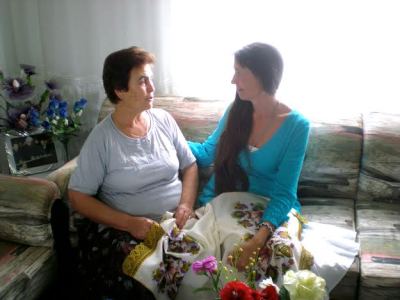


 Feminism and Religion