WHEN I SAY THAT I MISS MY MOTHER (THIRTY YEARS AFTER HER DEATH), WHAT PRECISELY AM I MISSING? by Rebe Huntman

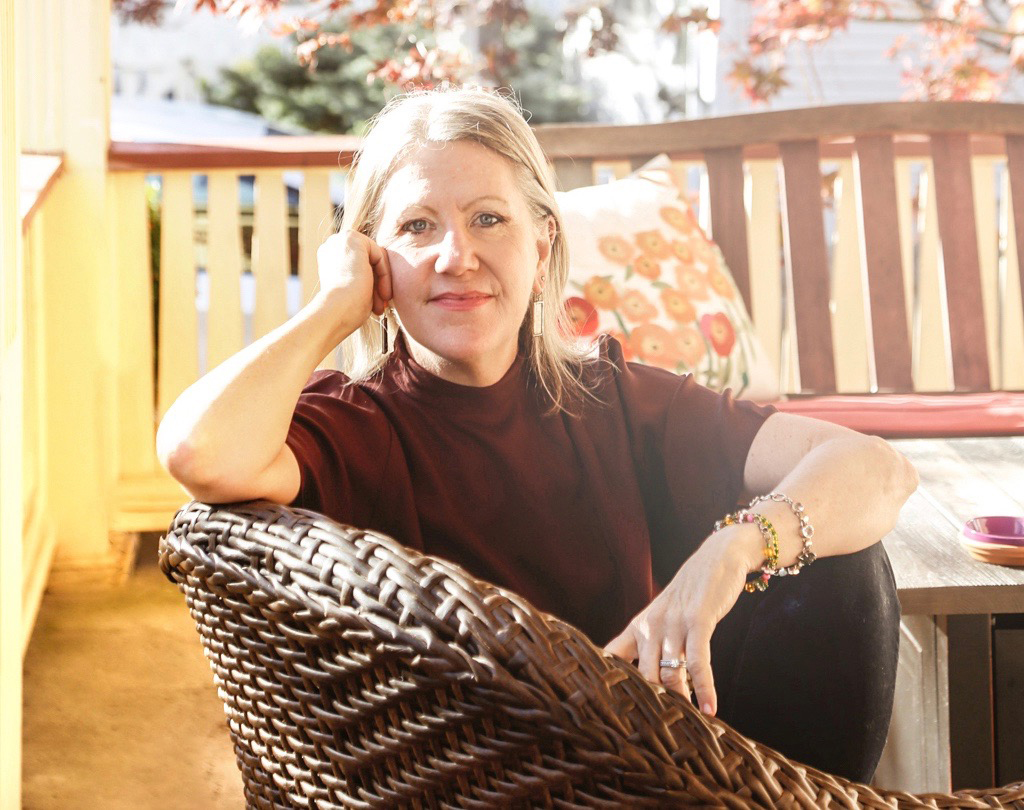
photo credit: Lac Hoang

On the eve of my 50th birthday, I found myself longing for my mother. She’d been dead thirty years—so long that I’d forgotten the sound of her voice or the temperature of her skin. And yet I missed her. Desperately. Shamefully.

The shape of that missing had something to do with the fact that I was nearing the age she’d been when she died. As a child, I’d watched my mother dress for a night of dancing with my father, lining her lips with red and stringing her neck with beads—sure signs she knew the secrets of being a woman: self-possessed; striding through the world with confidence and self-assurance; a real badass!

By now, I’d expected to feel that same sense of largesse. But the truth was that I still felt like the nineteen-year-old version of myself who had lost her mother, a child still waiting for someone to show me the way.

~*~

I wasn’t alone. My whole country seemed to have lost our way. We were surrounded by images of the feminine—pop icons and underwear models, feminists and porn stars, soccer moms and saints—all of them flashing large but pointing in different directions, unglued from whatever architecture might give them a coherent narrative: A blueprint that might hold us through the waters of our deepest anxieties. A guide who might answer our deepest questions: Who am I? Am I part of something larger than my own life? And if so, how do I fit within it?

~*~

Continue reading “WHEN I SAY THAT I MISS MY MOTHER (THIRTY YEARS AFTER HER DEATH), WHAT PRECISELY AM I MISSING? by Rebe Huntman”

O Madre Nostra Cara by Kaalii Cargill

kaalii-pic-edit

My historical novel, DAUGHTERS OF TIME, traces a line of mothers and daughters through 4000 years as they carry the way of the Goddess from ancient Sumer to the present day. In 1926, a daughter in the lineage is born in Southern Italy:

“Marias family had lived in the village and surrounding area for longer than anyone could remember. Like all the girls of her village, she grew up a Catholic, yet on Christmas Eve she gathered with the other women to perform a ritual in the Church that no man was allowed to see. The words she spoke would have been familiar to her many, many times great grandmother, Meh-tan, who once met a Queen in Ursalimmu.It did not occur to Maria that the ritual was not in keeping with the teachings of the Church; it was what her mother and all the mothers before her had done on Christmas Eve to honour the Great Mother.

Five years after writing about my fictional Maria, I stood in the church in Calabria where my grandmother Carmella once met with the other women on Christmas Eve. And the Great Mother was still there – the Madonna del Carmine a Varapodio, whom the people call “O Madre nostra cara.”

Kargill

The transition from Goddess to Madonna is very tangible in Calabria . . . Continue reading “O Madre Nostra Cara by Kaalii Cargill”

Some Friendly Advice for Female Graduate Students by Grace Yia-Hei Kao

I’m officially in “back to school” mode, as I put the finishing touches on my syllabi, get my course websites ready, and prepare my 5-year old son for Kindergarten.

As I think about new graduate students studying theology or ministry, I’m reminded that while women make-up approximately 1/3 of all seminary students nationwide, at the place at which I work  (Claremont School of Theology), they comprise half of the student body.

In honor of all the new, especially female, matriculates (at my school or elsewhere), I’m reposting below one of my first entries on this blogsite. It was entitled “Undermining Our Own Authority.” The advice I gave then still captures what I’d say now.

Continue reading “Some Friendly Advice for Female Graduate Students by Grace Yia-Hei Kao”

Undermining Our Own Authority by Grace Yia-Hei Kao

“I’ll be the first to admit that it can be difficult, if not exhausting, for women professionals to discern how to be strong and assertive (and thus be taken seriously) without coming across as arrogant or b*tchy. But there is indeed room for play between over-deference and cockiness, and the ability to code-switch while in formal settings would be a good step in the right direction for many of us.”

Whatever your take is on Madonna’s feminist bona fides, she was definitely on to something in her 2001 hit “What it Feels Like For a Girl.”  Madonna sang about the tremendous pressures females of all ages face to conform to gendered norms of physical appearance and demeanor. I want to use her lyrics to discuss some ways I have seen young women in academe subtly undermine their own authority.

Continue reading “Undermining Our Own Authority by Grace Yia-Hei Kao”