Anne Brontë’s Agnes Grey: Lifting the Veil on Cruelty, part 2 by Maria Dintino

Part 1 was posted yesterday.

Here the reader further witnesses how young Tom treats his little sisters which is consistently cruel-hearted. Tom continues to describe how he will harm the helpless birds while Agnes desperately works to persuade him otherwise:

“But you shall see me fettle ’em off. My word, but I will wallop ’em? See if I don’t now. By gum! but there’s rare sport for me in that nest.”

“But, Tom,” said I, “I shall not allow you to torture those birds. They must either be killed at once or carried back to the place you took them from, that the old birds may continue to feed them.”

“But you don’t know where that is, Madam: it’s only me and uncle Robson that knows that.”

“But if you don’t tell me, I shall kill them myself—much as I hate it.”

“You daren’t. You daren’t touch them for your life! because you know papa and mamma, and uncle Robson, would be angry. Ha, ha! I’ve caught you there, Miss!”

“I shall do what I think right in a case of this sort without consulting any one. If your papa and mamma don’t happen to approve of it, I shall be sorry to offend them; but your uncle Robson’s opinions, of course, are nothing to me.”

This young charge of Agnes’s is threatening and manipulating her as he and the other children do often. Tom doesn’t realize he has hit a nerve with Agnes, where the brutal treatment of the most vulnerable is unbearable. This situation is indicative of the overall treatment she receives as a governess, as one less-worthy-than and stripped of power, yet blamed for the misbehavior of her charges.

“So saying—urged by a sense of duty—at the risk of both making myself sick and incurring the wrath of my employers—I got a large flat stone, that had been reared up for a mouse-trap by the gardener; then, having once more vainly endeavoured to persuade the little tyrant to let the birds be carried back, I asked what he intended to do with them. With fiendish glee he commenced a list of torments; and while he was busied in the relation, I dropped the stone upon his intended victims and crushed them flat beneath it. Loud were the outcries, terrible the execrations, consequent upon this daring outrage; uncle Robson had been coming up the walk with his gun, and was just then pausing to kick his dog.

“Tom flew towards him, vowing he would make him kick me instead of Juno. Mr. Robson leant upon his gun, and laughed excessively at the violence of his nephew’s passion, and the bitter maledictions and opprobrious epithets he heaped upon me. “Well, you are a good ’un!” exclaimed he, at length, taking up his weapon and proceeding towards the house. “Damme, but the lad has some spunk in him, too. Curse me, if ever I saw a nobler little scoundrel than that. He’s beyond petticoat government already: by God! he defies mother, granny, governess, and all! Ha, ha, ha! Never mind, Tom, I’ll get you another brood to-morrow.”

Uncle Robson’s appalling show of support and praise for Tom’s egregious behavior toward his governess underscores a deeply engrained and condoned misogyny. But here our usual grin-and-bear-it Agnes will not back down or be silenced.

“If you do, Mr. Robson, I shall kill them too,” said I.

“Humph!” replied he, and having honoured me with a broad stare—which, contrary to his expectations, I sustained without flinching—he turned away with an air of supreme contempt, and stalked into the house. Tom next went to tell his mamma.”

Agnes has risked her position in defense of her values, but Uncle Robson, who it is noted never pays his nieces any heed, has instilled and upholds his nephew’s cruel ways, no doubt leading him to become a person who will kick his dogs and treat all creatures deemed lesser, including girls and women, with disdain. Little Tom is “beyond petticoat government already,” encouraged and rewarded for not listening to any of the women in his life. Following the example of his father, uncle, and many of the other men in his life, Tom has already learned to disregard what women have to say.

And Tom’s mother, Mrs. Bloomfield, buys into the dysfunction wholeheartedly. The passage continues with an interaction between Agnes and lady of the house, with her defending the violent behavior of her son and blaming Agnes for interfering with his fun and games.

“It was not her [Mrs. Bloomfield’s] way to say much on any subject; but, when she next saw me, her aspect and demeanour were doubly dark and chilled. After some casual remark about the weather, she observed—“I am sorry, Miss Grey, you should think it necessary to interfere with Master Bloomfield’s amusements; he was very much distressed about your destroying the birds.”

“When Master Bloomfield’s amusements consist in injuring sentient creatures,” I answered, “I think it my duty to interfere.”

“You seemed to have forgotten,” said she, calmly, “that the creatures were all created for our convenience.”

I thought that doctrine admitted some doubt, but merely replied—“If they were, we have no right to torment them for our amusement.”

“I think,” said she, “a child’s amusement is scarcely to be weighed against the welfare of a soulless brute.”

“But, for the child’s own sake, it ought not to be encouraged to have such amusements,” answered I, as meekly as I could, to make up for such unusual pertinacity. “‘Blessed are the merciful, for they shall obtain mercy.’”

“Oh! of course; but that refers to our conduct towards each other.”

“‘The merciful man shows mercy to his beast,’” I ventured to add.

“I think you have not shown much mercy,” replied she, with a short, bitter laugh; “killing the poor birds by wholesale in that shocking manner, and putting the dear boy to such misery for a mere whim.”

“I judged it prudent to say no more. This was the nearest approach to a quarrel I ever had with Mrs. Bloomfield; as well as the greatest number of words I ever exchanged with her at one time, since the day of my first arrival.”

Agnes knows her place and if she wants to maintain her position to both assist her family and to prove she can handle the role, she must monitor herself and bite her tongue around her employers and their children. In both Agnes’s positions, the parents are portrayed as overly indulgent and uninvolved, allowing the children to misbehave and manipulate at every turn. The parents consistently take their children’s side and refuse to see any fault in them, lest it cast blame on their parenting. This creates an especially impossible arrangement for the governess to have any influence on the children, let alone get them to care about and complete their lessons.

Anne’s resting place at St. Mary’s Church in the seaside town of Scarborough, North Yorkshire.

At a certain point in the story it becomes quite clear how all will unfold, yet one cannot stop reading!

In the end, Agnes is rewarded with the love of one she has admired for some time. The icing on this happy-ending cake is that she is also reunited with the neglected dog, Snap, that one of the young women in her charge had given away, breaking Agnes’s heart. This delightful reunion takes place on the beach, a setting Anne Brontë herself cherished.

If one cannot bear the truth, don’t read Anne Brontë’s novels. Yet, it’s worth keeping in mind that if the ugly truth is kept undercover, it’s less likely to be addressed.

Anne Brontë is a Nasty Woman Writer.

© Maria Dintino 2024

Works Cited & Resources

Brontë, Anne. Agnes Grey. The Project Gutenberg eBook of Agnes Grey, 4 December 2020. https://www.gutenberg.org/files/767/767-h/767-h.htm

Ellis, Samantha. “Anne Brontë: the sister who got there first.” The Guardian. 6 January 2017.  https://www.theguardian.com/books/2017/jan/06/anne-bronte-agnes-grey-jane-eyre-charlotte

Holland, Nick. “Agnes Grey: Nothing short of genius.” Anne Brontë Blog, 9 April 2017.  https://www.annebronte.org/2017/04/09/agnes-grey-nothing-short-of-genius/

Anne Brontë’s Agnes Grey: Lifting the Veil on Cruelty, part 1 by Maria Dintino

Moderator’s Note: This piece is in co-operation with The Nasty Women Writers Project, a site dedicated to highlighting and amplifying the voices and visions of powerful women. The site was founded by sisters Theresa and Maria Dintino. To quote Theresa, “by doing this work we are expanding our own writer’s web for nourishment and support.” This was originally posted on their site on November 19, 2024. You can see more of their posts here. 

Anne, the youngest of the Brontë sisters, penned two novels in her short life. The first was Agnes Grey (1847), then The Tenant of Wildfell Hall (1848).

A sketch of Anne by her sister Charlotte.

It’s probably safe to say that Agnes Grey is the least read and appreciated of all the Brontë novels, of which there are seven. Emily’s Wuthering Heights and Charlotte’s Jane Eyre garner the most praise and attention. But Anne’s The Tenant of Wildfell Hall is not far behind, and by some accounts leads the pack.

Interestingly, all the sisters’ first novels were released in the same year, under their pen names Currer, Ellis, and Acton Bell. First was Jane Eyre in October 1847 and then Wuthering Heights and Agnes Grey together as a ‘triple decker’ in December 1847, with Wuthering Heights making up the first two parts, and Agnes Grey the third.

Continue reading “Anne Brontë’s Agnes Grey: Lifting the Veil on Cruelty, part 1 by Maria Dintino”

Margaret Fuller (1810-1850): A Thanksgiving Revelation by Maria Dintino

Moderator’s Note: This piece is in co-operation with The Nasty Women Writers Project, a site dedicated to highlighting and amplifying the voices and visions of powerful women. The site was founded by sisters Theresa and Maria Dintino. To quote Theresa, “by doing this work we are expanding our own writer’s web for nourishment and support.” This was originally posted on their site on November 19, 2024. You can see more of their posts here. 

As the Thanksgiving holiday rolls around, I am reminded of Margaret Fuller’s Thanksgiving revelation, one she later wrote about in her journal. This revelation resonates annually for its gentle reminder of the value of being willingly and patiently engaged, of releasing resistance in the face of what cannot readily be altered.

Joy Harjo, American poet, musician, playwright, and author. She served as 23rd US Poet Laureate, the first Native American to hold that honor. (Wikipedia) Learn more at joyharjo.com.

As I re-read Fuller’s account, I think about something former US Poet Laureate Joy Harjo said when she joined us a few years back at Flagler College in St Augustine, Florida for a virtual event. I don’t remember the exact question one of the listeners asked, but I’ll never forget Harjo’s response. She answered, “Every job is a service job.”

The truth in this statement struck me. I’d never considered my many jobs over the years, both inside and outside the home, as service jobs, but indeed they were.

Continue reading “Margaret Fuller (1810-1850): A Thanksgiving Revelation by Maria Dintino”

May Sarton: Leaping the Waterfalls (1912-1995 American Woman Writer), part 1 by Marie Dintino

Moderator’s Note: This piece is in co-operation with The Nasty Women Writers Project, a site dedicated to highlighting and amplifying the voices and visions of powerful women. The site was founded by sisters Theresa and Maria Dintino. To quote Theresa, “by doing this work we are expanding our own writer’s web for nourishment and support.” This was originally posted on their site on July 13, 2021. You can see more of their posts here. 

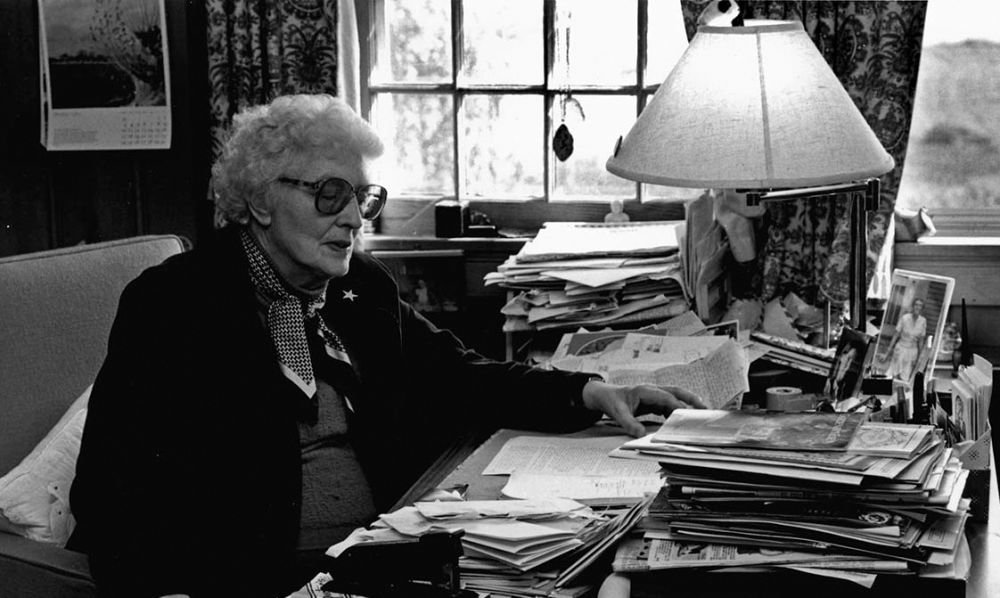
Spending summer 2021 in New Hampshire, I drive through Nelson quite often these days. Each time I do, I think of May Sarton, her years here, who she was, her art, and all she accomplished. I always glance down the road at the cemetery where she now rests.*

This post is one I wrote about May two years ago and it feels right to run it again since I feel so close to her these days. Enjoy!

May Sarton: Leaping the Waterfalls

I’d been duped. The gray-haired writer who moved to the small town of Nelson, New Hampshire in 1958 was not who I imagined. I only discovered this when I began work on this post. Far from the tranquil woman in my mind, May Sarton was an enigma, even to herself.

At forty-six, May Sarton purchased her first and only house, attempting to extract herself. In a destructive relationship, struggling to reign herself in, she sought to settle, to live where only those she wanted to see or those who really wanted to see her would visit. Plus, the dramatic move would provide fresh writing material.

May, high school graduation, Cambridge, MA 1929

Continue reading “May Sarton: Leaping the Waterfalls (1912-1995 American Woman Writer), part 1 by Marie Dintino”

Journey to Freedom: Harriet Tubman Still on the Move, part 2 by Maria Dintino

Part 1 appeared yesterday

Additional Developments

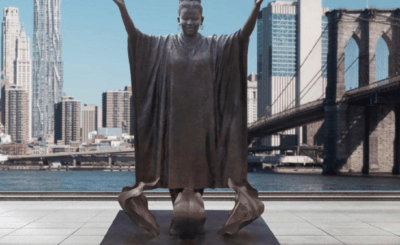
Although there’s a significant dearth of statues depicting real women in our country, Tubman’s image and legacy have done much to address this gap and put a serious dent in the bronze ceiling.

There are said to be at least 9 full-figure sculptures of Tubman with others in the works, along with plaques, busts,  parks and museums named in her honor. Also, three commemorative coins have been released, each depicting a particular phase in Tubman’s life.

Speaking of currency, the plan to replace President Andrew Jackson’s image with that of Harriet Tubman’s on the twenty-dollar bill is still in the works. It’s an important endeavor that’s taking far too long. Annie Linskey with The Philadelphia Tribune explains:

“There has never been a Black person on the U.S. currency, nor has there been a woman on a bill in the modern era, despite repeated attempts to diversify the currency.”

Continue reading “Journey to Freedom: Harriet Tubman Still on the Move, part 2 by Maria Dintino”

Journey to Freedom: Harriet Tubman Still on the Move, part 1 by Maria Dintino

Moderator’s Note: This post is brought to you by a collaboration by FAR and Nasty Women Writers written and hosted by Maria and Theresa Dintino. This post originally appeared on their website on Feb. 20,2024. It has been updated to reflect recent events. the post is subtitled: Nasty Women Writers: Breaking the Bronze Ceiling – Statues of Real Women in Public Spaces

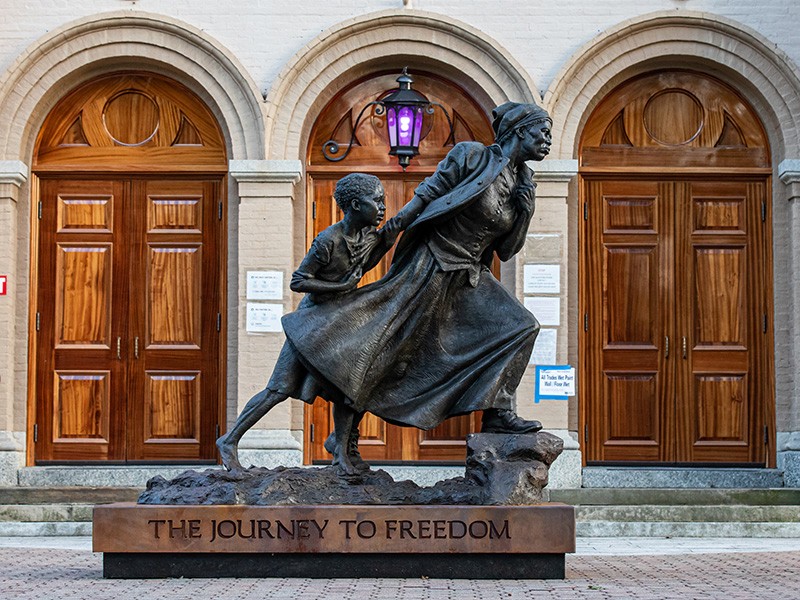
It’s quite fitting that the 9-foot bronze statue of Harriet Tubman, named Journey to Freedom is still on the move, as was Tubman for much of her life.

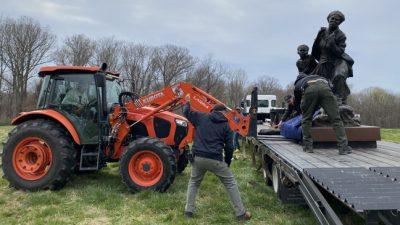
Since 2020, the statue has traveled around the country. It’s currently on Hilton Head Island, South Carolina, in Historic Mitcheville Freedom Park. The monument will remain on Hilton Head through April 2025 and from there be transported to Vienna, Virginia.

Continue reading “Journey to Freedom: Harriet Tubman Still on the Move, part 1 by Maria Dintino”

The Awakened Woman: Remembering and Reigniting Our Sacred Dreams by Woman Writer Dr. Tererai Trent by Maria Dintino

Moderator’s Note: This piece is in co-operation with The Nasty Women Writers Project, a site dedicated to highlighting and amplifying the voices and visions of powerful women. The site was founded by sisters Theresa and Maria Dintino. To quote Theresa, “by doing this work we are expanding our own writer’s web for nourishment and support.” This was originally posted on their site on January 14, 2020. You can see more of their posts here. 

Breaking the Bronze Ceiling – Statues of Real Women in Public Spaces

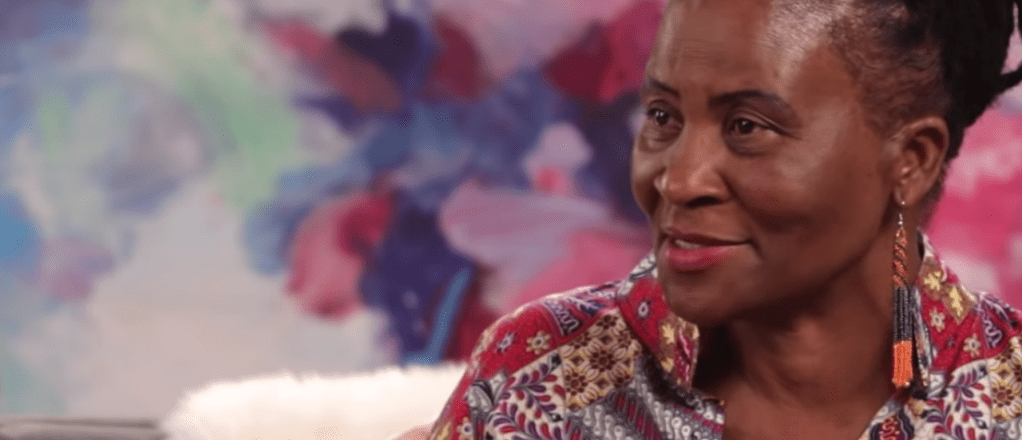
I cannot imagine a woman more deserving than Dr. Tererai Trent, her likeness one of ten life-size bronze statues unveiled in New York City on Women’s Equality Day on August 26, 2019.

Australian global public artists and activists, Gillie and Marc Schattner, revealed the statues of these inspirational women on 6th Avenue (Avenue of the Americas) that glorious summer day! Their organization, Statues for Equality, is on a mission to achieve gender balance in public statues worldwide. In NYC prior to their unveiling, only 3% of the statues depicted females; this climbed to 10% on August 26.

Continue reading “The Awakened Woman: Remembering and Reigniting Our Sacred Dreams by Woman Writer Dr. Tererai Trent by Maria Dintino”

MATILDA JOSLYN GAGE: IN HER NAME, AMERICAN WOMAN WRITER AND ACTIVIST (1826-1898), part 2 by Maria Dintino

part 1 appeared yesterday

Leila Brammer in her book Excluded from Suffrage History: Matilda Joslyn Gage, Nineteenth-Century American Feminist, explains the long-term impact of the dismissal of Gage:

“The loss of Matlida Joslyn Gage from the history of the woman suffrage movement and her ideas from the intellectual history of feminism speaks to the influence of exclusionary processes in social movements as well as their unfortunate consequences…we must remember that Joslyn Gage was intricately involved in the movement, wrote in newspapers and magazines, and published a book, but all these activities and her significant feminist thought had to be re-created and rediscovered nearly a century later”(120).

Continue reading “MATILDA JOSLYN GAGE: IN HER NAME, AMERICAN WOMAN WRITER AND ACTIVIST (1826-1898), part 2 by Maria Dintino”

MATILDA JOSLYN GAGE: IN HER NAME, AMERICAN WOMAN WRITER AND ACTIVIST (1826-1898), part 1 by Maria Dintino

Moderator’s Note: We are pleased to announce that we have formed a co-operation with The Nasty Women Writers Project, a site dedicated to highlighting and amplifying the voices and visions of powerful women. The site was founded by sisters Theresa and Maria Dintino. To quote Theresa, “by doing this work we are expanding our own writer’s web for nourishment and support.” This was originally posted on their site on January 5, 2021. You can see more of their posts here. 

A few weeks back, I came upon a term I had not heard before, the ‘Matilda Effect’. It’s defined as: a bias against acknowledging the achievements of those women scientists whose work is attributed to their male colleagues (Wikipedia). This term was coined by science historian Margaret W. Rossiter in 1993, in her essay The Matthew Matilda Effect in Science.

The Matthew Effect, labeled in 1948 and credited to Robert K Merton, and later to Harriet Zuckerman as well, refers to the way that: eminent scientists will often get more credit than a comparatively unknown researcher, even if their work is similar; it also means that credit will usually be given to researchers who are already famous (Wikipedia).

Continue reading “MATILDA JOSLYN GAGE: IN HER NAME, AMERICAN WOMAN WRITER AND ACTIVIST (1826-1898), part 1 by Maria Dintino”

FRANCESCA CACCINI (1587-1646): THE FIRST WOMAN TO COMPOSE AN OPERA by Maria Dintino

Moderator’s Note: We are pleased to announce that we are forming a co-operation with The Nasty Women Writers Project, a site dedicated to highlighting and amplifying the voices and visions of powerful women. The site was founded by sisters Theresa and Maria Dintino. To quote Theresa, “by doing this work we are expanding our own writer’s web for nourishment and support.” This was originally posted on their site on January 19, 2024. You can see more of their posts here. 

The featured image above is from the 2018 performance of Caccini’s La Liberazioine at the Morgan Library & Museum’s Gilder Lehrman Hall in New York City. Photo credit goes to Vincent Tullo of the New York Times.

I’ve always been an insomniac and of late I’ve become a regular listener of the app Calm’s sleep stories. One night I listened to an enchanting story called Songbird, written by Eurydice Da Silva and narrated by May Charters. Songbird is about Francesca Caccini, who is said to be the first woman to compose an opera, a musical genius and wonder. The next morning, I set out to learn more about her.

Continue reading “FRANCESCA CACCINI (1587-1646): THE FIRST WOMAN TO COMPOSE AN OPERA by Maria Dintino”