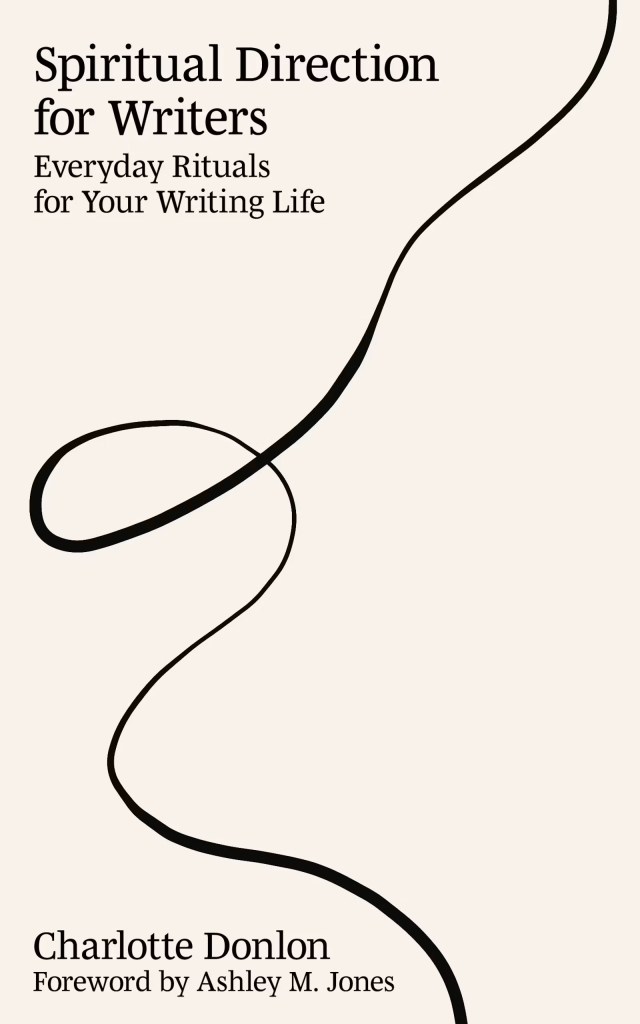
Spiritual Direction for Writers by Charlotte Donlon

I fell in love with poetry when I began graduate school for my MFA in creative writing. Looking back at the poems I was reading and writing ten years ago, I can connect the dots among my relationship with poetry, my faith, and my rejection of the patriarchy.

Most poems felt like prayers to me back then; they still do. I often say the word “poem” when I mean to say “prayer” and “prayer” when I’m trying to say “poem.” Half the time I don’t even notice that I’ve misspoken because the words and what they represent are so tightly woven together. If I don’t sense much of a personal connection to the themes of a poem I’m reading, I view it as I view a psalm that doesn’t feel especially resonant at the moment–I know that somewhere someone will feel seen and known by the words, and I am in some sense reading on their behalf, as I hope that on my harder days, people are reading and praying on mine. I trust the collective, the mystery, the power of words to connect souls and minds across time and space.

Putting myself in the way of poetry became a spiritual practice while I was struggling to find my place in the conservative evangelical denomination my husband and I had been members of for almost 20 years. We had engaged in conversations about women in the church, racial healing, mercy and justice—topics that we viewed as intimately connected to what it means to be a Christian in our everyday lives. We pushed for change. We led small groups without shying away from difficult conversations. We brought in speakers and coordinated film nights. We tried so hard to make our local church something it wasn’t–something it would never be.

Continue reading “Spiritual Direction for Writers by Charlotte Donlon”
Margaret Fuller (1810-1850): A Thanksgiving Revelation by Maria Dintino

Moderator’s Note: This piece is in co-operation with The Nasty Women Writers Project, a site dedicated to highlighting and amplifying the voices and visions of powerful women. The site was founded by sisters Theresa and Maria Dintino. To quote Theresa, “by doing this work we are expanding our own writer’s web for nourishment and support.” This was originally posted on their site on November 19, 2024. You can see more of their posts here. 

As the Thanksgiving holiday rolls around, I am reminded of Margaret Fuller’s Thanksgiving revelation, one she later wrote about in her journal. This revelation resonates annually for its gentle reminder of the value of being willingly and patiently engaged, of releasing resistance in the face of what cannot readily be altered.

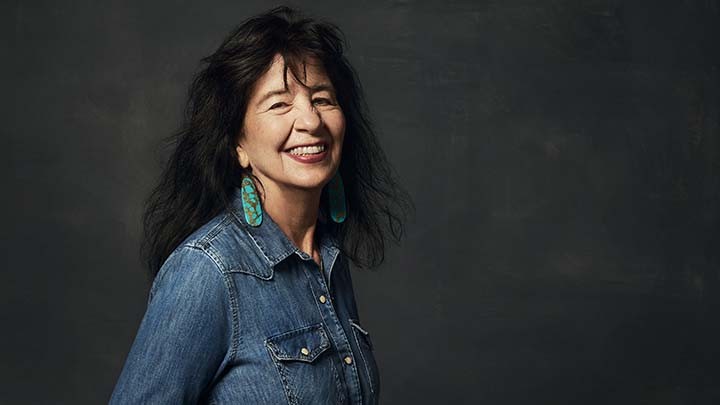
Joy Harjo, American poet, musician, playwright, and author. She served as 23rd US Poet Laureate, the first Native American to hold that honor. (Wikipedia) Learn more at joyharjo.com.

As I re-read Fuller’s account, I think about something former US Poet Laureate Joy Harjo said when she joined us a few years back at Flagler College in St Augustine, Florida for a virtual event. I don’t remember the exact question one of the listeners asked, but I’ll never forget Harjo’s response. She answered, “Every job is a service job.”

The truth in this statement struck me. I’d never considered my many jobs over the years, both inside and outside the home, as service jobs, but indeed they were.

Continue reading “Margaret Fuller (1810-1850): A Thanksgiving Revelation by Maria Dintino”

POET WARRIOR BY JOY HARJO: HEALING HEARTS AND NATIONS by Maria Dintino

Moderator’s Note: This post is presented as part of FAR’s co-operation with The Nasty Women Writers Project, a site dedicated to highlighting and amplifying the voices and visions of powerful women. The site was founded by sisters Theresa and Maria Dintino. This was posted on their site in 2021 and then again on March 21, 2023. You can see more of their posts here. 

“MY INNATE IMPULSE IS HEALING, WHICH IS ALSO STANDING UP FOR JUSTICE, WHICH CAN HEAL HEARTS AND NATIONS.” – JOY HARJO

Healing hearts and nations is what Joy Harjo does. Standing up for justice is what Joy Harjo does. Joy Harjo is a teacher and leader for our times, for all times.

When she asks this question in her book, Poet Warrior:

“What do I do with this overwhelming need for justice in my family, for my tribal nation, for those of us in this country who have been written out of the story or those who appear to be destroyed or perverted by false story?” (46),

Continue reading “POET WARRIOR BY JOY HARJO: HEALING HEARTS AND NATIONS by Maria Dintino”