
To See Ourselves in Others: Part Two by Beth Bartlett

Part 1 was posted yesterday. You can read it here.
Patriarchy is a system of male dominance, rooted in the ethos of war which legitimates violence, sanctified by religious symbols, in which men dominate women through the control of female sexuality, with the intent of passing property to male heirs, and in which men who are heroes of war are told to kill men, and are permitted to rape women, to seize land and treasures, to exploit resources, and to own or otherwise dominate conquered people.[i]Carol Christ

In Part I, I urged against the distancing that intellectual analysis can bring to situations that require us to respond from the depths of our being, and yet, how can one be a reader of this blog and not examine the intertwining strands of patriarchy, religion, women, and war in this current conflict.

Continue reading “To See Ourselves in Others: Part Two by Beth Bartlett”
To See Ourselves In Others: Part One by Beth Bartlett

I have felt both a responsibility and a reluctance to write about the escalating conflict in the Middle East.  The situation is so complex and such an unspeakable tragedy – acts of such terror and violence on the part of Hamas toward civilian populations met with even greater violence and repressive measures on the part of Israel toward the people of Gaza. It is a perplexity of the human condition that a people with such a deep history of being displaced and oppressed rather than refusing to oppress in turn, instead engage in the displacement and oppression of others that then erupts into more violence. Both are traumatized peoples acting out of deep pain and woundedness. Thousands have died, more are wounded and displaced, all will carry more trauma into generations to come. The very earth bears the scars of war. In the face of such unspeakable suffering, any kind of analysis feels distancing at a time when what we most need is to let the suffering move us to our depths.

Continue reading “To See Ourselves In Others: Part One by Beth Bartlett”

Calling All Biblical Wise Women by Rabbi Jill Hammer, PhD

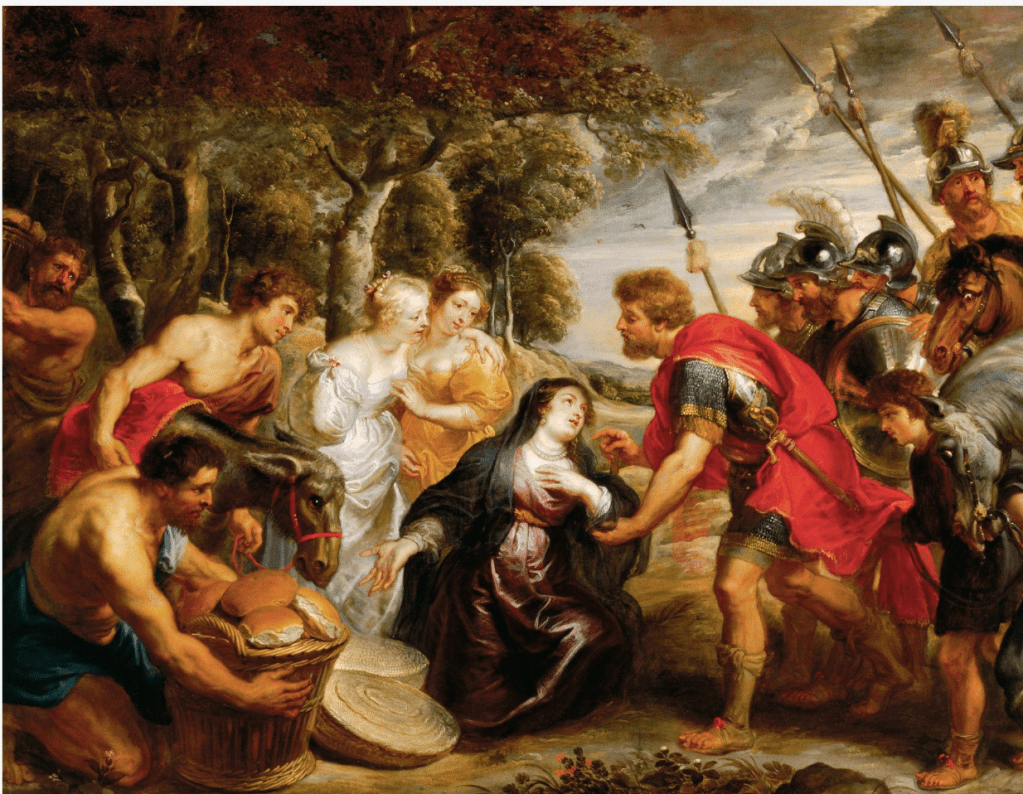
The meeting of David and Abigail by Peter Paul Rubens circa 1630

In these days when so many are afraid and aching for the people of Ukraine, and concerned about the lasting impacts of this war around the world, I cannot help thinking of the wise women of ancient Israel. These wise women, unafraid of confronting dangerous men, used their intelligence and storytelling skill to defuse violent situations between powerful adversaries and restore peace. May their wisdom be felt in the world now. 

The institution of “wise woman” appears several times in the Bible. In the Book of Samuel, a wise woman (chachamah in Hebrew, from chochmah, wisdom) steps in when there is a war, or political conflict, to promote peace. In II Samuel 14, after King David’s son Amnon rapes David’s daughter, Tamar, the king does nothing. Tamar’s full brother Absalom takes matters into his own hands and kills Amnon, then flees to another country.  David grieves for Absalom but won’t send for him. The wise woman of Tekoa appears before King David, pretending to be a woman whose sons fought, and one killed the other. The story she tells helps to reconcile King David with his son Absalom, at least temporarily.  

Continue reading “Calling All Biblical Wise Women by Rabbi Jill Hammer, PhD”

Goddess Embroideries of Ukraine as Prayers for Peace by Laura Shannon

I imagine many of you share my feelings of anger, grief and dread about this invasion of Ukraine. It is hard to know what to do and terrible to feel so powerless. I would like to offer a practice which I am finding very helpful: to meditate on Ukrainian Goddess embroideries as a prayer for peace.

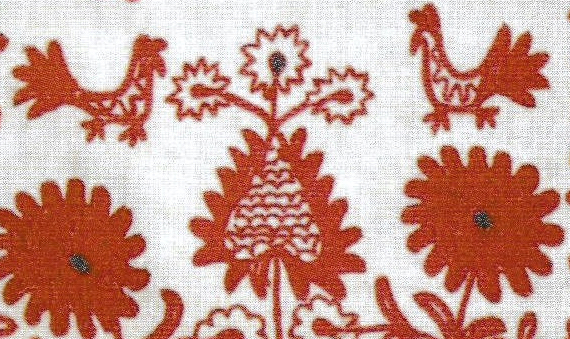
 Early 20th C. Goddess embroidery, central Ukraine. Photo: Ukrainian Museum. In The Tree of Life, the Sun, the Goddess: Symbolic Motifs in Ukrainian Folk Art, p. 99

Goddess figures are ubiquitous in Ukrainian folk art, in woven and embroidered clothing, ritual textiles, pottery, painting, and pysanky, ceremonially decorated Easter eggs (which I will explore in a future post). Goddess embroideries are also found throughout the entire Slavic world, Eastern Europe, the Near East and North Africa, and even farther afield, as Mary Kelly and Sheila Paine have diligently shown.

Continue reading “Goddess Embroideries of Ukraine as Prayers for Peace by Laura Shannon”

The Evil Powers are Well at Work and I’ve Lost My Spirit… by Valentina Khan

Valentina KhanIt has been over a year now that I haven’t been actively a part of my interfaith community. I find that especially odd since I graduated last May from the Claremont School of Theology with a Masters in Religious Leadership. I had hopes that I would be empowered by new education to go out and do more for my community, be invited to be a guest speaker at local houses of worship, or sit on panels; all the things I used to do more frequently and now have all stopped.

I am mostly to blame. Although my personal life has definitely changed with the birth of my son, two new businesses for my husband and me, and the ongoing pressure I put on myself to study for the bar exam any free moment I get (I really don’t have any leisure time to study, but thinking about it takes a lot of energy!), and now expecting my second child, I stopped attending my monthly meetings– whether it be with the Interfaith Youth Council of Orange County, the Muslim-Jewish forum of Los Angeles, or my own beloved organization “I Am Jerusalem.”

Continue reading “The Evil Powers are Well at Work and I’ve Lost My Spirit… by Valentina Khan”