 Stories about refugees in the island of Lesbos (where I live) are no longer front page news. Yet according the United Nations Refugee Agency, 12, 742 refugees arrived here in 2017. This number is equivalent to 15% of the year-around population of the island. Though this number is huge, it does not compare to the estimated 91,506 arrivals in Lesbos in 2016. In January 2018, 7572 refugees are estimated to be stranded in the island waiting for their applications for asylum to be processed. The government-controlled reception center has a capacity of 2000, but up to three times that number are being housed there at any one time, in conditions that must be described as inhumane. It is suspected that “someone” in Greece or the European Union is slowing the asylum process in order to discourage refugees from attempting to enter the EU via Lesbos.
Recently I have begun to work with the Starfish Foundation, a local non-profit helping refugees on the island, using my skills as a writer to help with outreach. Today I share with the FAR community a blog I wrote to contextualize the desperation of the situation the refugees find themselves in.
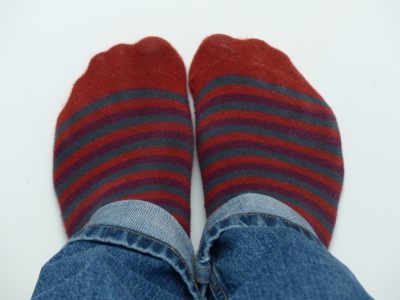
Think about it. Before you go out walking in town or countryside, you put on a pair of clean socks and then a pair of athletic shoes or boots. Your socks, which you take for granted—except when they get wet—protect your feet from blisters, callouses, and foot infections. Now imagine yourself as a refugee or migrant who has come across the wine dark sea, fleeing war. Your socks and shoes are soaking wet when you arrive. If you are lucky you will be given new shoes and socks, but then what happens?
You are taken to a refugee camp to wait for your asylum papers to be processed. While you are waiting, and it could be months or even a year, what happens to your socks? For sure they will get dirty, for you often have to walk on muddy and even sewerage infected paths in the camp. The toilets are filthy and when you have to use them, you try not to step in the muck, but sometimes you do.
You keep on wearing your socks, because you do not have a second pair. One day you decide to wash them and on that day blisters appear on your feet and become infected. You have always been a clean person, washing socks and underwear and all sorts of clothing for yourself and your family every day. But now you are facing the unknown, without even a clean pair of socks to put on your feet. You bind up your wounds and pray that your one pair of socks will not be stolen from the wire fence where you hung them out to dry.
There is an urgent need for socks in the refugee camps of Lesvos where thousands of refugees wait to learn if they will be granted asylum. It is hard for us who take our socks for granted to understand the difference a pair of clean dry socks could make in the life of a refugee. A pair of clean dry socks could make all the difference in the world.
A plea for 300 pairs of socks for men and women from Euro Relief was one of the first postings on Starfish Foundation’s web page Needs Hub, established to connect organizations helping refugees on the island of Lesvos with donors. The request for 300 pairs of socks may soon be answered, but the need for socks in the refugee camps is on-going and immense. And socks are only one of the many things—from baby strollers and wheelchairs to shampoo and toothpaste–that the refugees need. Your gift, whether large or small, really could make all the difference in the world to a vulnerable person who needs your help.
Starfish Foundation is a Greek non-profit organization. Founded at the height of the refugee migration to the Aegean islands, which was called the greatest humanitarian crisis since the Second World War, Starfish Foundation works in co-operation with other organizations dedicated to helping refugees and migrants in the island of Lesbos. Please visit Stafish’s web page Needs Hub to learn what you can do. Donate to Starfish Foundation here.
 Carol P. Christ is an internationally known writer and educator living in Molivos, Lesbos, who volunteers with Starfish Foundation to assist with writing and outreach. Carol’s new book written with Judith Plaskow, is Goddess and God in the World: Conversations in Embodied Theology. FAR Press recently released A Serpentine Path: Mysteries of the Goddess. Join Carol on the life-transforming Goddess Pilgrimage to Crete. Carol’s photo by Michael Honegger



 Parshah Vayigash covers Genesis 44:18 to 47:27. It involves the reunification of Joseph with his brothers and his father, the immigration of Jacob’s entire family to Egypt and Joseph successfully leading Egypt through famine. In other words, the parshah provides the backdrop for how the Israelites become slaves in Egypt.
 Two weeks ago, I spoke at a conference entitled “The Role of Academia and Religious Leaders in Relation to Refugees and the ‘Refugee Crisis,’” in Bratislava, Slovakia. One of the main questions of the conference was: what role do academics play in the refugee crisis? Are academics activists? Many conference presenters and attendees directly linked the two ideas. However, there were some who voiced their concern as to how in-touch academics actually are with reality and surmised that because of this academics probably weren’t activists. Wait! What? How can we not be activists?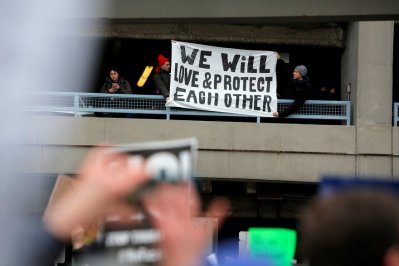
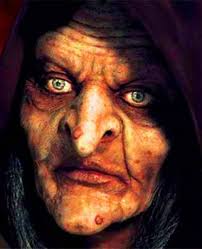 “My goodness!” she said. “I look like an old wicked witch!” She gave this some thought. “Well,” she finally said, “why not? I’m alone and friendless. I have barely enough to eat. I remember hearing about other old women who lived alone. People thought they were wicked witches. Hunh! I guess that’s what I’ll do now. Go into the wicked witch business.” She thought some more. “Well, maybe semi-wicked. My grandmother taught me stuff her grandmother taught her—how to mix potions to heal or kill. How to read the cards. All I need to do is remember those lessons. Then I can go into the wicked witch business.”
 This holiday season, in the midst of our ever-repeating mass shootings and debates about the welcoming of Syrian refugees, I have seen a meme, a pithy quote, a bumper sticker time and time again amidst my fellow liberals:
 On June 22, 2015 Carol Christ translated
  Feminism and Religion