

Viśākhā: Surrogate Mother of Buddhism by Oxana Poberejnaia

oxanaViśākhā is often called the greatest female lay follower of the Buddha. She prompted the Buddha to give numerous teachings. She also donated generously to the Sangha (monastic order). Her crowning contribution was building a monastery called Migāramātupāsāda.
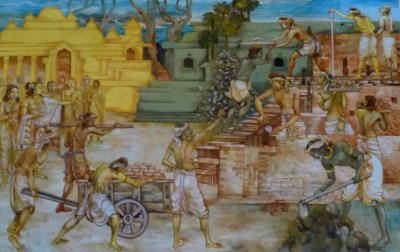
Visakha Directing the Construction of the Eastern Monastery in Savatthi, at the Nava Jetavana, Shravasti

She is said to either die as a “stream-enterer” (a person who will definitely become enlightened, no matter how many life times it will take). Another account about her afterlife says that she would live for eons in happiness in one of the divine realms before achieving the final Liberation there and then.

Viśākhā appears in numerous Suttas of Theravadin Canon. From the modern feminist point of view, the content of these discourses reinforces patriarchal gender stereotypes. In particular, Viśākhā is portrayed as a caring Mother for her relatives, Bhikkhus (Buddhist monks and nuns), and other people.

Continue reading “Viśākhā: Surrogate Mother of Buddhism by Oxana Poberejnaia”
O Tempora o mores by Oxana Poberejnaia

oxanaI have entitled this post O Tempora o mores after a sentence by Cicero, meaning “Oh what times! Oh what customs!” I would like to discuss how some of the messages we get from religious writings are defined by the age in which they were written.

As a result, I argue that it is wiser to pay more attention to the overall message of a given spiritual tradition, rather than to subject our view on a single quote.

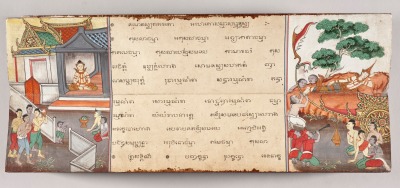
Phra_Malai_Manuscript_LACMA_M.76.93.2_(11_of_21)One of the most popular texts in Thai Buddhism (which is of Theravada tradition) is called Phra Malai Klon Suat, “Chanted Version of Phra Malai.” It was reproduced copiously in the 19th century, with the earliest version dating from the 18th century. However, its origins are believed to be more ancient, coming from the original Indian Buddhism.

Continue reading “O Tempora o mores by Oxana Poberejnaia”

The Difficult Issue of the Origins of the Buddhist Nuns’ Order by Oxana Poberejnaia

oxanaThe origins of the Buddhist Nuns ‘ Order are a contentious issue in Theravada Buddhism. Paradoxically, it is also the issue that is not discussed a lot. Which is surprising, as in current Buddhism there is a gaping hole where a Theravada Bhikkhuni (Nuns) community should be. The prevailing view is that the nuns’ full ordination line was irrevocably lost long in the past and cannot be restored.

There are separate attempts here and there to bring Theravada Nuns’ Order back, including Ajahn Brahm’s ordaining a group of nuns in Dhammasara Monastery in Australia in 2009. This resulted in severe criticism by some Theravada religious leaders and expulsion of Ajahn Brahm and the monastery he leads from the organisation of the Sangha of Wat Nong Pah Pong.

AniPemaChodronMahayana Nuns receive full ordination, as it is considered that historically the Order did not lose continuity since the Buddha’s times. However, for both Theravada and Mahayana something called “The Eight Garudhammas” – the eight heavy rules – remain a painful issue. These are the rules that the historical Buddha is supposed to have given the first nuns to whom he gave ordination. These eight rules were the condition on which the Buddha would even allow women to become Bhikkhuni.

Continue reading “The Difficult Issue of the Origins of the Buddhist Nuns’ Order by Oxana Poberejnaia”

Cultural conditions and Spiritual Subtleties by Oxana Poberejnaia

oxanaI am very grateful to Carol P. Christ and other contributors for their insightful comments and thoughtful questions to my post “Blindness of the Gals”. As I promised to Carol, here is my post that starts answering some of the issues raised in the comments.

I cannot say that it was giving birth to my daughter that first made me question my blindness to patriarchy in religion and culture. Rather, it was a gradual process of educating myself by reading works by feminist thinkers, and learning about the brave women and men who have been fighting and are still fighting for women’s rights.

Continue reading “Cultural conditions and Spiritual Subtleties by Oxana Poberejnaia”