Islamophobia and Two Tales about Muslim Women by Vanessa Rivera de la Fuente

Woman in religion is a story. This means that all that is said about women in all religions, as well as from social and natural sciences, institutions and the media is a  story, a story that is the product of the interaction of mechanisms of power, authority, and performative actions. If gender is a discourse with cultural signifiers, then the “feminine” and “women” in the religious field are too. Speech about women has functioned in patriarchal structures historically, and still now, as a mechanism of control, discipline. and punishment.

In my experience, the situation of women in Islam is generally addressed from two opposing and dominant discourses that I call: The “Idealization of Inequality” and “Demonization.” The “Idealization of Inequality” view argues that the Quran elevated the position of women from a terrible condition of objectification in the pre-Islamic Arab society, also called the age of ignorance or Jahiliyya, a time in which many girls were killed at birth, to a state of full equality and recognition of rights. According to this approach, feminism has no place in Islam. Nothing should be changed. No new hermeneutics must be allowed, since the only differences between men and women stem from biology: women can conceive, men have more physical force. But this does not mean that one is below the other, because, under the “cosmological equality” established by the revelation, the lives of women and men are equal before Allah.

The “Idealization of Inequality” view represents a hegemonic discourse that lacks a strong and coherent response to the prevalence of discriminatory practices against Muslim women based on differences beyond their biological nature: such as the prohibiting women from entering or speaking in some mosques, not allowing women to hold positions of spiritual and administrative leadership, and requiring women to worship in segregated spaces with separate entrances. None of these are related to the “equality” they attribute to the Quran. Nor does the “Idealization of Inequality” standpoint provide real and concrete answers to the other issues affecting Muslim women: institutional violence, racism, stereotypes, and the sexist burden of common narratives.

The “Demonization” view, on the other hand, argues that, with respect to religion, it is not possible to speak of the liberation of women. So all kind of activism or feminist initiatives coming from or seeking background in religion are oxymorons. Accordingly, there would not be Catholic, Muslim, or Mormon feminism or the possibility to develop feminist hermeneutics that can be taken seriously. An important feature of the “Demonization” argument is the assumed axiom of a fundamental difference between East and West, pitting the rationality of “we” against the irrationality of “them,” and the analysis of “our” development versus “their” underdevelopment:  reaffirming the western identity as superior. And here lies its most egregious shortcoming: “Demonization” acts as judge and jury in regard to the description of the oppression of all women perceived as “other.” First, it places them in the category of otherness, and then it defines the causes of discrimination suffered by them in their societies. Finally, it gives “us” the messianic ability to save “those” women. Continue reading “Islamophobia and Two Tales about Muslim Women by Vanessa Rivera de la Fuente”

Khutba “A Call to Radical and Angry Women of Faith” by Vanessa Rivera de la Fuente

Sacred+Circle+home+page+image+oneI am grateful to the Interfaith Group of Feminist Theologians and Women of Faith for remembering my spiritual affiliation and giving me the opportunity to lead this service in this fully of blessings month of Ramadan and share with you a reflection in the form of a sermon or khutba. Perhaps you know that in orthodox Islam, tradition, without any theological basis, still forbids women to speak or lead rituals. So, this is a joyful occasion for me and I want to start with my usual invocation:

I thank God for this day. I praise Allah for the paths I had to walk that led me to its light and the present day. I ask the protection of the Divine that lives in the essence of everything. and I invite my female ancestors to walk with me in this journey.

A Call to Radical and Angry Women of Faith

My dear sisters, I want to invite you this evening to reflect on what it means to be a radical woman of faith, in a context of extreme upsurge of violence against women and minoritized groups we live in. What does mean being a radical woman? As we know, radical women are feared even by their activist and feminists peers. For the mainstream of society, a radical woman is a little crazy, a little witch, a little ugly, and especially, a very angry woman.

Well, they are right about anger. To be radical is to be as outraged enough to, fearlessly and tirelessly, claim and work for the total end of all kinds of oppression. You heard it right, the total end of all kinds of oppression. For women of faith, like us, who believe in social justice as the prior duty and principle of living in the creation, the current status of abuse, violence and exploitation to which a part of humankind is subjected must provoke us to rage, anger and outrage.

Aren`t you upset? Because I am. Religious patriarchy has historically exercised and endorsed, until today, violence against women and those group defined as “minority.” This religious patriarchy, composed for priests, imams, lamas and rabbis legitimize multiple forms of exclusion of women, sexism, control of our bodies, misogyny and rape culture.

This week we mourn the death of about 50 of our Latino siblings in Orlando. We have to add to this list the hate crimes against queer people in Veracruz, México, as well the slaughtering of women in thousands of gendercides that have become the standard cover of newspapers every day, and the violence against lesbians and trans women, crimes that fail to capture the visibility and solidarity of a homophobic and androcentric society.

Without denying the misogyny and homophobia existing in my community, I want to say that the specific religion of those criminals doesn´t matter, you know why? The pernicious influence of religious patriarchy extends beyond the limits of our assemblies. People blame misogyny and LGTBQphobia on religions as if this is something external to their lives. But each day, at the school, workplace and media our society reproduces all that hetero-sexist, colonial, racist, elitist violence. Heterosexuality as a political regime, validated by hegemonic religious narratives, present in all belief systems, is a source of violence and a form of terrorism itself. Continue reading “Khutba “A Call to Radical and Angry Women of Faith” by Vanessa Rivera de la Fuente”

Feministing Sarah and Hagar by Vanessa Rivera de la Fuente

sarah_hagarOne story that has marked my life as a feminist is that of Sarah and Hagar. This is a story of pain and enmity among women under patriarchy that despite its age, is still relevant to illustrate the negative effects of the androcentric socialization. But it can also hold an inspirational feminist reading that leads us towards a reflection on the amazing possibilities of a shift in the way we women look at each other.
Feminism is a political practice, an ethics for living based in an option for women. It is not or should not be a Diploma, a chair where to work from 9:00am to 5:00pm, or an excuse to act from our own privileges against other women. In private and in public, in academia or in the street, in sexual, cultural, intellectual and religious affairs, a feminist is a feminist, without excuses or regrets.

This year I was part of the anthology “Jesus, Muhammad and The Goddess” with an essay called “The Wounded Goddess: The History of Sarah and Hagar From a Feminist Outlook” from which I want to share some excerpts with you, as follows: Continue reading “Feministing Sarah and Hagar by Vanessa Rivera de la Fuente”

Woman Is Not Anonymous by Vanessa Rivera de la Fuente

Vanessa Rivera Virginia Woolf

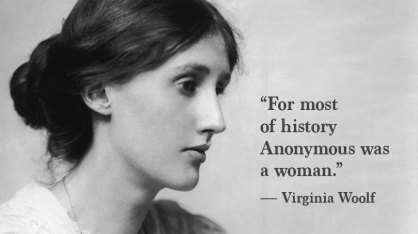
Lately I have been reflecting on this quote of Virginia Woolf: “For most of history, Anonymous was a woman.” Here she points out the deliberate invisibilization of women’s contribution in all areas of human endeavors.

Patriarchy always takes these contributions for granted. For centuries, domestic labor has been invisible and not considered work. It has put beauty over intelligence, even with women of outstanding intelligence. And in terms of knowledge and intellectual production, patriarchy has appropriated women’s ideas and in presenting them as “anonymous,” presents them as it’s own.

Thanks to the feminist reclaiming of history, and proving the accuracy of the premise that “Anonymous is woman,” we have learned of the long list of inventions that were made possible due to women’s ideas who were kept invisible, unnamed, unquoted,  and erased;  after all, she was “just” a “woman.” Continue reading “Woman Is Not Anonymous by Vanessa Rivera de la Fuente”

Islamophobia is Gender Violence and a Feminist Issue

The case of Larycia Hawkins, an African-American Christian, Associate Professor of political science at Wheaton College in the United States, who published a photo on Christmas day on Facebook wearing a headscarf in solidarity with Muslim women victims of Islamophobia, has raised a significant controversy about whether non-muslim women wearing the hiyab is useful for Muslim women and our feminists struggle in Islam or not. Beyond the debate about veils, the heated discussion that followed reminds us that Islamophobic violence against Muslim women is a gender matter that must be addressed not only by Islamic feminists, but also by all decolonial feminists.

According to Itzea Goicolea Amiano, a Spanish researcher, in her work “Feminismo y Piedad” (“Feminism and Piety”):

Gender Islamophobia is a term that refers to the xenophobic and Islamophobic attitudes mixed with sexist and misogynist discourses that oppress, discriminate and targets with a negative preference for Muslim women more than muslim men …

Continue reading “Islamophobia is Gender Violence and a Feminist Issue”

Xmas and Feminine Wisdom by Vanessa Rivera de la Fuente

Katherine-Skaggs-1029.ABUNDANCE-ANGELI am not fond of Christmas and these holidays are very difficult for me to deal with. This has nothing to do with me being a Muslim. I have been a Grinch before this. I do not like excessive noise or crowds of people. It bothers me especially the excess, the lack of meaning and loud claims for kindness and mercy to decorate our lives for few days. This year is proving particularly hard for me.

Experiences of 2015 have forced me to question the paradigms under which I had lived until now. Life is suing me for an extra effort of introspective, growth and openness and that can be painful at times. A few weeks ago, I was venting my sorrows and doubts to my mother. I told her that the last thing I wanted to do was install a Xmas tree. She looked at her own Xmas tree full of golden balls and said:

“You know why I like Christmas trees? You were born a week before Pinochet’s coup. That year, the Dictatorship forbade people to buy, sell or cut pines trees under punishment, which ruined our Xmas, since plastic ones were very expensive. I built a tree for you at home, made of brass and wood. The center was a broomstick and the branches of wire. I cut leaves from empty cans of milk. I lost a child before you came to my life. And you were born in a country that suddenly lost freedom. I could not deny you hope. The Christmas tree has been my way to convey hope. That was my present.”

Listening to my mother, Christmas took on new meaning for me, a sacred dimension. I understand the sacred as those things, memories and spaces that are vital for us, all of what gives our lives meaning, purpose, reason and inspiration. I come from a family of women where husbands, brothers and male cousins are scarce. Joy, mourning, religion, knowledge or strength have been developed and shared from womb to womb. Continue reading “Xmas and Feminine Wisdom by Vanessa Rivera de la Fuente”

All Male Panels and Feminist Movement Building by Vanessa Rivera de la Fuente

All Male Panels and Movement BuildingMaking visible gender inequities in the accessibility, acquisition, and transmission of knowledge is essential to breaking ceilings and barriers that prevent women from full participation. This is especially critical in religion, an area in which Patriarchy has bashed women in a systematic, deliberate and cumulative way throughout history.

The current dominant discourses about Muslim women: idealization (sustained by religious patriarchy) and demonization (which corresponds to a Western vision) universalize their own particular way of seeing reality through privilege and representation of female otherness and don´t give women a voice or the chance to declare an epistemic space, meaning a symbolic place of discussion where our experiences with knowledge are relevant.

This is why initiatives like “Not More All Male Panels” and other similar are important. Who dominates knowledge, manages explanations and represents reality is important. If women are excluded, then it is as if women do not exist. The inclusion of women in knowledge serves two purposes: one is simply our presence in instances where knowledge is produced; the other, which my reflection is about, concerns appropriation of knowledge and spaces via movement building.

Panels, Ceilings and Walls

A few weeks ago I participated in a panel to discuss women and feminism in religion. One of my peers spoke to me about the perception of Islamic Feminism. To paraphrase my fellow panelist:

In ‪‎Islamic‬ ‪Feminism‬, your voice is ignored and disposable, because you lack all of what gives one authority in that field– You are a Latina, living in the South, with no formal education in Islam. You have no Arab/Asian name and you speaks Spanish. In a Feminist world that should be ‪‎Intersectional‬ and ‪Decolonial‬ by definition, you’re a woman racialized in contrast with you peers. If not, tell me in how many lists of Muslims Feminist your name is written.

That was hard to hear, but led me to think that the struggle against our lack of presence in matters of knowledge has not only to do with visibility, but also with access and representation. In this sense, I wonder: who is in charge of knowledge in Islamic Feminism? What are the possibilities for any Muslim woman to become a scholar? This is still something only privileged women seem to be able to do. Continue reading “All Male Panels and Feminist Movement Building by Vanessa Rivera de la Fuente”

The Pilgrimage We Need Is Not To Mecca by Vanessa Rivera de la Fuente

PilgrimageMany people have been writing about the Hajj from a critical perspective, telling Muslims it is a time to reflect seriously and deeply about what is happening there in Saudi Arabia with our sacred places and rituals. I am here to add my two cents to that fountain but also, to say that the Hajj we need is not in Mecca.

Even when the season of Hajj is over, it is never too late to ponder the idea that Islam is a spiritual path that encourages a way of life based on reflection, responsibility and ethical decisions. The Qur’an encourages believers through many verses to reflect on the reality surrounding the way of life and on our role in it like in 29:43, 30:21, & 30:22. Among the things Muslims should reflect on and take action concerning are firm opposition to oppression and raising their voices against injustice. That is the call of Allah  in 57:25, 4:76, 4:135, 5:8, for example.

We all know what happens in Saudi Arabia. So, I wonder, if we believe the word of Allah is true: why do some of us, declaring ourselves believers, continue to fuel the arrogance, injustice and oppression of the usurpers of our Faith? Why are we still funding the oppression occurring in Saudi Arabia with performing the Hajj? Are you naive or sheep-minded or unwilling to take responsibility for the role you play in the maintenance of oppression in the name of Islam?

You pay thousands of dollars to the Saudis for the Hajj, and with that you finance a million dollar business that has nothing spiritual or halal .. yes, hear me well: HAS NOTHING HALAL ABOUT IT! Then at the Mosque, Mussala or Derga you are shocked that the Saudis invaded Yemen to kill Muslims, make deals with Zionism, leave thousands of people to die at sea without giving them shelter, torture dissidents and activists and treat women like animals.  After all of that, why do you complain if you don´t have the courage to act as prescribed by the Quran and oppose injustice? Instead you fund oppression and become part of the problem. You are an oppressor by omission and payment via PayPal or Visa! Continue reading “The Pilgrimage We Need Is Not To Mecca by Vanessa Rivera de la Fuente”

Offering My First Khutba: On Imaan & The Divine Presence by Vanessa Rivera de la Fuente

Vanessa Rivera First KhutbaFor the last 6 weeks, I’ve been living in Cape Town, South Africa. This has been a blessed opportunity to grow, to gain more knowledge, and to reach outcomes that are beneficial both for my work as an activist and for my life as individual. One of the challenges I took up, on Friday, July 24th, was to offer my first Khutba ever: the text of which I share with you:

Invocation

I thank God for this day. I praise Allah for the paths I had to walk that led me to its light and the present day. I ask the protection of the Divine that lives in the essence of everything. and I invite my female ancestors to walk with me in this journey.

On Imaan and The Divine Presence

Allah speaks about Imaan (Faith) in the Holy Qur’an in Surat number 2 verses 1 to 5, which some scholars call “The verses of faith and belief.” I like especially ayat 2 that says:

“That is the book. There is NO DOUBT in it, a guidance to those who are truly conscious.” Another translation says, “Sure, without doubt, a guidance for those who are God-fearing.”

Let’s think a moment about this:

1.- Allah tells us that the Holy Qur’an is, without doubt, surely, with complete certainty, a guide. There Is No Doubt, that we can put our faith and trust in it, and we won’t be deceived. That’s a beautiful aspect of Faith. We can trust in the promise of Allah that the Qur’an is… without doubt… a guide, a path of spiritual growth and happiness in this world and in the hereafter.

2.- A guide to whom? Allah says in the Qur’an “For those who are truly conscious and God-fearing.” Reflect on this. What kind of Imaan is that? Being “truly conscious” is being aware, and this is to be awakened, alert, attentive,and  in possession of knowledge with our senses and reasoning functioning properly. Then, this is not a blind Faith, but a conscious Faith, an Imaan over which we have direct and personal accountability. Then, the Qur’an is certainly a guide to those who are God-fearing, meaning those who are aware and accountable for their faith; for those who have come to certainty after an effort of conscious reflection, because, as God says in the Qur’an: “Truly in that there are signs for a folk who reflect” (45:13). There is no Imaan without a personal Jihad in matters of belief. Continue reading “Offering My First Khutba: On Imaan & The Divine Presence by Vanessa Rivera de la Fuente”

Women Fighting Patriarchy … Against Each Other by Vanessa Rivera de la Fuente

Vanessa Rivera de la Fuente. Women and PatriarchyIt is painful to find out the lack of understanding among feminists when controversial issues are discussed, to the point that it seems we have failed in achieving a key factor: transforming the way women perceive and interact with each other. I have been in discussions that begin with great aptitude for addressing issues about which a voice is needed, to finish in symbolic violence by stances in which I can hardly find a trace of feminism. I offer here  just a few examples.

Invisibility: At least in two situations

Case nº1: “No. A woman like you can’t be feminist. That doesn’t exist.” Denying my existence as a feminist is to deny that there are women in the world able to empower themselves, beyond your permission, in their contexts. No one owes you an explanation, by the way.

Case nº2: “She is not my ally (because she is not like me), say feminists who do not accept Muslim women as such, but praise the pro-women statements uttered by a privileged man, well advised by his publicist, because “Everyone can be feminist.” Continue reading “Women Fighting Patriarchy … Against Each Other by Vanessa Rivera de la Fuente”