

Part 1 was posted last Tuesday. You can read it here.
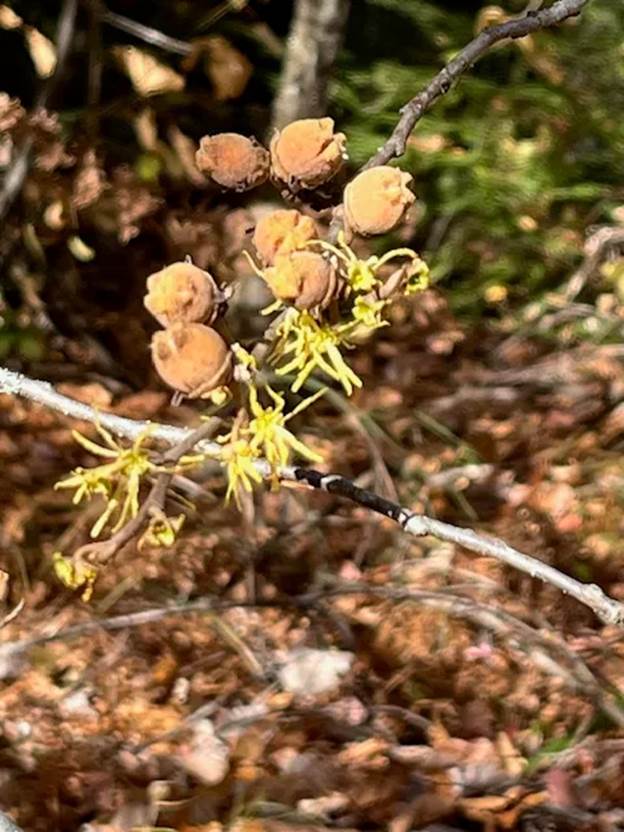
Like all flowering plants, witch hazel must be pollinated to produce fruit and seeds, and for this, it relies on insects. These include late-flying gnats and flies as well as forest-dwelling owlet moths, all drawn to the scented flowers and sweet nectar. On warm days like the few we have had this week while surrounded by an annoying cloud, I hoped these flying gnats were also busy pollinating lemony witch hazel ribbons.
The owlet moth is a nocturnal pollinator. These moths remain active after most other pollinators have died or are missing in action. Biologist and naturalist Bernd Heinrich first documented the relationship between witch hazel and owlet moths in 1987 in an article published in Scientific American.
Continue reading “Witch Hazel, a Tree that Belongs to Women! part 2 by Sara Wright” Feminism and Religion