She Changes Everything She Touches: A Reflection on Love and Loss, part 2 by Sara Wright

part 1 was posted last week, you can read it here.

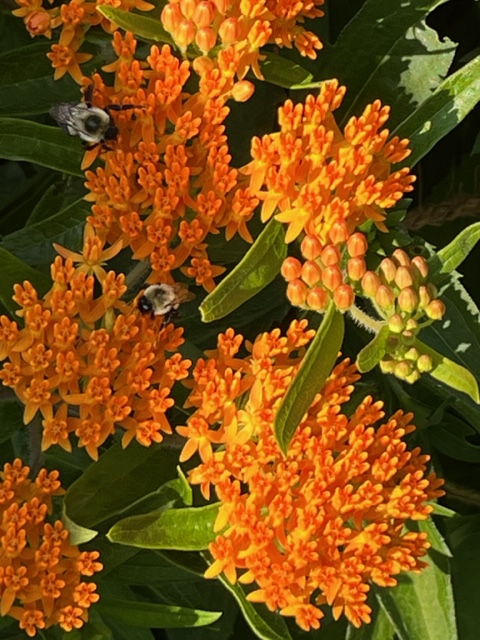
How much I like clipping by hand. Surprised by this realization I feel satisfaction rising. I was bored by this task as a child. I am delighted to meet a bevy of fat nubbly toads who appear out of the overgrown ground covers and in between sun warmed stones. Both child and ‘old woman’ feel happy that none will get mowed down by a polluting gas guzzling machine. The Peace of this Land that we belong to steals over us. Less is more. I’ll tackle the patch of bracken later, or maybe not until tomorrow. In this weather   accomplishing one simple chore a day is enough.

Well not quite. I am creating a serpentine path of fieldstone that stretches from my front door to meet the path that climbs the hill. My original intention was to have someone ‘more professional’ do the work, but they were too busy so here I am, an almost eighty-one-year-old woman, creating a mosaic out of cracked stone! ‘I am the artist’ I say, as I carry a few more irregular rocks down from the huge pile sitting in front of the garage eyeing the mosaic for the perfect fit. Illumination strikes when wind hits the stones. Blowing seeds, withered crabapple bits, pine needles and leaves into the cracks I see what is happening. Small plants like violets, creeping charlie, ground ivy, and catmint will find niches in the soil that is being created before my eyes.  Mosses will follow in the shade. Ah, Nature is going to help me craft a unique and imaginative fieldstone floor. Each time it rains the stones flatten out becoming more stable. That same feeling of satisfaction steals over me again. Vaguely I think that I may be doing something else besides laying stones in an artistic way and trusting that Nature will fill in the cracks, but I am not clear just what this might be. All I know is that it doesn’t matter how long this project takes. Process has taken precedence. This much feels just right.

Continue reading “She Changes Everything She Touches: A Reflection on Love and Loss, part 2 by Sara Wright”

Grief, Grace, and the Eco-Feminist Legacy of Katherine Paterson’s Bridge to Terabithia, part 2 by Elanur Williams

Part 1 was posted yesterday.

The Fridging Paradox

Jesse and Leslie’s autonomy is structurally threatened by the narrative’s conclusion, and Leslie’s sudden death invites a critique of the “fridging” trope, a term derived from the comic book industry describing the practice of injuring or killing a female character primarily to serve as a plot device for a male character’s emotional development. Named after a 1994 comic book scene in The Green Lantern where a hero discovers his murdered girlfriend in a refrigerator, the term critiques the tendency in fiction to treat female characters as disposable tools for male growth rather than as autonomous individuals with their own arcs.

In Bridge to Terabithia, this sacrifice unfolds in three critical movements:

  1. The Intersection of the Boundary: When the narrative notes, “The rain had been falling all night… the creek would be angry,” it signals the reassertion of the physical world. The creek acts as the boundary between the wild sanctuary and the dangerous, restrictive reality. By having the creek kill her, the text suggests that the “wild” or “feminine” space is inherently dangerous and incompatible with long-term survival.
  1. The Reduction to Catalyst: In the aftermath, the text frames Leslie’s existence through her utility to Jesse. He realizes “it was up to him to pay back to the world in beauty and caring what Leslie had loaned him in vision and strength.” This is the core of the “fridging” critique; Leslie is explicitly framed as a “loaned” object, and as a resource for Jesse, rather than a person with her own trajectory.
  2. The Post-Death Domesticization: Finally, Jesse assumes control: “He had to teach May Belle, for he was the king of Terabithia, and it was his duty to pass on the crown.” This shift in language marks the institutionalization of their anarchic space. By bringing May Belle in, Jesse settles the “frontier,” turning a radical, feminist space into a legacy for the next generation, effectively cementing Leslie as a relic of the past.

This tension is most visible in how the forest is described. When Leslie is alive, the forest is an active, creative force. Paterson describes how “Leslie had turned into a beautiful wild creature.” Yet, after she is dead, the forest becomes a site of mourning and memory, described as “still, and the creek was clear and cool.”

Would the novel have been more or less feminist if Leslie had lived? Does her death (within the context of a 1970s children’s book) actually provide the only way for a “non-conforming” girl to be fully accepted by the patriarchal structures of Lark Creek?

To view Leslie solely as a plot device is to overlook the novel’s sophisticated, often brutal, exploration of grief as a catalyst for moral maturity. While the “fridging” critique highlights a structural reliance on her death, one might argue Paterson is engaging in a deeper inquiry regarding the necessity of loss in the formation of the self. In this light, Leslie’s death serves not to diminish her agency, but to transition the novel from a fantasy of escapism into a somber, realistic lesson on the burden of growth. She is not merely a tool for Jesse’s development; rather, her death forces the permanent integration of her radical, imaginative spirit into the “real” world. By “loaning” him her vision, Leslie ensures her feminist influence survives her physical body, compelling Jesse to carry that disruptive, egalitarian force into a resistant, patriarchal landscape. She becomes an internalized mentor, suggesting that a true feminist impact is measured by how deeply one’s vision survives in those who remain. Terabithia ceases to be a secret getaway and becomes a foundation for the transformation of others.

It’s also important to keep in mind Paterson writes from a place of deep, personal vulnerability. She began the novel to help her son process the sudden death of his best friend. When we realize this, the “fridging” trope takes on a different hue. While the structural critique holds, it is also an attempt by an author to offer healing for her son.

The Secular Saint: Aesthetic Grace and Mentorship

Some may argue Miss Edmunds serves as the narrative’s secular saint of aesthetic grace. By treating Jesse’s art with profound respect, she acts as a bridge to a wider world, a living testament that one can exist within a rural community without being confined by its rigid gendered expectations. She provides institutional permission for Jesse to value his own sensitivity, effectively acting as the precursor to the creative sanctuary he will later build. While Leslie represents the collaborative, anarchic spirit of childhood, Miss Edmunds offers a glimpse of that same autonomy realized in adulthood. She is the professional, self-actualized woman of the story, and her presence proves to Jesse there is an alternative way to be, an existence defined by the pursuit of beauty and individual purpose.

Looking back, I can see how Leslie’s golden room and her expansive approach to faith taught me one of my first lessons in feminism, religion, and spirituality. It showed me that the borders we build, whether between countries, genders, or theological doctrines, are often artificial. Although the narrative’s reliance on “fridging” reveals a patriarchal constraint, the legacy of Leslie’s vision remains, and continues to inspire.

This piece is part of a series of explorations on children’s literature, spirituality and feminism by Elanur Williams. FAR has posted several of them.
Two pieces on The Chronicles of Narnia which you can read here and here.
Anne of Green Gables which you can read here.

Bibliography and Recommended Reading:

Escaping to Nature: Ecofeminism in the Children’s Book Bridge to Terabithia, by Anandayu Suri Ardini (2023):

https://www.researchgate.net/publication/372862789_Escaping_to_Nature_Ecofeminism_in_the_Children’s_Book_Bridge_to_Terabithia

BIO: Elanur Williams writes from Dublin, Ireland. She holds an MPhil in Children’s Literature and a MS Ed in Literacy Studies. She is a teacher who specializes in reading and writing instruction, as well as a poet whose work has appeared in Eunoia Review, the Ekphrastic Review, Halfway Down the Stairs, and Cosmic Daffodil, among others. Above all, she is inspired daily by her daughter, whose presence imbues her life with joy, magic, and a sense of limitless possibility.

Grief, Grace, and the Eco-Feminist Legacy of Katherine Paterson’s Bridge to Terabithia, part 1 by Elanur Williams

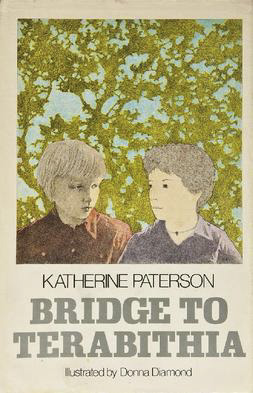
Bridge to Terabithia, First Edition (1977), by Katherine Paterson. Illustrated by Donna Diamond.

There are stories that define our childhoods, and then there are the rare narratives that teach us how to survive the contradictions of adulthood. When my family relocated from Istanbul to a Philadelphia suburb during my elementary school years, I remember feeling suspended between two universes. My efforts to map suburbia onto the vibrant textures of the home I had left behind corresponded with my encounter with Katherine Paterson’s classic novel, Bridge to Terabithia, and its sibling text, Jacob Have I Loved. I remember being completely mesmerized by Leslie Burke’s house, specifically the room she and her parents painted gold. To a child who felt uprooted and out of place, that golden room was a sanctuary of pure possibility. The book was also one of the first I’d encountered that dared to tackle the complexities of grief.

Published in 1977, Bridge to Terabithia reflects the burgeoning spirit of Second-Wave Feminism, a movement that championed the personal as political and sought to dismantle the rigid gender roles of the post-war era. Leslie’s rebellion, however, carries a bittersweet resonance for the modern reader; while her struggle fits the Second-Wave pursuit of liberation, her eventual “fridging” reflects the persistent literary habit of the era to treat female autonomy as a temporary, tragic catalyst for the male hero’s journey.

Continue reading “Grief, Grace, and the Eco-Feminist Legacy of Katherine Paterson’s Bridge to Terabithia, part 1 by Elanur Williams”

Our Children by Annelinde Metzner

 How do we bring our children along?  How do we share with them all that is best about being human?  All too often, I hear of events in children’s lives that no one should ever experience. Children are being subjected to trauma that will reverberate through all our lives. We are all one people, and all children are our own.  These poems are just a few simple meditations on how to bring children along with the best we have to give. My own son passed on in 2004, and I honor all that we taught each other.

The Poet Walks the Woods               

“That’s what I’m here for!” says the poet
to the young family,
gazing downward beside the trail.
“The Trillium- they’re called ephemerals
because they don’t last long!
They bloom in spring
just before the leaves are on the trees.
Three petals, three leaves, three everything.
So, Trillium.”
The littlest girl stows away a note
in some memory pocket.
“…When I’m an old woman,
I’ll walk the woods
looking for Trillium…”

Continue reading “Our Children by Annelinde Metzner”

Missing Trees by Beth Bartlett

“Tree of Life” photo by author

The gap in the trees is a painful reminder of the one that is missing. This past winter an ice and wind storm late in the season brought down the aspen that had sheltered our deck. Its absence is more than a hole in the canopy – it is a hole in the heart. I miss its friendly presence, its shelter, its shade.  I suspect I never fully appreciated it until now.  It is just the latest in a long line of missing trees – trees lost to disease, insects, climate change.

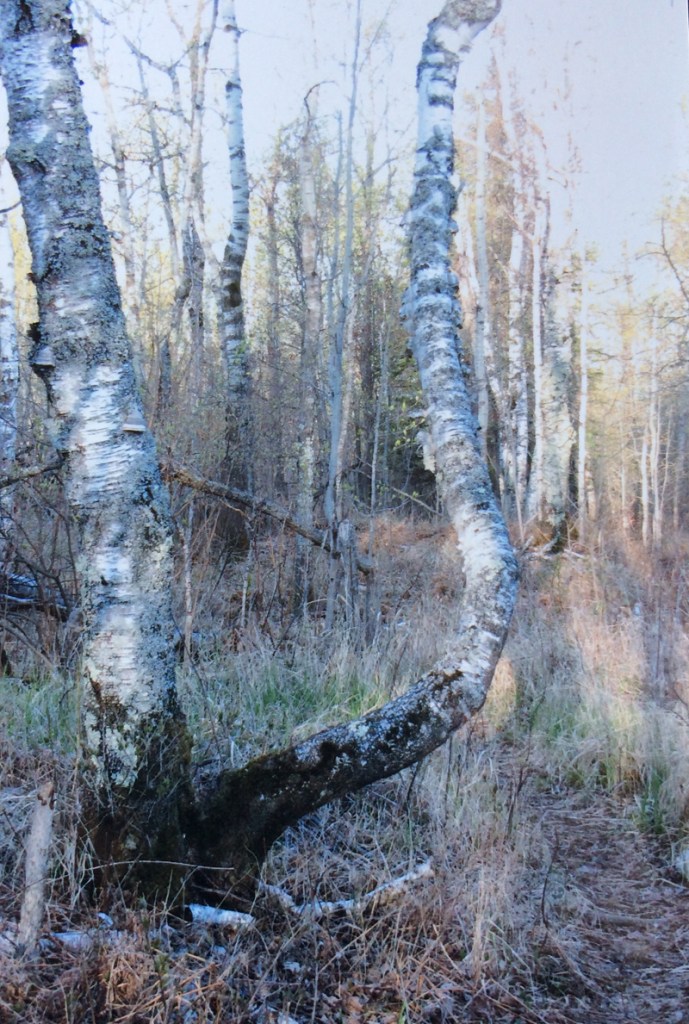
The paper birch were the first to go. When my dad first bought our family cottage in 1964, paper birch trees arched delicately over the cottage, framing it in white branches against the blue sky.  Another large birch stood as a landmark on the top of the hill, and another by the lake was the centerpiece of the circular bench built around it.  Several more lined the path down to the lake and dotted the hillside.

“Mama” birch, photo by author

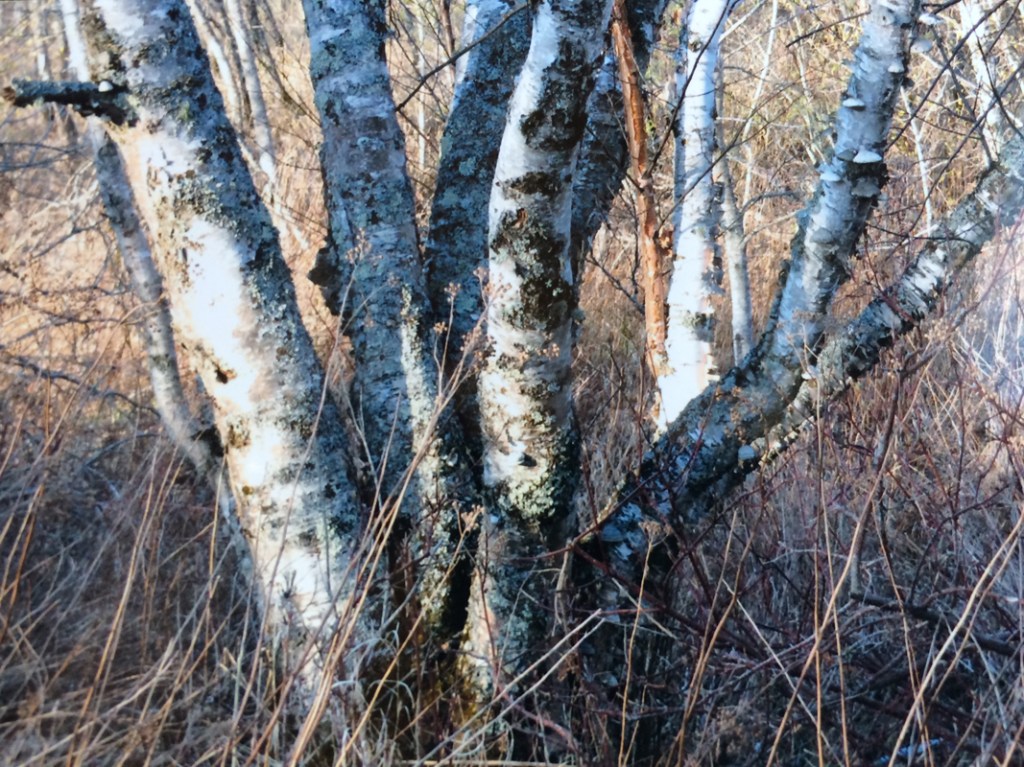
When we bought our home in Duluth, paper birches graced the yard on all sides.  In the woods out back I’d befriended several of the birches, naming them according to their distinctive shapes – there was the “Mama” birch with its bulging pregnant belly, the three then four-clump birches that I’d named after our music group – “Wild By Nature,” and the glorious “Tree of Life” – a magnificent clump birch of at least twenty connected trunks that served as a talisman for me during the most difficult days of my illness and for many years after my transplant. 

Continue reading “Missing Trees by Beth Bartlett”

The Glorians written by Terry Tempest Williams, discussion by Sara Wright

The Glorians: Visitations from the Holy Ordinary is an astonishing book written by internationally acclaimed  writer Terry Tempest Willams that is predicated on the necessity of bearing compassionate witness to all beings during these troubled times. It is a book about family, friends, earth and dreams, the later of which inspired the title. The volume is composed of a series of essays, only one of which I will discuss here.

Terry, who teaches at Harvard Divinity School, writes about the Divinity Tree, a two-hundred-year-old red oak that was removed from the Commons. Listening to this narrative as a ‘Tree Woman’ was/is excruciatingly painful. My stomach roils in misery, but I am compelled to listen, over and over, because this is my story too.

I came to the mountains because I was in love with trees and bears discovering an evergreen paradise or so I thought until the dreams began. In my night stories all the trees were being slaughtered and there was nothing I could do. Since I was surrounded by fragrant forests that stretched from horizon to horizon, I could make no sense of these terrifying warnings and let them be.

Continue reading “The Glorians written by Terry Tempest Williams, discussion by Sara Wright”

Roots in the Air by Sara Wright

Passionflower Dance

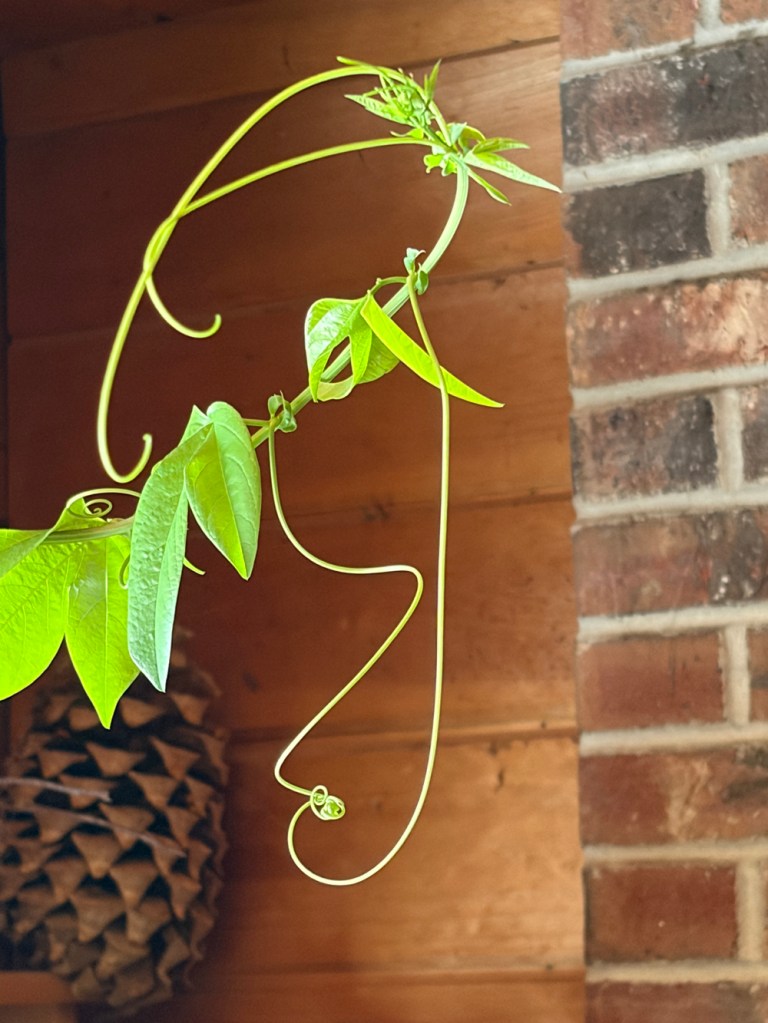
I am a plant woman, that is a woman who has an intimate relationship with plants. As an ecofeminist writer I believe that women and plants have a ‘natural’ connection to one another. We see this mythologically as women turn into trees, hold ceremonies under trees, listen to them for wisdom, take comfort from them in distress.

Why do we look to the stars for direction and ignore the urgent messages about interspecies communication that trees and plants convey to us here on earth?

I think this is a very important question to be asking when our planet is facing ecological collapse.

What follows is one woman’s story.

Continue reading “Roots in the Air by Sara Wright”

Mountain Mother by Sara Wright

When I picked berries in the mountain field that first summer, I could sense wave after wave of feeling rising up – seeping into my feet from the ground below. The sun spread blue heat over the hills, and I bathed in summer’s glow. For the first time in my life I felt visible, witnessed for who I really was and accepted: I was loved –unconditionally loved by a Mother. That She was a mountain field didn’t seem odd at all. I loved her back – fiercely. I marveled. To be in love with my goddess, the one that lived in this field, brook, young forest, the one who inhabited each of these rolling hills and mountains seemed so natural. Remarkably, She celebrated my presence not only by gifting me with a love that ran like a great underground river beneath me but because She created a palpable sense of belonging. I belonged to Her. She loved me just because I was. I couldn’t get over it. My gratitude knew no bounds. All I wanted to do was to serve her…

She was visible in so many ways – in the riot of purple and green jack in the pulpits that sprung out of the sphagnum moss behind the camp in the moist valley that often filled with water, through the solitary pink lady slipper that appeared by the bridge that crossed the brook, the tiny white swamp violets, the blue fringed gentians and pearl-white turtleheads that popped up in the meadow fed by it’s own spring in the center of the field.

I glimpsed her face in the cedar that sprung to life in the rich wooded soil that bordered the brook, she sang to me from the wild apple branches that bowed over rippling water, she blinked through each firefly night, burst into a “high” when thunder and lightening churned up the waters and the brook overflowed – White Fire crackling out of her clouds and slamming into me.

Continue reading “Mountain Mother by Sara Wright”

Broken Roots? by Sara Wright

I write to
find out
who I am
becoming
and when
I implored
Sedna
to take
me back
to the sea
I came
to know
my roots
to Place
were
broken
by age
by betrayal
by loneliness
by advocating
for a planet
animals, trees
by people
who do not listen
by people who
will not see

like Mother Pine
moaning
outside
my door
I  too
moan
Unforgiving
Ice and Wind
Treachery on every path
Trees encased
in White

At the Bottom
of the Well
Water Murmured
accept
this Break

Underground
Mycorrhizal
threads remain
your Guides

Sedna
rises
meets you
on
dry land
for the second
time in
one year

Continue reading “Broken Roots? by Sara Wright”

A Goose Tale by Sara Wright

Coalie and the Goose

It’s the last day of November and small groups Canadian geese are still drifting around on patches of open water. I saw two small groups on North Pond. Although many skeins have flown south along the Atlantic flyway – they can migrate south as far as Mexico and South America -some geese spend the winter along coastal areas in Maine if food resources are available. It’s hard to know whether these groups are migrators from Canada who have stopped over to rest or a few that winter over nearby on the Kennebec or elsewhere along the southern coast of Maine. With warming temperatures Canadian Geese migratory patterns are changing.

Soon after their arrival the female disappears to lay 8 – 10 eggs in her nest that is securely hidden in the reeds while her mate stands watch. When the goslings are born both parents escort them through the water, one parent in front, the other behind. If threatened the male becomes aggressive, a totally appropriate behavior from my point of view. When the little ones are big enough these birds join other families for the rest of the summer and some will probably migrate together. These are such community oriented birds. They make it a habit to get along. Geese are omnivores that will eat almost anything and they mate for life, returning to their designated ‘home’ places to breed year after year. Even before the chicks arrive geese are drawn to some of the 400 million lawns in this country (especially those that are close to water) much to the dismay of some.

Continue reading “A Goose Tale by Sara Wright”