From the Archives: Awakening to the Mystery of Absolute Beginnings by Carolyn Lee Boyd

This was originally posted on February 1, 2013

As I rise at 5:30 each morning, my spirit reawakens in a between-the-worlds realm of absolute beginnings. For those few minutes of quiet and slowly revealing dawn light, I revel in mystical newness, endless possibility, a horizon that is only the future.  By 7 am, when I can hear cars on the road and see television screens through windows as I walk to work, normal, plodding space-time has taken over, leaving just a shimmer to linger in my memory.

I remember living all day with this feeling of being at the very beginning of my world when I was a young child and everything that I did and thought was for the first time. I believed this sense was lost forever when I was later taught by society, as so many of us are, that I was only the tiniest, most ordinary mite in a world already built many eons ago by people with a much brighter genius than me. 

And then, on my 25th birthday, I heard Merlin Stone speak about When God Was a Woman As I truly envisioned the Divine with a female face for the first time in my life, I felt a joyful excitement as if I had been transported back to that first second in human history when the insight dawned that a sacred presence exists within ourselves and all of creation that is unseen, but real, and that it can be expressed and shared. Because I had never been taught about Goddess or how to interact with Her, I was able to discover and act on what I knew intuitively within myself about Her in a way that was completely my own. With great fervor I began my own individual journey of the spirit and found that this exhilarating profound newness never left me because the territory I was exploring was completely unfamiliar to me in my own experience.

Continue reading “From the Archives: Awakening to the Mystery of Absolute Beginnings by Carolyn Lee Boyd”

From the Archives: Sacred Food for Body and Soul by Carolyn Lee Boyd

This was originally posted on Jan 29, 2022.

Today is Wives’ Feast Day, a holiday celebrated in Ireland and northern England on February 2, the same day as Imbolc, Candlemas, and St. Bridget’s Feast Day. On this holiday, women (in Old English, “wife” meant simply woman) would gather together and enjoy making and sharing delicious foods with each other, honoring themselves and their work providing nourishment and other aspects of making a “home.”

When you think about it, this delightful tradition is quite remarkable. Feast days are generally associated with saints, so, in a way, this feast day recognizes the sacredness of all women and also their daily labor. This echoes to me Old European cultures that connected women’s baking and weaving to divinity by placing workshops in goddess temples and associating goddesses with these tasks. Today, women work in many jobs not directly associated with food production, but still labor to make our communities and planet better “homes” in many other ways. 

Continue reading “From the Archives: Sacred Food for Body and Soul by Carolyn Lee Boyd”

Unsung Heroines: Mary Moody Emerson, Foremother of Transcendentalism by Carolyn Lee Boyd

Transcendentalism is a philosophical, literary, and spiritual movement begun in 19th century America whose founders centered being guided by your own inner voice, the immanence of divinity in all beings, the sacredness of nature, and the importance of social reform, among other aspects. Its influence is still felt today in the environmental movement, civil rights, literature, spirituality celebrating nature, and more. Ralph Waldo Emerson, Henry David Thoreau, Margaret Fuller and others are often considered to be its originators, but before them all was Mary Moody Emerson.

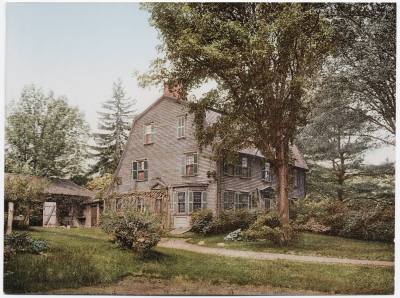
The Old Manse, Concord, Massachusetts, where Mary Moody Emerson was born and lived periodically, as did various minister ancestors and Ralph Waldo Emerson.

Mary Moody Emerson was born in 1774 in Concord, Massachusetts into a family of ministers and philosophers, including her nephew, Ralph Waldo Emerson. Her literary legacy includes a few published pieces, but is primarily the mountain of letters and journals which she called her “Almanacks.” She circulated these among friends and family, including many transcendentalists, especially Ralph Waldo Emerson. They featured many revolutionary ideas that made their way into his books and lectures, in particular, especially foreshadowing his book Nature, which launched transcendentalism. She also held influential conversations with Henry David Thoreau as he was writing Walden and with many other prominent thinkers over decades. Ralph Waldo Emerson praised her “Genius always new, subtle, frolicsome, musical, unpredictable” (Cole, 262). Almost entirely self-educated through books given or lent by family, friends, and local libraries, her sagacity was the well-spring of a movement that has been instrumental in making her world and ours. 

Continue reading “Unsung Heroines: Mary Moody Emerson, Foremother of Transcendentalism by Carolyn Lee Boyd”

Mother Sky: I See You, I Hear You by Carolyn Lee Boyd

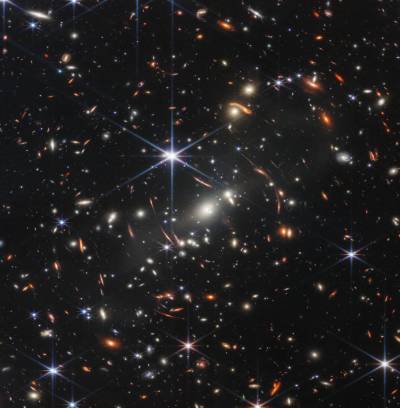
Deep field galaxy cluster from 4.6 billion years ago.
Deep field galaxy cluster from 4.6 billion years ago with light from galaxies 13.5 billion years old soon after the “Big Bang” 13.8 billion years ago.

The sky is telling us a story of our universe’s first moments while the cosmos sings, and now we can see and hear these wonders through our bodies as well as our imaginations, spiritual journeying, and intuition. These feats are made possible by the successful launch of the James Webb Space Telescope (JWST) and the sonification of sound waves emanating from galaxies that have, for the first time, been converted into a range audible to human ears. Now, experiences that we have only heard about in ancient myths have come to the human realm.

The JWST, according to NASA, allows us to see stars and galaxies as they formed 13.5 billion years ago. Because the light from these stars and galaxies took billions of years to reach us, we see them at the first moments of their birth.

Continue reading “Mother Sky: I See You, I Hear You by Carolyn Lee Boyd”

Coming Home for Samhain by Carolyn Lee Boyd

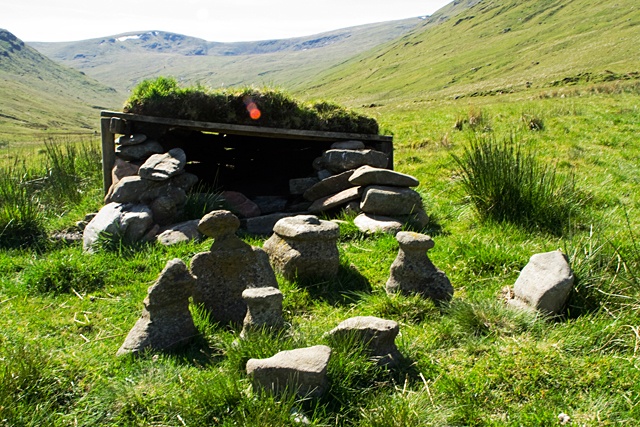
Tigh nan Cailleach, House of the Cailleach, Glen Lyon, Scotland

Samhain is the beginning of winter according to the Celtic calendar. On this day, people brought their livestock in from the pastures and settled by their hearths to survive the coming cold until the magical renewal of spring. Here in New England, leaves are beginning to blaze red-gold, plants to brown as nutrients fill their roots, and animals to nestle underground to hibernate. Across the northern hemisphere, we should once again begin our own retreat below the the busyness of our lives to re-energize and plan for the fruition of spring works.

I’ve usually thought of winter as a time of withdrawal from other beings and the world, but maybe Celtic tradition offers us a more nuanced way of perceiving this season. A wonderful Scottish Samhain story has made me rethink of winter as a time to also reconnect and re-vitalize each other and chart our course to spring’s promise together. I cannot say what the story means to those from whose land it emerged, but I can share the thoughts it evokes in me. Settle in, get comfy, and listen…

Continue reading “Coming Home for Samhain by Carolyn Lee Boyd”

The Gift of Hospitality by Carolyn Lee Boyd

The Earth’s abundant gifts of hospitality

Hospitality is the way of Nature. Every spring, the Earth provides us with warmth, beauty, water, and nourishment. In winter, the Earth offers tools to heat and shelter ourselves. When we are sick, medicine is as close as the forest and meadow. She has welcomed a variety of life forms as the environment changes over our planet’s many geologic ages. Living beings have always been the wanderer in need knocking at Earth’s door and She always gives Her all to us.

This welcoming attitude has been reflected in customs of offering strangers food, water, and shelter in ancient and contemporary cultures and religions around the world, including goddess reverence. We see the influence of hospitality in the many goddess temples that welcomed and, for living traditions, still welcome, anyone in need of healing. These include those of the Egyptian Neith, the Italian Angitia, Idemili of the Nnobi Igbo people, the Yoruba Oshun, and others. We also see it in stories of women caring for one another like that of the Greek Maenads, ecstatic women worshippers who were unable to return home after attending rites and fell asleep in a town along the way. During the night, the town’s women silently encircled them, holding hands, for their protection.

Continue reading “The Gift of Hospitality by Carolyn Lee Boyd”

By Truth the Earth Endures by Carolyn Lee Boyd

Door to Truth, Sri Rangnath Swamy Temple, Pushkar

“By truth the Earth endures.” This Old Irish pronouncement quoted by Peter Berresford Ellis in  The Druids (p. 162) holds such hope. In this moment when the survival of humans and other living beings on our planet is uncertain, when we wonder how we can ensure a future we want our descendants to live in, this centuries-old statement tells us exactly what to do. Revere truth, speak truth, live truth, and the Earth will endure.

The “truth” by which the Earth endures is not simply the state of being factually correct, but, to the ancient Irish, as well as other cultures, also a mighty force that is an element of all that is good.  “…The old Irish word for Truth is also the basis for linguistic concepts of holiness, righteousness, faithfulness, for religion, and for, above all, for justice (p.169)” according to Ellis. What gives truth this immense authority is the power of the Word. Ellis tells us “Truth was the Word and the Word was sacred and divine and not to be profaned…’Truth is the foundation of speech and all words are founded upon Truth’” (p. 162).

Continue reading “By Truth the Earth Endures by Carolyn Lee Boyd”

We Are a Beautiful, Passionate, Inspiring, Never-Ending Story by Carolyn Lee Boyd

Your life is a beautiful, passionate, inspiring, never-ending story. It began with your ancestors long before your birth and will reverberate through untold future generations. It is infinitely complex, unique, and fascinating. Your story is deeply interconnected with other living and non-living beings. It is one among billions of individual stories that make up the wondrous, awe-inspiring story of our planet. 

Do you see yourself, other humans, all living beings, and Earth Herself in these words? Many of us may struggle to do so. As Janet Rudolph so eloquently noted in her recent post about Moses, we need to re-examine and change our foundational stories away from violence and towards spiritual regeneration. So, how can we create new stories about who we believe ourselves to be and how we respond to the world around us? Ursula Le Guin gives important clues in her book Steering the Craft: A 21st-Century Guide to Sailing the Sea of Story. In it she defines story as “a narrative of events (external or psychological) that moves through time or implies the passage of time and that involves change. I define plot as a form of story that uses action as its mode, usually in the form of conflict…(p. 122). “ Le Guin continues to say that this kind of plot “reflects a culture that inflates aggression and competition while cultivating ignorance of other behavioral options… (p. 123).”

Continue reading “We Are a Beautiful, Passionate, Inspiring, Never-Ending Story by Carolyn Lee Boyd”

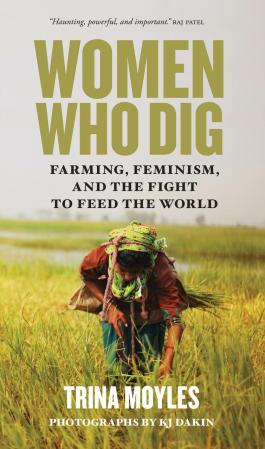
Women Who Dig by Trina Moyles – Book Review by Carolyn Lee Boyd

Here in the north, it is harvest time when the deep and ancient relationship between women and farming once again brings forth the food on which life depends. Women have been co-creating with the Earth to feed themselves and their families and communities for many  thousands of years. In fact, the world’s oldest agricultural tool may be a 300,000 year old stick possibly used by women to “harvest wild tubers for food and medicine” (p. xx) according to Women Who Dig: Farming, Feminism, and the Fight to Feed the World by Trina Moyles with photos by KJ Dakin. 

In her beautiful and enlightening book, Trina weaves together stories and stunning color photographs about the lives and work of women small farmers in Uganda, Guatemala, Nicaragua, the United States, Canada, India, the New Congo refugee settlement in Uganda, and Cuba. Together the profiles demonstrate that, despite sometimes overwhelming odds, women are feeding themselves, their families, and their communities through sustainable small farming practices that are good for both our nutrition and well being as well as the planet.

Continue reading “Women Who Dig by Trina Moyles – Book Review by Carolyn Lee Boyd”

Transforming the Streets of Past into the Cities of the Future, Part II by Carolyn Lee Boyd

You can read yesterday’s part 1 here.

Knossos in Crete

Modern architects and urban planners have recently been designing buildings and urban spaces promoting values reminiscent of Old Europe and other societies with similar values. These societies are often referred to as “matriarchal.” However, there is ongoing discussion among scholars about what to call them. For this post, we will use Heide Goettner-Abendroth’s lovely term “societies of peace.” To read more about these societies, modern desires to live in communities similar to these societies, and modern efforts to promote social interaction and beauty, please click here to read Part 1. 

Connecting to Nature

Stonehenge, Great Britain

Old Europe and other similar societies of peace frequently included well-used outdoor spaces, connecting residents to nature as they went about their daily life. Residents did weaving, baking, and other tasks in open courtyards. Public rituals were held in plazas and courtyards. Celts and those who lived in Britain before them held their religious ceremonies in groves of trees or in open spaces with standing stones or other monuments. Public art, such as frescoes in Crete, featuring plants and animals also indicates the value these societies gave to nature.

Continue reading “Transforming the Streets of Past into the Cities of the Future, Part II by Carolyn Lee Boyd”