Transforming the Streets of Past into the Cities of the Future, Part I by Carolyn Lee Boyd

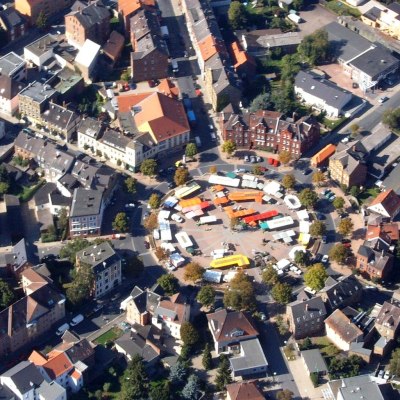
Modern Mixed Use Development with Buildings Facing Each Other in a Circle

Is a peaceful, just, creative, sustainable world a far-off, unattainable dream or might there be ways to begin to build such communities right in our own neighborhoods?

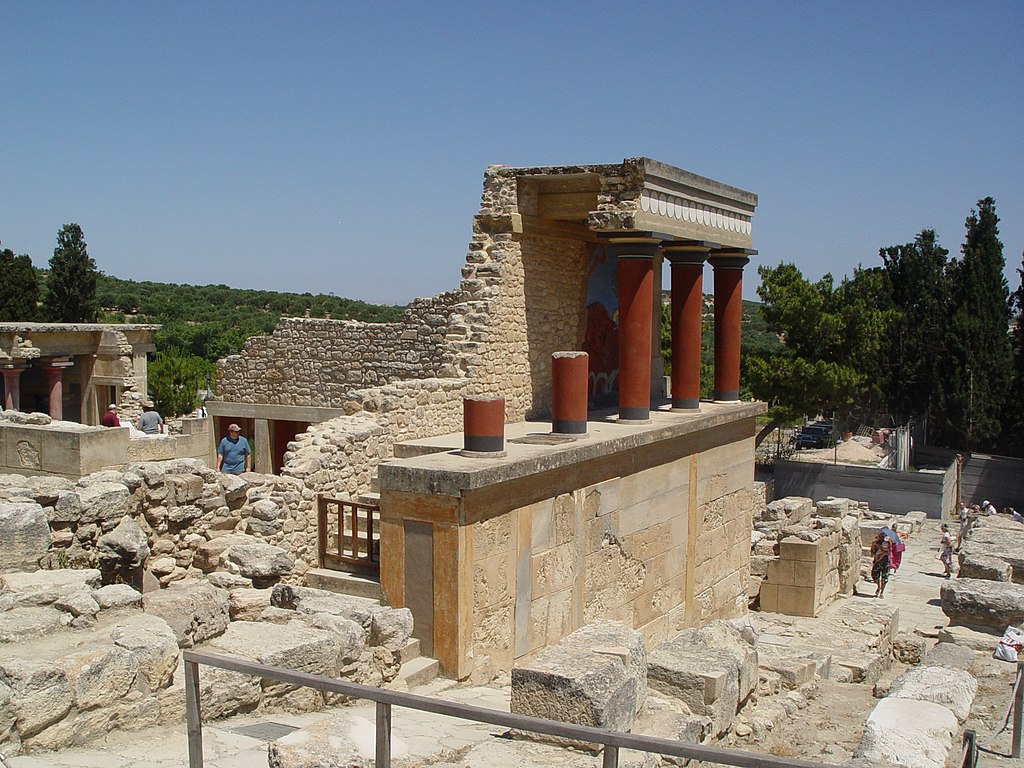
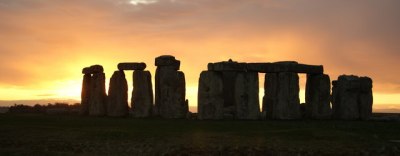
Archeologists and scholars like Marija Gimbutas, Heide Goettner-Abendroth, and Carol Christ have studied societies from Old Europe and elsewhere that share some common characteristics. (These societies are often referred to as “matriarchal.” However, there is ongoing discussion among scholars about how to name these societies. For these posts, I’ll use Heide Goettner-Abendroth’s beautiful term societies of peace). These qualities include prioritizing caring social relationships, art and beauty, ecological responsibility, equality, commitment to consensus decision-making, and more. Researchers often cite how buildings, city and town layout, and outdoor spaces of these societies of peace reflect these values by featuring similarly-sized residences, beautiful frescoes depicting women and men in peaceful pursuits, a lack of warlike structures, and plazas and courtyards for social, civic, and religious events, among other attributes.

Continue reading “Transforming the Streets of Past into the Cities of the Future, Part I by Carolyn Lee Boyd”

GOD IS A BLACK WOMAN by Christena Cleveland, PhD – Book Review by Carolyn Lee Boyd

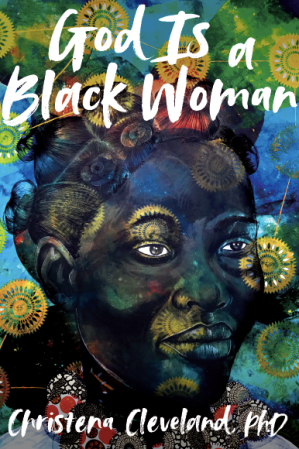
God Is a Black Woman by Christena Cleveland PhD

FAR recently published an excerpt and lively discussion of Christena Cleveland, PhD’s new book God Is a Black Woman. We thought the FAR community might enjoy learning more about this memoir of her moving journey from the terror and control of “whitemalegod” to the unconditional love and healing of the Sacred Black Feminine. Her recounting of her 400-mile walking pilgrimage to see eighteen French Black Madonnas is especially fascinating and poignant.

Christena is a social psychologist, former professor at Duke University’s Divinity School, public theologian, researcher, author, and speaker. She is “the founder and director of the Center for Justice + Renewal as well as its sister organization, Sacred Folk, which creates resources to stimulate people’s spiritual imaginations and support their journeys toward liberation.” She blends all these areas of expertise to offer theological, sociological, psychological, and historical insights into her stories of her spiritual quest. The book offered me many “aha!” moments about my own beliefs and assumptions regarding spirituality, feminism, and the ubiquitous effects of racism.

Continue reading “GOD IS A BLACK WOMAN by Christena Cleveland, PhD – Book Review by Carolyn Lee Boyd”

From the Archives: Through the Eyes of the 21st Century Bird Goddess by Carolyn Lee Boyd

Moderator’s note:Today’s blogpost was originally posted March 14, 2018. You can visit it here to see the original comments.

When I raise my eyes to a bird soaring over me in flight, I am no longer bound to the Earth by gravity. I stop my round of daily tasks and widen my vision to view myself and our world from above through birds’ eyes. For just a moment, as I observe beyond my usual narrow horizon, I perceive truths about myself and others that have been hidden and grasp wisdom that has previously eluded me.

From Neolithic times onwards in cultures stretching across the globe, as described by Judith Shaw, bird-shaped goddesses have embodied life, death, rebirth, and more. More recently, as noted by Miriam Robbins Dexter, these beautiful winged beings were perceived of as monsters and flying through the air was one of the accusations made against the women persecuted as witches in the Burning Times. What greater demonstration could there be of the intense terror this powerful relationship between women and birds creates in those who demand dominion over women’s bodies and souls?

Continue reading “From the Archives: Through the Eyes of the 21st Century Bird Goddess by Carolyn Lee Boyd”

Earth Is Our Community by Carolyn Lee Boyd

Earth from space, NASA

“The beauty of the planet from 100,000 miles should be a goal for all of us, to help in our struggle to make it as it appears to be.” Astronaut Michael Collins said these words reflecting on seeing the Earth from space. To me, he is expressing the truth that the Earth is our community that we share with all other beings on the planet, our home base. But what does this really mean in its most profound perspective?

Over the years, I have heard people express over and over how they desire “community,” whether that means a neighborhood café or an ongoing circle to share our deepest lives over decades, or any of many other expressions. The emotional and physical impact of isolation and divisiveness over the past months of the pandemic has shown how essential “community” is to our well being, and how we need to think of it as more than just a sense of being part of a group. True community provides us with a sense of belonging and relationship, of being part of a vibrant, interdependent web, of assuming everyone will act in the best interests of all. 

Continue reading “Earth Is Our Community by Carolyn Lee Boyd”

Sacred Food for Body and Soul by Carolyn Lee Boyd

Soon it will be Wives’ Feast Day, a holiday celebrated in Ireland and northern England on February 2, the same day as Imbolc, Candlemas, and St. Bridget’s Feast Day. On this holiday, women (in Old English, “wife” meant simply woman) would gather together and enjoy making and sharing delicious foods with each other, honoring themselves and their work providing nourishment and other aspects of making a “home.”

When you think about it, this delightful tradition is quite remarkable. Feast days are generally associated with saints, so, in a way, this feast day recognizes the sacredness of all women and also their daily labor. This echoes to me Old European cultures that connected women’s baking and weaving to divinity by placing workshops in goddess temples and associating goddesses with these tasks. Today, women work in many jobs not directly associated with food production, but still labor to make our communities and planet better “homes” in many other ways. 

Continue reading “Sacred Food for Body and Soul by Carolyn Lee Boyd”

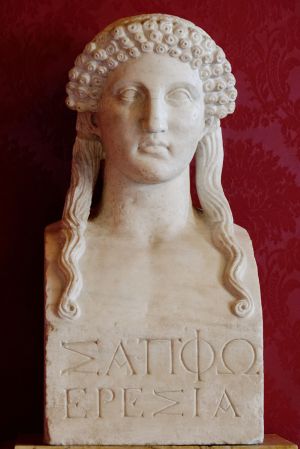
Sappho in a Locrian Mode by Carolyn Lee Boyd

Sappho

The world Sappho envisions in her poetry is one with many lessons for us in the 21st century about how to live. While ancient Greek society, especially in later eras, was deeply misogynistic and women had few rights, Sappho’s words evoke a perspective in which goddesses, especially Aphrodite, are revered and the connection of worshippers to goddesses is intimate, art created by women is celebrated, women’s relationships are central to one’s well being, and love and sensuality are enjoyed.

But words only tell part of the story. Sappho’s poetry was meant to be sung, and while we can’t hear the songs she wrote, I think it is interesting to note that Anne Carson, in her 2003 translation “If Not, Winter” says that Sappho is credited with inventing the Locrian musical mode.  A mode is a scale in which the progression of notes follows a set pattern of whole and half notes. We are all familiar with the major mode that makes music sound happy (Happy Birthday song) and the natural minor mode that we use for sad music (House of the Rising Sun). But there are many other modes, and the Locrian mode is one of them. (just a note: the Locrian mode is the same as the Greek Mixolydian mode and completely different from the modern Mixolydian mode, just to be confusing.)

Continue reading “Sappho in a Locrian Mode by Carolyn Lee Boyd”

Slaying Dragons Our Own Way, Part II by Carolyn Lee Boyd

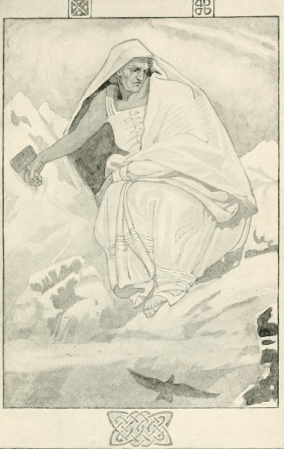
Cailleach Beira
Cailleach Beira

Assipattle and the Mester Stoorworm is a Scottish dragon-slayer folk tale with many enticing details linking it to elements of an older culture centering the Earth with a reverence for female spiritual power. You can read a summary of the story and these clues in Part I.

While the tale was obviously not originally meant to reflect the 21st century, it has echoes of our own society’s challenges today, including inequality, injustice, violence, and ecological disaster. It may be a revision of an older story but, not knowing what that story was, we can perhaps re-envision the story to be meaningful for our own time with the characters and practices hinted at in the details. Maybe something like this (I’ve named Assipattle’s unnamed sister Morag) …

Continue reading “Slaying Dragons Our Own Way, Part II by Carolyn Lee Boyd”

Slaying Dragons Our Own Way, Part I by Carolyn Lee Boyd

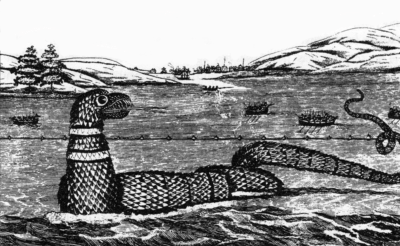
Monster of the Sea

In winter people traditionally gather around the fire to enjoy stories as the stormy winds thunder outside. Come closer to the hearth as I regale you with Assipattle and the Mester Stoorworm, a centuries-old dragon-slayer folk story from Scotland’s Orkney Islands with many Norse elements. On the surface, it is a fairy tale about a village threatened by a gigantic sea serpent and how they responded to this existential threat. Though meant to entertain with its adventure and romance, it also has many details that perhaps link it to older roots of a culture that centered the Earth and healing and revered female spiritual power, all of which are profoundly needed in our own time. If we re-envision the tale through the lens of these clues, we may be able to find guidance for how our own communities — local, national, and global — can more successfully confront profound challenges.

Here is the summarized original tale:

Continue reading “Slaying Dragons Our Own Way, Part I by Carolyn Lee Boyd”

Hope Lives in the Twinkling of the Stars by Carolyn Lee Boyd

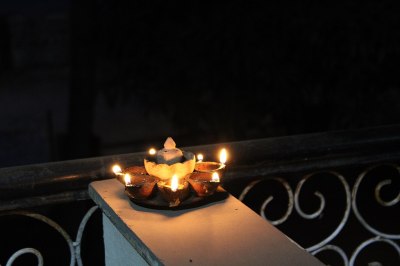
Diwali candles

For millennia, we humans have found hope in the dark of winter through holidays featuring lights or the sun such as the Winter Solstice, Diwali, Hanukkah, Kwanzaa, Soyal, Christmas, and others. As the people of our beautiful, fragile planet celebrate these traditions in these perilous and momentous times, I have been wondering what fresh perspectives on hope our global goddess myths and stories can offer.

Let’s start with the Greek goddess of hope, Elpis. In the Greek Pandora’s story as usually told, Elpis/hope is all that is left for humanity after Pandora lets misery escape into the world by opening her box, However, according to Patricia Monaghan in her New Book of Goddesses and Heroines, originally Pandora was the ever-abundant Earth goddess and her box was a pithos, a clay jar used to store food, but also remains of the dead awaiting rebirth. In her Roman incarnation as Spes, the goddess of hope also served Fortuna, the goddess of destiny who brings people together to create life. Finally, She is associated with Salus, the goddess of health. 

Continue reading “Hope Lives in the Twinkling of the Stars by Carolyn Lee Boyd”

Reshaping Our World with Words by Carolyn Lee Boyd

Holy well of Saint Scoheen

Pagasasthai, kernos, thiosos, sloinneadh, taibhsear.  These are centuries-old words that help describe and create a world in which the Earth is sacred and receives gratitude, people revere the wisdom of their ancestors, and those who see beyond our everyday reality are honored. 

Every day we build the world around us with words. Their tone and subtle meaning tell us who we are, what our place in society is, and how we should live. Which objects and concepts become common words indicate what is “real” and important or not. When an object or concept has its own word it gains clarity and power. Here at FAR, for example, we have had many wonderful posts about rewriting religious texts and liturgy to re-invigorate them with the sacred female spirit and be resonant with female presence. 

Continue reading “Reshaping Our World with Words by Carolyn Lee Boyd”