Dancing for the Ancestors: Ahouache Dance in Southern Morocco by Laura Shannon

This autumn I am once again in southern Morocco, bringing friends and students to experience traditional Berber women’s dance and culture. 

The Berbers or Imazighen* are the indigenous people of North Africa, who have lived for at least 12,000 years in the Maghreb region (Morocco, Algeria, Tunisia, Libya, Mauritania, and Western Sahara). Within this vast area, different Berber tribes follow various forms of social organisation, yet remain linked by language, culture, and a shared sense of identity. 

Among the Berbers, 

The ‘religion’ of women is expressed in the cult of the family, in religious practices performed close to their environment and in the management of clairvoyance and healing within the domain of the traditionally sacred… [The] domain of the sacred is found in the family community as it extends to the village, according to social relations determined by a spirit of collective responsibility. This is found between the living but also with the Ancestors. – Makilam

Even though the Souss Valley and Anti-Atlas mountains of Morocco where we are travelling is far from the Kabylia region of northern Algeria Makilam describes, her comments also apply here.

Continue reading “Dancing for the Ancestors: Ahouache Dance in Southern Morocco by Laura Shannon”

Asherah and Taghonja: A rain ritual with ancient roots, by Laura Shannon

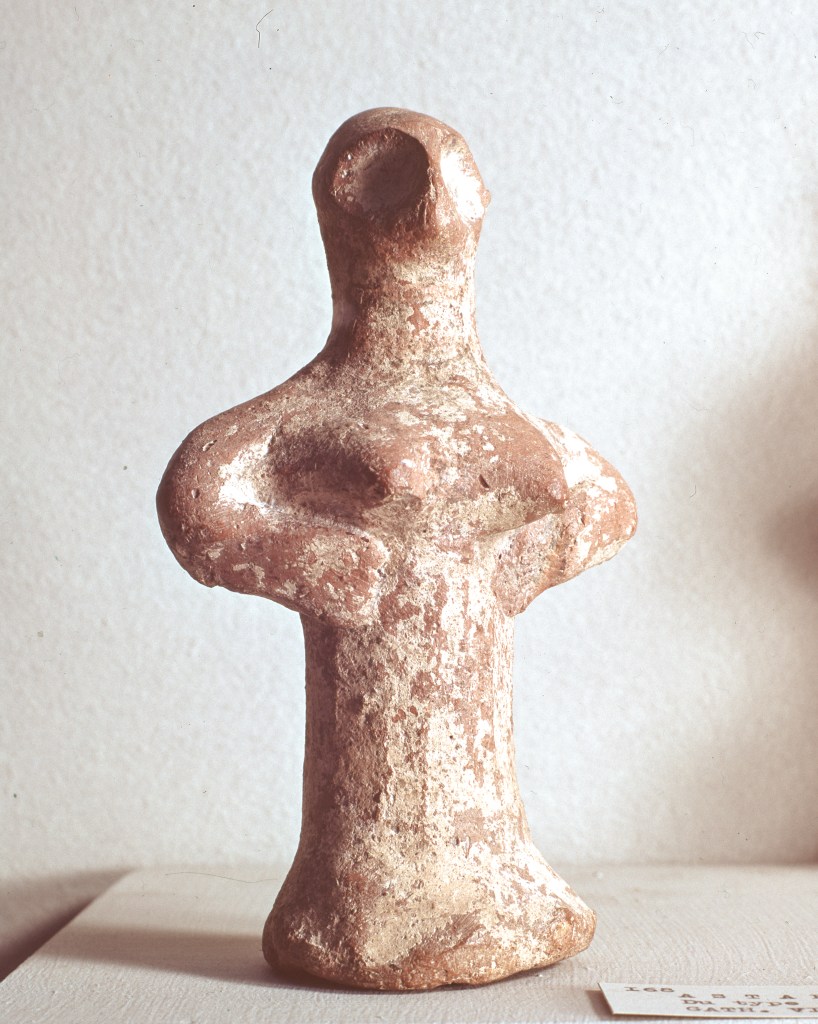
The Great Goddess of North Africa and the Near East had many different names. In Canaan, she was Asherah, Mother of Creation, Queen of Heaven, and consort of the male god El/Yahweh. Countless archaeological discoveries of ‘images of the Goddess, some dating back as far as 7000 BC, offer silent testimony to the most ancient worship of the Queen of Heaven’. (Kosnick 2017, Stone 1978)

Judean pillar figure representing Asherah, ca. 8th-7th C BCE. Wikimédia commons.

In Canaan, Asherah’s sacred places included high hills and mountaintops, ‘under every spreading tree and every leafy oak’. Identified with the Tree of Life, Asherah was represented by wooden poles or pillars known as asherim. These were ‘cut and shaped from a tree’, ‘adorned with silver and gold’, and ‘had to be carried’. Her rites were chiefly in the hands of the women, who honoured her with incense and liquid offerings, and baked sweet cakes for the Queen of Heaven.. Women also wove elaborate veils to dress the asherim. (Ezekiel 6:3; Jeremiah 10:3-5, 44:17-18; 7:18-19; 2 Kings 23:7)

Continue reading “Asherah and Taghonja: A rain ritual with ancient roots, by Laura Shannon”

The Gifts of the Magi Were Meant for the Mother by Laura Shannon

For over forty years I have been researching women’s dance and folk arts. This quest has been inspired by Merlin Stone, Max Dashu, Vicki Noble, Mary Kelly, Marija Gimbutas and others, including my close friend Carol P. Christ, who encouraged scholars to examine ‘nontextual artifacts’ and ‘expand our notion of history to include records that are not written’. 1

Through extensive travels in southeastern Europe, North Africa and the Near East, I’ve learned to recognise the symbols and significance encoded in dance patterns, textile motifs, jewellery designs, healing practices, and other forms of women’s ritual arts.2 This experience has trained me to discern patterns and meaning beyond superficial interpretations – to look ‘with eyes to see’.

In this article I would like to offer a closer look at the ‘nontextual artifacts’ in the Christian Nativity story: the gold, frankincense and myrrh brought by the Magi. My lifelong interest in North African bridal jewellery leads me to suggest that the gifts of the Magi were meant for the mother, not the child. Not only that, this closer look reveals that  the Magi were probably not three, almost certainly not kings, and very likely included both men and women.

Continue reading “The Gifts of the Magi Were Meant for the Mother by Laura Shannon”

Saved by the Sea by Laura Shannon

This is the story of an improbable rescue. 


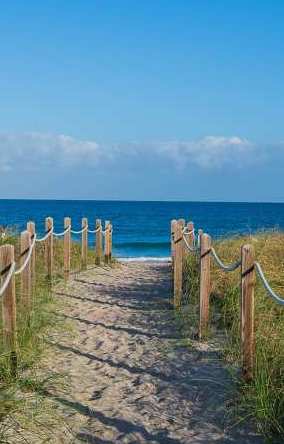
Delray Beach footpath. Photo: Public domain

The outcome of the US election was not the one I had hoped for or voted for. I know I’m not alone in this, nor am I alone in experiencing sudden strong emotional reactions in response to the acts of this new administration. 

For survivors of sexual abuse and sexual assault (officially 44% of adult women in the U.S., though habitual underreporting means this figure is probably much higher), it has been terrifying to see more and more men in positions of power who show no remorse for misogyny and abusive behaviour. This empowers others to behave badly, with an obvious sense of entitlement and impunity. 

The atmosphere of unchecked threat makes it harder for survivors to speak up for ourselves and others when any imbalance of power rears its head. Yet at the same time, it is ever more crucial that we do speak up. Many survivors find their chronic PTSD is triggered more frequently, while feeling even less able to respond with adult capability when a crisis strikes. This horrible paradox can quickly set off the paralysing cycle of diminishing self-esteem and increasing helplessness which survivors know only too well.

Continue reading “Saved by the Sea by Laura Shannon”

Thirst for Knowledge, Thirst for Rain: Women’s Seeds and Symbols in Southern Morocco by Laura Shannon

Last week, once again, I had the good fortune to bring a small group of dancing friends to southern Morocco. As always, our travels there unfolded in a blessed and beautiful way, rich in experiences of ancient Berber/Amazigh culture and encounters with local women.

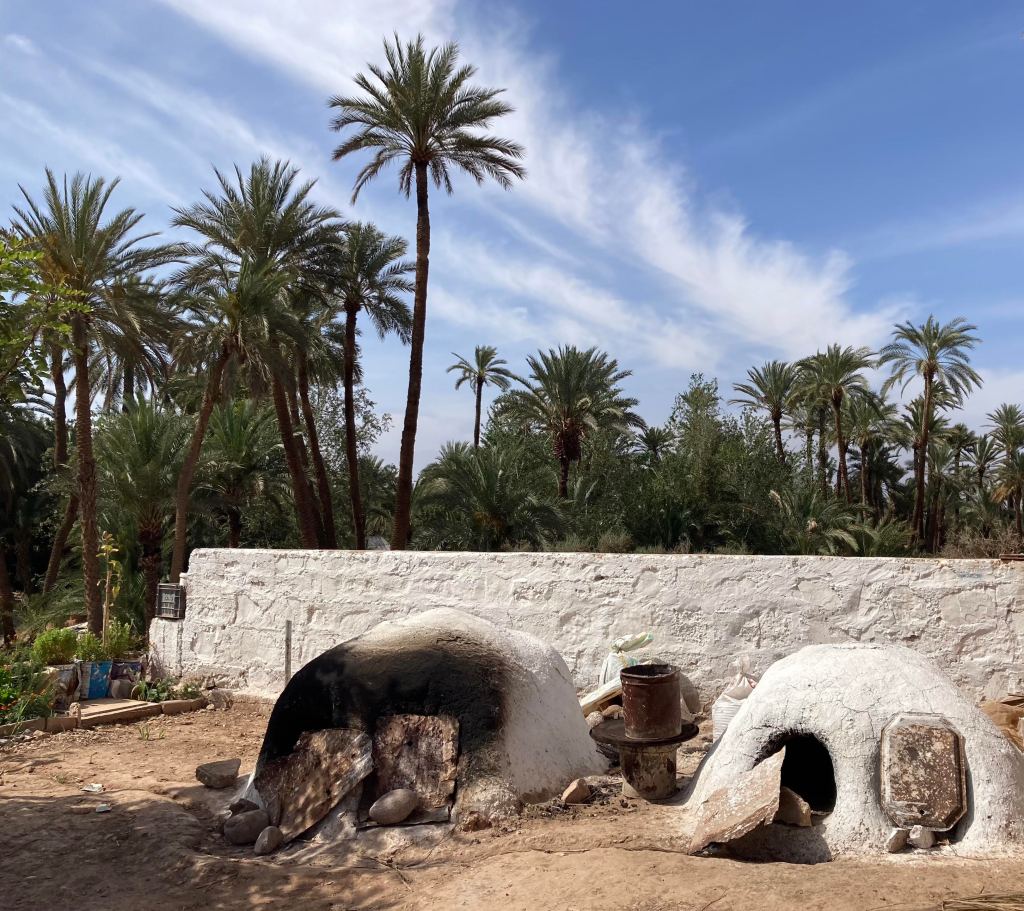
At Tioute oasis in the foothills of the Anti-Atlas mountains, we bought unleavened flatbread baked in rounded clay ovens. 

Bread ovens at Tioute oasis, southern Morocco. Photo: Laura Shannon
Continue reading “Thirst for Knowledge, Thirst for Rain: Women’s Seeds and Symbols in Southern Morocco by Laura Shannon”

Snake Priestesses of Crete as Earthquake Oracles? by Laura Shannon

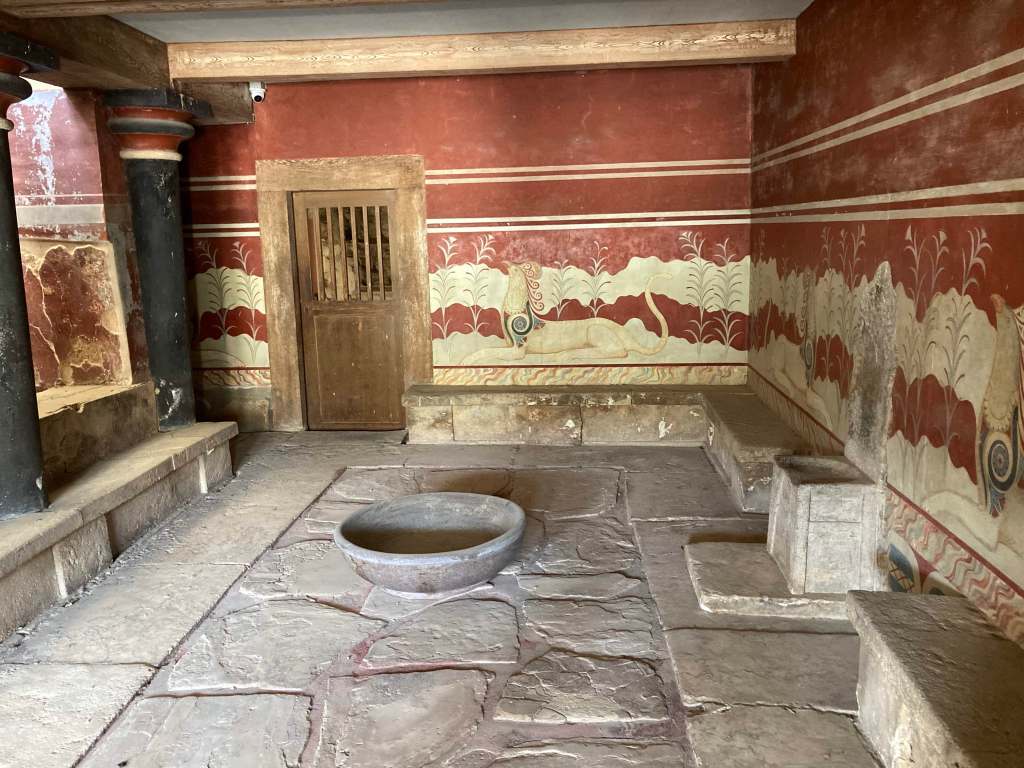
Knossos Throne Room showing edge of lustral basin at left. Photo: Laura Shannon

A few weeks ago I was on Crete, having coffee with an archaeologist friend. She happened to mention something strange. Crete has always been a seismic zone, with lots of earthquakes, yet remarkably, in Minoan times, no one was killed in collapsing buildings; they were never taken by surprise. 

We pondered this – it seems astounding. They must have had some means of warning. Perhaps the serpents sacred to them could have given them some sign? 

Continue reading “Snake Priestesses of Crete as Earthquake Oracles? by Laura Shannon”

Carol P. Christ and the Pilgrimage to the Goddess: Online Memorial Gathering, December 20, 2023

Dear FAR community,

Two and a half years ago, our beloved friend and mentor Carol P. Christ passed to the realm of the ancestors. It’s been wonderful to read her archive posts every week as well as so many posts remembering and referencing her brilliant work. The FAR community was so important to her: as Carol herself pointed out, she not only offered her own posts each Monday, she also read and responded to every post, every day. I also cherish the daily connection to our FAR ‘family’, and find profound comfort for the loss of such a tremendous presence through this daily connection with others who knew her and miss her as as I do.

Continue reading “Carol P. Christ and the Pilgrimage to the Goddess: Online Memorial Gathering, December 20, 2023”

Crete as the cradle of a culture of peace – Part Two by Laura Shannon

Part One of this article spoke of our collective yearning for peace, and the difficulty of imagining a peaceful world when we are taught to believe that “patriarchy and with it war and domination are universal and inevitable.” (Carol Christ, 2015)

But this is a myth. The peaceful civilisation of Bronze Age Crete lasted two thousand years with no sign of violence, slavery, or war. Most likely matriarchal, matrifocal, and matrilineal, ancient Crete embodied the final flowering of Old Europe. Art and archaeology reveal a life-loving people who honoured the earth, the Goddess, and nature, particularly mountains, caves, and trees. Key values and symbols of this culture of peace survive today in Cretan women’s dances and folk arts including pottery, textiles, baskets, and bread.

Continue reading “Crete as the cradle of a culture of peace – Part Two by Laura Shannon”

Crete is the Cradle of a Culture of Peace – Part One by Laura Shannon

These are difficult days. We awaken daily to the ongoing horror of senseless killing. My heart is filled with a yearning for peace. Now is the time to dream of peace, to choose peace, to practice peace – within our selves, with those we love, in our communities and in our world.

But what might a peaceful world look like? It can be hard to even imagine – not only because we live in a world filled with war, but because we have been taught to believe, as Carol Christ explains, that “patriarchy and with it war and domination are universal and inevitable.” However, she goes on, “this is a myth perpetrated by those who do not want to give up the power and privilege the patriarchal system has accorded to them.” War is not inevitable. Peace is possible.

Continue reading “Crete is the Cradle of a Culture of Peace – Part One by Laura Shannon”

Elixir: In the Valley at the End of Time by Kapka Kassabova, Book review by Laura Shannon

Kapka Kassabova is an award-winning author of poetry, fiction and nonfiction, born in Bulgaria and now living in the Scottish Highlands. Her newest work of narrative nonfiction, Elixir, soars with the luminous prose and unflinching honesty we have come to expect from this brilliantly gifted writer.

Elixir is an extraordinary, profoundly moving book. The moment I finished reading it, I began again from the beginning, pausing only to order multiple copies for friends. Like Robin Wall Kimmerer in Braiding Sweetgrass, Kassabova effortlessly integrates science and the sacred, addressing historical, ecological, and personal trauma with clarity, compassion, and hope. Elixir combines memoir, travel, history, ethnography, botany, philosophy, spirituality, eco-psychology, traditional Chinese medicine, and even alchemy, in a subtle, sophisticated exploration which defies categorisation.

Continue reading “Elixir: In the Valley at the End of Time by Kapka Kassabova, Book review by Laura Shannon”