 This past Saturday, I had an opportunity to sweat in a traditional Lakota sweat lodge for the first time. It was, above all, an interesting cognitive experience for me. I found myself sort of shaking hands with the ritual, the heat, the stones, the songs, and so on, saying, “Hi, I’m Natalie. I have an open mind. I am excited to know about you. Thanks for letting me see what you are all about.” I didn’t know whether I would pass out, have visions, or learn something new and wonderful about myself or the others. I was curious, still, and grateful for the opportunity. I was gifted by generous people, good fellowship, and new ideas. I will go back, even though I didn’t exactly find some thing… or maybe I did. Maybe, I found someone, or, better, maybe someone found me.
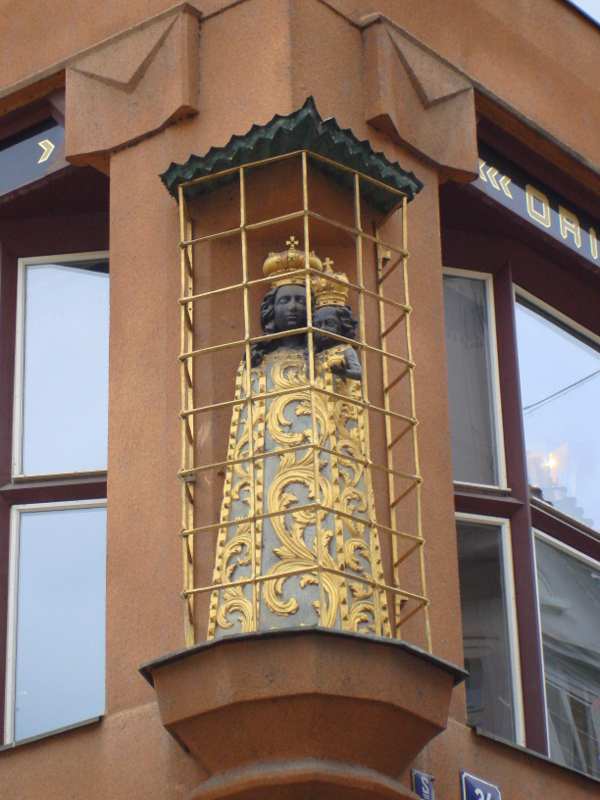
Two days before the sweat, I received an email from one of my companions on the journey, saying something I still do not understand about the Constellation Sagittarius, the Galactic Center, and the Rising of the Black Madonna. Although I did not understand the astronomy, I was intrigued by the call to recognize and confirm the Black Madonna. For, without particular reason or impetus that I could identify in myself, I had been dreaming of a Black Madonna statue for some time. After trying to find out what it was, I was able to identify it as the Black Madonna of Prague. I have never been to Prague and was basically unaware of the rich tradition of Black Madonnas in Europe, despite four semesters of art history in college. So, I made note of my dreams, with a promise to myself to seek them out whenever and wherever I travel. I also purchased little trinket at a Canadian gift shop, which sits on my desk as a guide and companion.
Continue reading “Prayers to Black Madonna and Kali Rising by Natalie Weaver”
 Autumn of 1977. The faculty wives have come together in the modest University Heights home of a physics professor. Their Aquanet hair is sprayed to the heavens and at significant risk of igniting from lipstick-stained cigarettes that are resting precariously in the cradle a heavy crystal ashtray. Their business is serious. They are putting together a cookbook. The Faculty Wives Cookbook of 1977, to be precise. It is a noble task. They will cook from it for their young families, for their husbands, that is, the faculty. Even more, they will use each other’s recipes. Martha will cook Mary’s chili; Margaret will lose weight on Donna’s diet cabbage stew. It is an achievement that will be smugly displayed on bookshelves for decades. It will yellow, and the black plastic spiral binding will wear and crack. The Kinko’s heavy card stock cover will be ringed with coffee marks. And, one day, daughters-in-law will decide whether to keep it or to pitch it out.
 One of my goals for the summer is to paint more. I find I can often say or think by a picture something that I am trying to work through in a formal, discursive way. Art functions as a methodological tool for my theology insofar as it helps me to articulate in one language something that I am trying to say in another. As my teaching career has lengthened, I’ve become more confident using images I have created to communicate my ideas. This no doubt has something to do with the liberty one gains in teaching as a performance exercise, combined with avoidance of repetition, and the desire to engage as well as to be entertained in one’s own right. Even more than just working out an idea, sometimes I also find making images to be a therapeutic tool. I can laugh, mourn, gripe, or celebrate through an image, and sometimes, I can even protest by one.
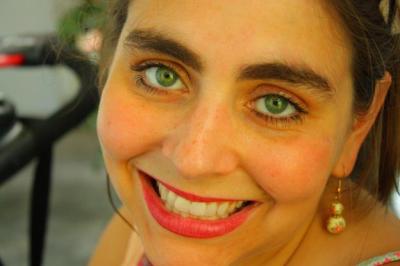 It is a difficult thing to wake up and realize you are living a life you do not recognize. This happens for all sorts of reasons. Sometimes, it happens dramatically as in the case of death, job loss, personal trauma, or illness. Other times it is a slow and insidious transition from what you knew to what you have become, as you find yourself looking at your workplace and recognizing no one or wondering who these people are in your home. Sometimes it is as simple as getting a haircut or a pair of contact lenses, when suddenly you see some wrinkle or skin mark you didn’t know had been forming while you slept.
 I used to paint and draw all the time as a child. I thought about majoring in art as a college student, but I went to an institution that did not have any applied arts courses in the curriculum. I had gone to college on a scholarship that I could not duplicate elsewhere, so I settled for a number of art history classes and gave up any formal pursuit of art. However, when I had my children, I rediscovered art. More accurately, I did not rediscover it so much as I fell in love anew. For, I found in working with my children a tremendous liberation. It did not matter if it was “good” or not, had the “right” form or not, used the medium “correctly” or not, or said something “properly.” I learned all over again that people could have hearts for heads; skies could rain jellybeans; and skin could be blue just because you like it that way.
 Dear Friends,
 1 The beginning could not be reckoned in the time before time was reckoned. 2 For, what was had yet to know itself, and it could not know itself alone. 3 But, for its love, it could not be known. So it was that the beginning that could be reckoned was not the beginning but the beginning of loving, which was the beginning of knowing, which was the beginning of being. 4 And, in that beginning, a great ellipsis had already become of particle and light, and the particle and light thrummed through darkness forming a whole body. 5 Of the great ellipsis of particle and light, a body and a body and a body were formed, in and of the great ellipsis, thrumming through darkness. 6 The thrumming ellipsis pushed forward so far that its particle and light extended beyond itself and then beyond itself and then beyond itself, as though it were to separate, but it did not. 7 A whole body was formed, which was the beginning of the simultaneity of what was and what is and what will have been.
  I have begun to call my mother the “Reaper,” which
  Feminism and Religion