Latin Identities and Muslim Malinches by Vanessa Rivera de la Fuente and Sumayah Soler

scdqgosrseo_vjrs3uaz-biiyjq

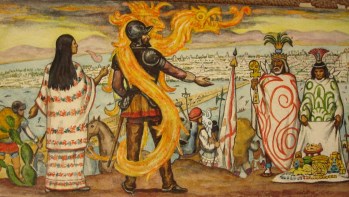
The myth says that Malinche, an Aztec princess, betrayed her people, her culture and faith, for the love and the desire to be loved and accepted by the foreign Spanish conquer, colonialist and exploiter. Her name, said with contempt, is used in Latin America to point those who sacrifice their identity and tradition in order to please foreigners over their own people and family.

Latin America has experienced in recent years an increase in the presence of Islam on the continent. As Muslims, we support and promote freedom of conscience that leads to our brothers and sisters to embrace Islam as their spiritual journey, as we did ourselves. However, we also know, because we have lived and learned from other latin muslims, that converting to Islam for Latinamericans means assuming the position of Malinche; this means to undertake a violent process of detachment and alienation of everything that identifies them as Latin, to prove their love and desire to be recognized as part of Islam. Continue reading “Latin Identities and Muslim Malinches by Vanessa Rivera de la Fuente and Sumayah Soler”

Progressive Islam: A Critical View from Latin Muslim Feminists by Vanessa Rivera de la Fuente & Eren Cervantes-Altamirano

Progressive Islam(s) in the West, particularly in Canada and the US, have been defined as movements that primarily encompass Islamic feminism(s), LGBTQI affirming movements, anti-Conservative theologies, feminist theologies, women-centered liturgies, etc. From within this umbrella, we have seen calls to embrace women-led prayers, women-only spaces, LGBTIQ inclusive and affirming mosques and practices like ijtihad, which are said to be useful in breaking away from Conservative understandings of Islam. All in all, Progressive movements often depict themselves as “reformers” within a paradigm that is usually conceived to be dominated by Orthodox theologies and attitudes mainly driven by Saudi Arabia and Iran.

However, to what degree are Progressive movements truly inclusive? Are they as “radical” as they have been made out to be? Are Progressive spaces any safer for women and trans-women? Are Progressives free of misogyny and violence? Continue reading “Progressive Islam: A Critical View from Latin Muslim Feminists by Vanessa Rivera de la Fuente & Eren Cervantes-Altamirano”

Gender Jihad and Epistemic Justice by Vanessa Rivera de la Fuente

women-fighting-demons_web

In previous articles I have developed my personal perspective on Islamic feminism as a third narrative pathway that responds to the two traditional hegemonic discourses that exist on Muslim women, which I call “idealization of inequality” and “demonization of Islam

The search for gender justice within the framework of Islam has been called Gender Jihad is focused on installing a legal and social equality for Muslim women and groups or identities in the otherness, in line with the equality of divine origin established in the Qur’an. I think this socio-political equality begins with unpacking the epistemic violence prevailing in religious narratives that affects the representations and validation of women and persons in the otherness as equals, ie, like people, like men, the discursive and biopolitics referent of what is “Humankind”.

Islamic feminism is a narrative that provides answers to the epistemic violence represented by the speeches of idealization and demonization. As Gayatri Spiviak said, such epistemic violence is an orchestrated, widespread and heterogeneous project to constitute the colonial subject, as other. Women in religion are colonized subjects. Epistemic violence leads to epistemic injustice that results in unfair practices such as, for example, considering that the testimony of some people is less credible because they belong to certain gender, based on a distorted image of the other, which dehumanizes the individuals who are giving testimony.

The Gender Jihad posed by Islamic Feminisms seeks to establish a declaratory place that is an authentic expression of the agencies women and people in the otherness in relation to a hegemony with a strong colonial bias, represented for the narratives of idealization and demonization. Gender Jihad is the building of an episteme, understanding the right of Muslim women to enunciate and interpret a reality that challenges them, for and by themselves since, as Amina Wadud says “defining religion is to have power over it.”

This discursive possibility is possible thanks to the Tawhidic paradigm developed by Amina Wadud in the early 90s and  in her book “Qur’an and Woman,” a methodology that can decolonize fields of  knowledge, bodies and representational policies of the mainstream narrative about Muslim women and Others.

The merit of her paradigm, among many, is to systematize existing concepts in the Muslim cosmogony, in a way that provides a frame for gender analysis from Islamic theology and promoting the empowerment of women through it. Recognizing, on the one hand, the inherent equality of women as human beings, it gives theological support to a legal equality that for centuries have been at the discretion of Muslim scholars. On the other, it enables women, through rescuing Ijtihad, in our enunciation and narrative capacity as religious subjects. If humans are equal before God, then Women and Others are, by divine right, equally able to read, decipher, interpret and convey their perspective on religious matters.

There cannot be any political transformation, without having an equal right to speak, equal freedom to express thoughts, equal entitlement of movement of the body and ideas, equal agency to occupy material and symbolic spaces, without restrictions.

There can be no Gender Jihad without appropriating the  readings and discourses on gender, religion and jihad.

Gender Jihad begins with the recovery of the right to say and represent, therefore, is a struggle that could have as a prior aim the acquiring of epistemic justice.

This is relevant because “Who can speak” will mark simultaneously “on what terms that person talk.” What concepts and meanings can be used within the framework of the construction of a particular view of reality? What terms become the lens for discerning reality: development, democracy, gender equality, civil society, religion, social agency, etc. Only and exclusively from the enunciation (the power to speak) and from the ability to define the context in which speaking occurs, can one have a voice, that is, be a subject.

This framework for a new reality, based on the epistemic justice, will allow Muslim women to define their own place and have a voice to counteract epistemic injustice. Wadud offers a system of hermeneutic model that enables a “who can speak” and “on what terms” from an interpretation of the Quran from a gender perspective, which recognizes Muslim women agency to define and interpret religion, to build a speech based in empowerment and to rise as “political individuals of faith,” establishing a mapping for the construction of a reality in which they position themselves as people, beyond stereotypes and myths.

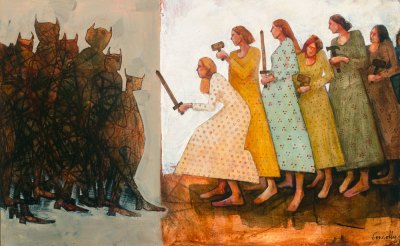
Image: Women Fighting Demons – Caitlin Conolly

Vanessa Rivera de la Fuente is a social communicator, writer, mentor in digital activism and community educator in gender and capacity development. She has led initiatives for grass roots female leaders’s empowerment in Latin America and Africa. She is an intersectional feminist interested in the crossroads between Religion, Power and Sexuality. Her academic work adresses Feminist Hermeneutics in Islam, Muslim Women Representations, Queer Identities and Movement Building. Vanessa is the founder of Mezquita de Mujeres (A Mosque for Women), a social media and educational project based in ICT that aims to explore the links between feminism, knowledge and activism and highlights the voices and perspectives of women from the global south as change makers in their communities.

Caring as Resistance and Sisterhood by Vanessa Rivera de la Fuente

sisterhood

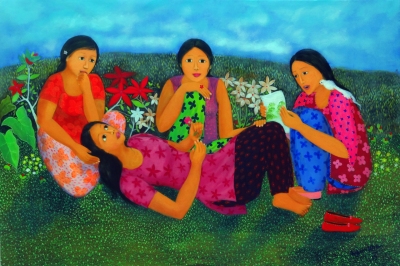
Every week, the women participating in my workshops easily share their experiences in the social, political or community world. However, it is difficult for them to talk about themselves. Several of them face complex situations: A divorce or a long layoff, illness of a relative whom they are caretakers, raising a disabled child. They are ashamed to speak up about how they feel; this should not be so. We women have the right and the duty to speak openly about what ails us in our private lives. The idea that the personal is political has to be a perfect circle.

Bisi Adeleye-Fayemi says that the lack of attention to physical, emotional and spiritual needs of women has become one of the weak points in the work of feminists. In our own social and institutional spheres where we work, the combined effects of the strong reactions against women’s movements, harassment on social networks, cultural and religious fundamentalisms, the pressures for leadership and the challenge of finding a balance between multiple spheres of life make it difficult to conserve energy.

While activisms mean resistance to the hegemonic system, some dynamics could reproduce patriarchal control’s devices on women’s emotions and impact us negatively: The expectation of renunciation and silent sacrifice as supreme feminine virtue. Sadness, illness or emotional distress are political issues and a way to control us with them is through the imposing or adopted silence about. Continue reading “Caring as Resistance and Sisterhood by Vanessa Rivera de la Fuente”

Have You Seen These Muslim Women? by Vanessa Rivera de la Fuente

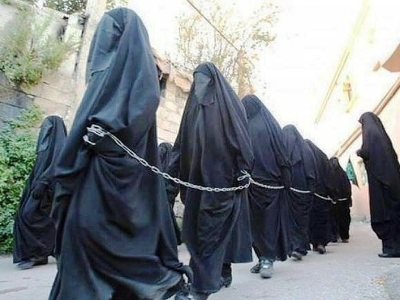
Shia Women AshuraThe photo that accompanies this article, or others similar, have been posted, shared and commented through social networks as expression of the inherent misogyny of Islam, with descriptions such as “DAESH taking women to sell in the concubine’s market” or “Muslim women being carried to forced marriages”. I’ve also seen this picture being used by some feminists in academic conferences to illustrate their presentations on the “Status of Women in Islam.”

This photo has been misused. This image is taken from a religious event which is celebrated for Shiite Muslims to describe the terrible events that took place in Karbala 1,200 years ago. This act recalls the occasion when the family of the Prophet Muhammad, formed mostly by women, was taken prisoner, including children and forced to walk chained. History records and praises the courage of women who bear this painful pilgrimage instead of submit themselves to their captors.

 “Muslim Women” is a Hoax Continue reading “Have You Seen These Muslim Women? by Vanessa Rivera de la Fuente”

Islamophobia and Two Tales about Muslim Women by Vanessa Rivera de la Fuente

Woman in religion is a story. This means that all that is said about women in all religions, as well as from social and natural sciences, institutions and the media is a  story, a story that is the product of the interaction of mechanisms of power, authority, and performative actions. If gender is a discourse with cultural signifiers, then the “feminine” and “women” in the religious field are too. Speech about women has functioned in patriarchal structures historically, and still now, as a mechanism of control, discipline. and punishment.

In my experience, the situation of women in Islam is generally addressed from two opposing and dominant discourses that I call: The “Idealization of Inequality” and “Demonization.” The “Idealization of Inequality” view argues that the Quran elevated the position of women from a terrible condition of objectification in the pre-Islamic Arab society, also called the age of ignorance or Jahiliyya, a time in which many girls were killed at birth, to a state of full equality and recognition of rights. According to this approach, feminism has no place in Islam. Nothing should be changed. No new hermeneutics must be allowed, since the only differences between men and women stem from biology: women can conceive, men have more physical force. But this does not mean that one is below the other, because, under the “cosmological equality” established by the revelation, the lives of women and men are equal before Allah.

The “Idealization of Inequality” view represents a hegemonic discourse that lacks a strong and coherent response to the prevalence of discriminatory practices against Muslim women based on differences beyond their biological nature: such as the prohibiting women from entering or speaking in some mosques, not allowing women to hold positions of spiritual and administrative leadership, and requiring women to worship in segregated spaces with separate entrances. None of these are related to the “equality” they attribute to the Quran. Nor does the “Idealization of Inequality” standpoint provide real and concrete answers to the other issues affecting Muslim women: institutional violence, racism, stereotypes, and the sexist burden of common narratives.

The “Demonization” view, on the other hand, argues that, with respect to religion, it is not possible to speak of the liberation of women. So all kind of activism or feminist initiatives coming from or seeking background in religion are oxymorons. Accordingly, there would not be Catholic, Muslim, or Mormon feminism or the possibility to develop feminist hermeneutics that can be taken seriously. An important feature of the “Demonization” argument is the assumed axiom of a fundamental difference between East and West, pitting the rationality of “we” against the irrationality of “them,” and the analysis of “our” development versus “their” underdevelopment:  reaffirming the western identity as superior. And here lies its most egregious shortcoming: “Demonization” acts as judge and jury in regard to the description of the oppression of all women perceived as “other.” First, it places them in the category of otherness, and then it defines the causes of discrimination suffered by them in their societies. Finally, it gives “us” the messianic ability to save “those” women. Continue reading “Islamophobia and Two Tales about Muslim Women by Vanessa Rivera de la Fuente”

Khutba “A Call to Radical and Angry Women of Faith” by Vanessa Rivera de la Fuente

Sacred+Circle+home+page+image+oneI am grateful to the Interfaith Group of Feminist Theologians and Women of Faith for remembering my spiritual affiliation and giving me the opportunity to lead this service in this fully of blessings month of Ramadan and share with you a reflection in the form of a sermon or khutba. Perhaps you know that in orthodox Islam, tradition, without any theological basis, still forbids women to speak or lead rituals. So, this is a joyful occasion for me and I want to start with my usual invocation:
I thank God for this day. I praise Allah for the paths I had to walk that led me to its light and the present day. I ask the protection of the Divine that lives in the essence of everything. and I invite my female ancestors to walk with me in this journey.

A Call to Radical and Angry Women of Faith

My dear sisters, I want to invite you this evening to reflect on what it means to be a radical woman of faith, in a context of extreme upsurge of violence against women and minoritized groups we live in. What does mean being a radical woman? As we know, radical women are feared even by their activist and feminists peers. For the mainstream of society, a radical woman is a little crazy, a little witch, a little ugly, and especially, a very angry woman.

Well, they are right about anger. To be radical is to be as outraged enough to, fearlessly and tirelessly, claim and work for the total end of all kinds of oppression. You heard it right, the total end of all kinds of oppression. For women of faith, like us, who believe in social justice as the prior duty and principle of living in the creation, the current status of abuse, violence and exploitation to which a part of humankind is subjected must provoke us to rage, anger and outrage.

Aren`t you upset? Because I am. Religious patriarchy has historically exercised and endorsed, until today, violence against women and those group defined as “minority.” This religious patriarchy, composed for priests, imams, lamas and rabbis legitimize multiple forms of exclusion of women, sexism, control of our bodies, misogyny and rape culture.

This week we mourn the death of about 50 of our Latino siblings in Orlando. We have to add to this list the hate crimes against queer people in Veracruz, México, as well the slaughtering of women in thousands of gendercides that have become the standard cover of newspapers every day, and the violence against lesbians and trans women, crimes that fail to capture the visibility and solidarity of a homophobic and androcentric society.

Without denying the misogyny and homophobia existing in my community, I want to say that the specific religion of those criminals doesn´t matter, you know why? The pernicious influence of religious patriarchy extends beyond the limits of our assemblies. People blame misogyny and LGTBQphobia on religions as if this is something external to their lives. But each day, at the school, workplace and media our society reproduces all that hetero-sexist, colonial, racist, elitist violence. Heterosexuality as a political regime, validated by hegemonic religious narratives, present in all belief systems, is a source of violence and a form of terrorism itself. Continue reading “Khutba “A Call to Radical and Angry Women of Faith” by Vanessa Rivera de la Fuente”

Who’s to Blame for Patriarchy? by Vanessa Rivera de la Fuente

Vanessa Rivera de la FuenteA 16 year old girl was drugged and then gang raped by 33 men in Brazil. The police arrested the boyfriend as a suspect. A 30-second video recording the suffering of the girl was uploaded to social networks, as a display of the “omnipotent” power of patriarchy on women’s bodies; a power that not only destroys wombs or bladders but also unbearably wounds the soul.
A woman was attacked in Chile by her ex-husband. Her name is Nabila. He raped her and then ripped out her eyes, in a jealous rage, because she attended a party. Months after they broke up, she dared to have fun without him.

Each day the body of a murdered woman appears somewhere in Latin America. They appear in the middle of the road, in garbage dumps, wrapped in plastic bags, among the woods or on the shore, cut into pieces, impaled with brooms, burned with acid. And as outrage grows, so violence rages with women.

Who’s to blame for Patriarchy? Continue reading “Who’s to Blame for Patriarchy? by Vanessa Rivera de la Fuente”

Feministing Sarah and Hagar by Vanessa Rivera de la Fuente

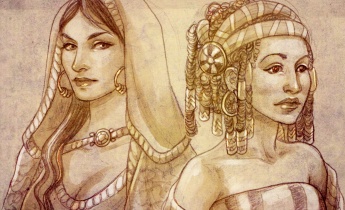
sarah_hagarOne story that has marked my life as a feminist is that of Sarah and Hagar. This is a story of pain and enmity among women under patriarchy that despite its age, is still relevant to illustrate the negative effects of the androcentric socialization. But it can also hold an inspirational feminist reading that leads us towards a reflection on the amazing possibilities of a shift in the way we women look at each other.
Feminism is a political practice, an ethics for living based in an option for women. It is not or should not be a Diploma, a chair where to work from 9:00am to 5:00pm, or an excuse to act from our own privileges against other women. In private and in public, in academia or in the street, in sexual, cultural, intellectual and religious affairs, a feminist is a feminist, without excuses or regrets.

This year I was part of the anthology “Jesus, Muhammad and The Goddess” with an essay called “The Wounded Goddess: The History of Sarah and Hagar From a Feminist Outlook” from which I want to share some excerpts with you, as follows: Continue reading “Feministing Sarah and Hagar by Vanessa Rivera de la Fuente”

The Denied Trans-Childhood of Medusczka by Vanessa Rivera de la Fuente

13162008_266379727041652_171093612_n

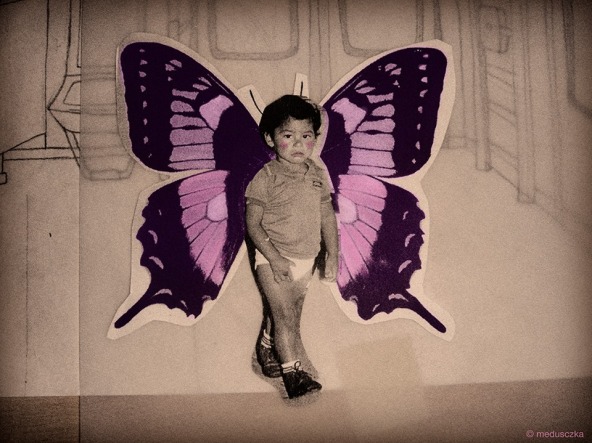
One of my articles in April featured one of the “Niñas Santas Trans”(1). I have been asked often where I came across her and if there are more liken her. Well, she is part of a colorful and provocative project of mexican trans-feminist artivist and illustrator Medusczka Gorgona, who developed a series of images that mix religion Mexican popular culture and trans identities to make visible the non-conforming childhood subjugated by heterosexual discipline.

I have known Meduscka for a while. I am personally fascinated with each one of those beautiful and cheeky “Niñas Santas Trans.” Now is your chance to meet her and her “Niñitas”(2), through this short interview she agreed to have for this site. Continue reading “The Denied Trans-Childhood of Medusczka by Vanessa Rivera de la Fuente”