

 I have the privilege of having radical lesbian feminism ‘work’ for me. I can’t explain why it does – but it does – it just works for me. I am not of the same generation as most feminists who experienced and awakened to radical feminism during the women’s movement of the 70s and 80s in the United States. I am not white nor was I middle-class when I encountered it (though I probably am middle class now). But nonetheless, as I encountered radical lesbian feminist writing, and eventually some of the women who wrote them, it spoke to me in the depths of my being and rattled my very core. Radical lesbian feminism liberated me and birthed me into a whole new way of Be-ing…and that is a privilege I must not take for granted and must hold loosely. Continue reading “Privileged Feminist By Xochitl Alvizo”
Author: Xochitl Alvizo
Queer feminist theologian, Christian identified. Associate Professor of Religious Studies in the area of Women and Religion and the Philosophy of Sex Gender and Sexuality at California State University, Northridge. Her research is focused on feminist and queer theologies, congregational studies, ecclesiology, and the emerging church. She is co-founder of Feminism and Religion (feminismandreligion.com) along with Gina Messina. Often finding herself on the boundary of different social and cultural contexts, she works hard to develop her voice and to hear and encourage the voice of others. Her work is inspired by the conviction that all people are inextricably connected and the good one can do in any one area inevitably and positively impacts all others. She lives in Los Angeles, CA where she was also born and raised.
Leadership As Risk And Open Dialogue By Xochitl Alvizo
Regardless of the context, leadership is too often simply an imitation and implementation of business management strategies that are designed to ‘lead’ people toward a predetermined goal. In business the goal is to maximize profits, minimize cost, and increase production, and as long as it is serves that purpose, employee satisfaction is sought and minimally maintained. I reviewed Ronald A. Heifetz classic text on leadership, Leadership Without Easy Answers, which does take the discussion of leadership into a different direction. And although it does not fall in the direction I want to eventually go, it does offer a solid place to start this conversation on leadership. [1] Continue reading “Leadership As Risk And Open Dialogue By Xochitl Alvizo”
Seeds of Hierarchy By Xochitl Alvizo
 Last month I was at an event that I helped organize. Inevitably I was here and there and everywhere: greeting people, making sure things were in place, answering questions, and taking pictures (I’ve been the official ‘unofficial’ photographer at this event for 4 years now). But, the one thing that will stick in my memory was the reminder that the little things count: “What we are doing in the present is creating the future, is the future.”[1]
You see, while I was taking pictures of people at one of the tables I ended up in front of someone I had not yet met, so I introduced myself and asked him his name. After he told me his name, Joe – a first year masters student, immediately proceeded to tell me how intimidated he was by me. He told me that I was famous and that he got so nervous each time I came around that he tried not to look at me because he wouldn’t know what to say. (Obviously he couldn’t have been truly intimidated since he was able to tell me all this – but the lightning speed in which he talked and his obvious nervousness made me realize there was some truth to what he was expressing). Continue reading “Seeds of Hierarchy By Xochitl Alvizo”
Sister Wives, The Terrible Taboo, and Agency by Xochitl Alvizo
A couple of weeks ago I watched a handful of Sister Wives episodes; it was the start of the new season and the network was having a marathon. I was absolutely fascinated. It was my first time watching the show, and interestingly, I had actually seen the family in person in Boston before I ever saw them on TV. They had been in town in September for a panel discussion that one of my friends was hosting and all I knew about the Sister Wives show was that it was about a polygamist family with three wives and one husband. I never imagined myself intrigued. But seeing the women sitting there, hearing them talk about their lifestyle and how much they love their sister wives, getting to witness their family dynamics and their different personalities, I found that my first reaction to them was not judgment. Instead I found myself increasingly curious, particularly about the sister wives’ relationship with one another. Continue reading “Sister Wives, The Terrible Taboo, and Agency by Xochitl Alvizo”
Religious Mestizaje by Xochitl Alvizo
Some have said that all theology is autobiographical. Whether this is always the case or not, in my case, it is absolutely true. I came to the topic of religious mestizaje because of my own need to make sense of the fact that I fully identify as a Goddess loving person as well as a Christian-identified one. I have made reference to this before on this blog; I have admitted that even after my feminist awakening, even after coming to love and practice Goddess spirituality, even after reading all of Mary Daly’s books (some of them more than once), I have chosen to affiliate with Christianity all while also maintaining my Goddess devotion nonetheless. Therefore, Gloria Anzaldua’s understanding of mestijaze, and religious mestizaje in particular, has contributed to the ongoing revision of my religious identity.
The word mestiza or mestizo is born of the incarnation of hybridity and diversity.[1] Historically mestizaje is the new hybrid race, a reference to Mexicans who are the mixed people born of Indian and Spanish blood in the 16th century.[2] The Spanish invaded the land now called Mexico, and in partnership with rival tribes, conquered the Aztec people. Oscar Garcia-Johnson, in his book A Mestiza Community of the Spirit, states that mestizaje “represents a hub of dehumanizing stories and self-empowering templates.”[3] Thus, there is an inherent violence implied in mestizaje as the word originated, and this violence is also implied in my Goddess Loving Christian mestizaje. Christianity has been the cause of much harm and dehumanizing violence, especially in its relationship to women, and really is in need of transformation and self-empowering templates. The origin of mestizaje implies the violence of one tradition or people dominating and suppressing another and the reality that new life, a new people and tradition, find a way nonetheless; I think this is part of what leads to my religious mestizaje. The new ‘way’ that I have found has taken form in a Goddess Loving Christian religious practice that reflects the concrete embodied reality of my experience – a religious practice that is always negotiated with a community of people. .
Be-ing in the Church By Xochitl Alvizo
Sometimes it is difficult to make sense of the peculiar paths our religious lives take, much more so to make sense of one another’s paths which can be so different from our own.
I was raised in a Mexican American family and grew up in Los Angeles, California(my parents say I was “made in Mexico, assembled in the U.S.”). And I grew up going to Spanish-speaking Catholic mass. I have often said that the God I know in Spanish is so different from the God I came to know in English when I began to roam Protestant circles in undergrad. Growing up, the Spanish speaking God I knew was as assumed and as basic as the air that kept us alive: always available and always with us in the good, the bad, and the ugly. God was a constant without which we could not exist. But in undergrad, my Protestant friends seemed to have a completely different understanding of God than the one I had grown up with. Theirs was a God that required obedience, a God of very specific expectations, and a jealous God at that! It was a very confusing time for me and my engagement with Christianity wavered.
Then in graduate school, eight years after undergrad, something happened that revolutionized my life – I discovered radical feminists! As ironic as this might seem, radical feminists provided me with a way to make sense of Christianity. They gave me a language and the tools to both critique and engage Christianity and the church. I have often said that if it wasn’t for Mary Daly, I wouldn’t be able to call myself a Christian(!). Continue reading “Be-ing in the Church By Xochitl Alvizo”
Hearing Each Other to Speech in the Academy By Xochitl Alvizo
Sometimes when I write, especially when I am writing an academic paper but even when I am writing for this blog, I imagine that I am writing it to my feminist peer-group. I am part of a group of four feminist women who have intentionally decided to stay involved in our religious traditions. We are Unitarian Universalist, American Baptist, Presbyterian, and Disciples of Christ, and we started our peer-group in order to enCourage, support, and inspire each other as we participate in our churches with our full feminism selves. We get together regularly and we listen deeply to each other, we celebrate, we cry, we mourn, we rage, we laugh, and, of course, we eat together. On many occasions we have each expressed that we are better versions of ourselves because we are part of each others lives.
One of the reasons it is easier for me to write to my peer-group instead of my academic audience is because I know that my peer-group is invested in my empowerment, my liberation, and my continual be-coming – they understand that my well-being contributes to theirs, and vice versa. Thus, when I write for them, I do not fear; I trust that my peer-group will truly hear me and encourage me, and that when they raise questions and point out weaknesses in my writing, they do so not in an attempt to tear down my work but in order to strengthen it and build on it.
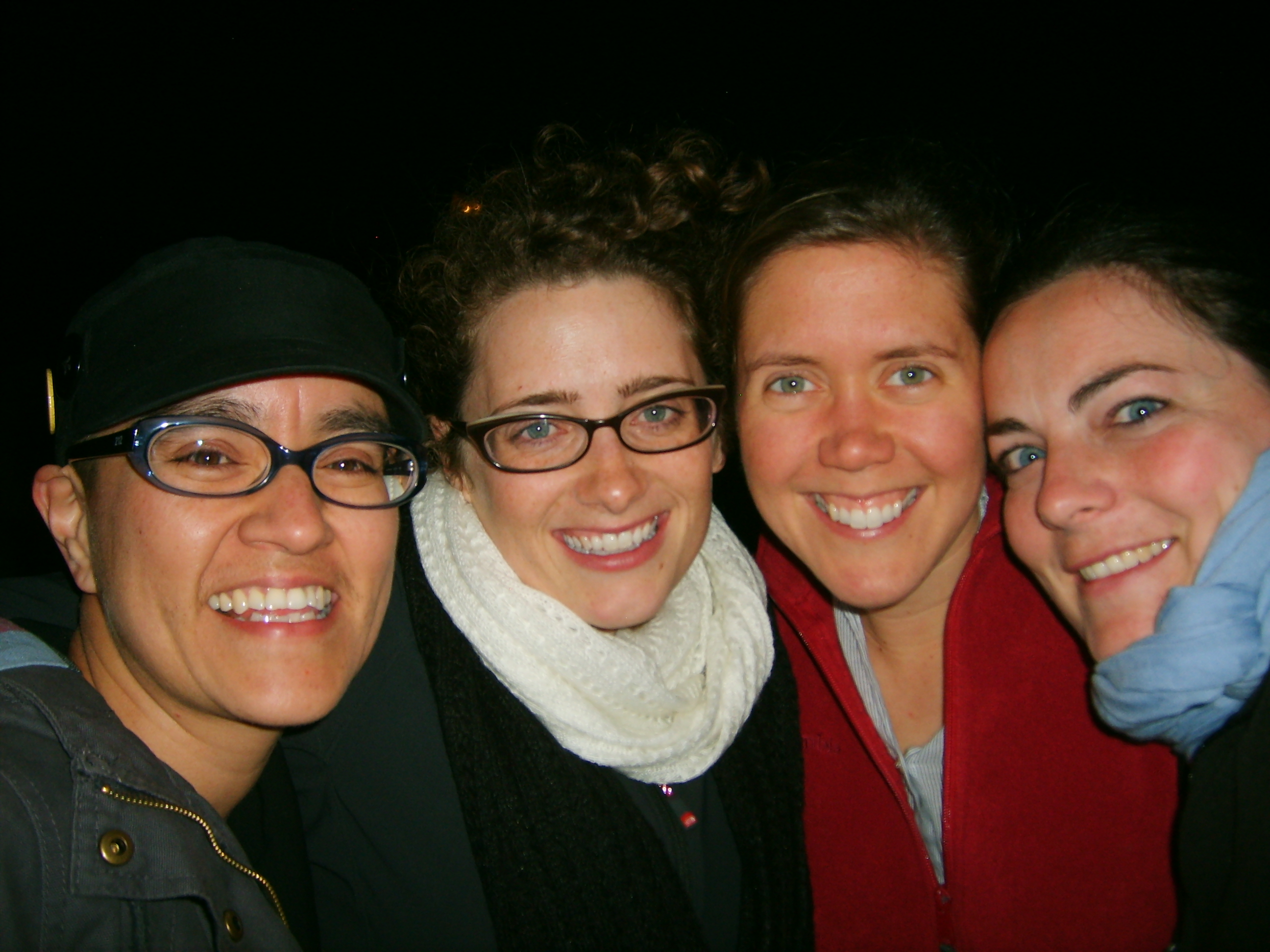
My peer-group, while being able to point out the blind spots and shortcomings on my work, never fail to recognize, honor, and express appreciation for my contribution as well. They hear me to speech and understand the importance of that for bringing out my academic best. Continue reading “Hearing Each Other to Speech in the Academy By Xochitl Alvizo”
Speaking of Sacrifice and Rape Culture…by Xochitl Alvizo
Recently Gina Messina-Dysert, on this blog, wrote about rape culture and the church’s role in preserving it instead of challenging the norm of violence against women and victim blaming. And in my last post, after having just watched the last installment of the Harry Potter movies, I wrote about Lily’s love for Harry as being what saves Harry and not the sacrifice of Lily’s life; my point being that we need to give more credit to love as salvific and redemptive and not to sacrifice or suffering. For too long within Christianity, Jesus’ death and ‘sacrifice’ have been held up as the core, the essence, the heart of Christianity – wrongly giving it a necrophilic emphasis that I do not believe is actually faithful to the Christian tradition. All this reminds me of why feminism is critical to my ability to stay within Christianity and that without feminism I would not be able to be a Christian-identified woman.
Every day in both small and enormous ways I see the effects and embedded patterns that result from the long history and dominance of patriarchy/kyriarchy. Everything from sexism and racism, to capitalism and the destruction of our world, these destructive systems are part of our daily environment and affect the quality of all our lives in devastating ways. And perhaps it is because I am a woman and I am directly and existentially affected, but, sexism, misogyny and violence against women are the things that most crush my spirit and break my heart. As I see these insidiously at work in many aspects of our society, and see the effects these have on us, women and men alike, I am saddened and angered to a level for which I have yet to find words to express. I feel it, the insidious trauma of sexism, misogyny, and violence against women, I feel their effects on me and others, but do so usually in silence or in tears. Lump in my throat. No words to speak. All I can do is continue in my commitment to live in a way that is different from these – in a way that is biophilic and affirming of all people as sacred and divinely in-Spirited. Continue reading “Speaking of Sacrifice and Rape Culture…by Xochitl Alvizo”
Loving Harry Potter By Xochitl Alvizo
I went to the movies with a group of friends last Friday to watch the final Harry Potter movie, Harry Potter and the Deathly Hallows Part II. It was a great movie, fun and action-filled, and the energy of opening night only made it better. Afterward we all went out to eat and exchanged notes on our favorite scenes – talking about every little detail. At one point, one of my friends commented on the strong role women have in the Harry Potter movies/books. She said the story is carried by the women – that if it wasn’t for them Harry Potter would not exist. She made specific mention of Harry’s mom as having sacrificed her life for him. Lily dies so Harry can live.
This of course is when my brain comes to a screeching halt.
Women sacrificing their lives for others – I become suspicious and my defenses go up. Sacrifice = suffering. Suffering must not be glorified. Sacrifice must not be sacralized. I see red flags everywhere. Wait, though; haven’t those of us who are Christian-identified heard the opposite affirmed a million times? Jesus suffered and died – was sacrificed – for our sins. Further, Christians’ most sacred ritual, communion, includes reference to Jesus’ broken body and spilt blood. So, isn’t that what people do for love, sacrifice, as Harry’s mom did?
No. I don’t think that’s actually what people (or God) do for love. Continue reading “Loving Harry Potter By Xochitl Alvizo”
Qu(e)erying Our Lady By Xochitl Alvizo
I love art. I especially love certain women’s art – women such as Frida Kahlo, Cathy Ashworth, Sudie Rakusin, and Alma Lopez. To me, their art is a reflection of women’s strength, creativity, and beauty. Frida Kahlo, for example, expressed so many aspects of herself and her experience through her art. In it one can glimpse her passionate love for Diego Rivera, her continuous physical pain, her search for meaning, and the unending hopefulness she maintained throughout it all. Frida Kahlo’s art, like her person, was vibrant and full of life, colorful and yet broken. She expressed the wide spectrum of her experience not in words only but in color and images, texture, paint and print. As she put it, “I paint my own reality” – her own reality is what she knew and it is what she painted.
I rely on art to do what academics often cannot do well – what I cannot do well – which is to communicate the truths that rattle our being down to its deep core in ways that connect with others. There have been times in my academic life when I have encountered new insights that changed my life forever. Moments of being shaken and awakened at my very core by a truth that until then had eluded me. But such moments can be hard to share with others because they can be hard to translate to words, even if such moments have come to me by words. Learning about feminist theology and being shaken by the truths it spoke to me is one such encounter – and it was indeed an academic one that is often hard for me to put into words and explain to others. On the other hand, encountering Alma Lopez’s artwork was also a core rattling moment, but one which I can more easily share.
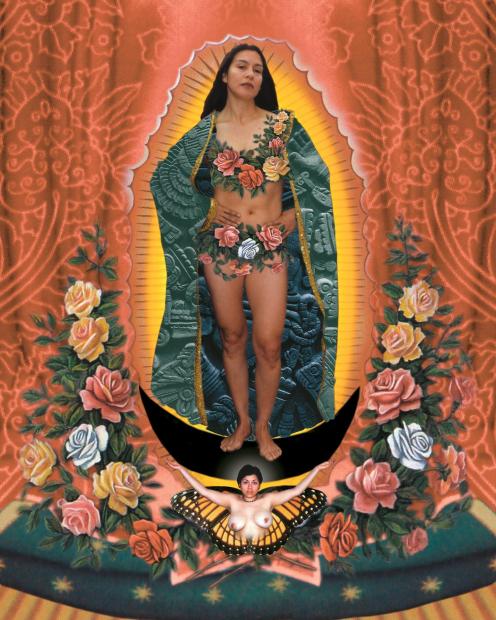
Alma Lopez’s Our Lady is a digital art piece in which Our Lady of Guadalupe is depicted (embodied, really) in a more obviously female form than is traditionally expected. For this, every time her piece is on exhibit, Lopez receives a barrage of protest and harassment – as does the sponsoring institution. Accusations of obscenity, profanity, and blasphemy come her way. But, why?
When I see Lopez’s Our Lady, I do not see blasphemy or obscenity, I see a celebration of the female and the sacred. I see the beauty of God’s queer incarnation – and I remember – I remember that the word became flesh and made her home among us. From the womb of a woman’s body, her life-giving body, the divine took human shape. Boundaries of sacred and profane forever blurred.
Alma Lopez, like Frida Kahlo, paints her own reality; she says this piece is a reflection of her relationship with Our Lady of Guadalupe, a divine image that has been part of her life since she was very young. But I also think she reveals something more than just her personal relationship with Our Lady… Continue reading “Qu(e)erying Our Lady By Xochitl Alvizo”
 Feminism and Religion