
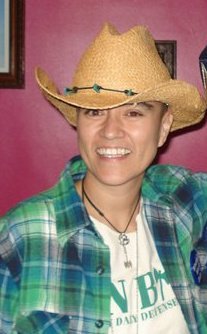
My Terrible Transition Year and the Return of my Humanity by Xochitl Alvizo

Alvizo headshot smallI have called it, The Terrible Transition Year, this year of finishing dissertation, uprooting from home, moving cross-country, and starting a new full-time teaching job. Last year at this time I was in LA for a 7-8 week stay, away from home – which at the time was in Boston – writing dissertation nonstop. I spent the holidays apart from my family and shared in none of my traditional holiday celebrations as I intensely pushed forward to complete the dissertation. After (seemingly) endless edits back and forth with my advisor and second reader, I finished the dissertation just in time to successfully defended it in May.

During most of this dissertation-writing time, I never had the sense that there would be a successful end to it all. I wrote and submitted each chapter-draft always with the underlying fear that I would be told my work was unworthy, my logic lacking, and my thesis unsubstantiated. So I vividly remember the moment (I can actually still feel it) when I got definitive affirmation that my dissertation would reach a successful end. I remember the shock, the relief, and the physiological rush that coursed through my body as I read the words of approval that came in response to my last chapter. I remember my body shooting up off the chair and saying, “No!” as I read the email. It was a “No” of disbelief, as in “Can this really be?!” And it was. And only at that point did I believe my dissertation would be successful. Continue reading “My Terrible Transition Year and the Return of my Humanity by Xochitl Alvizo”

From Mary Daly to the Emerging Church – An Unlikely Dissertation Trajectory by Xochitl Alvizo

Alvizo headshot smallIt was 2004 during the first semester in one of my classes for the master’s program when my TA presented a lecture on feminist critiques of atonement and introduced me to the writings of Mary Daly. It was my first introduction to feminism as theory and theology, and my first introduction to Mary Daly the writer.

Mary Daly was the first woman to preach at the Harvard Memorial Chapel in its three-hundred and thirty-six year history, back in 1974. On that occasion and in cahoots with some of her graduate students of the time, Mary Daly took the opportunity to invite people to give physical expression to their exodus from sexist religion by walking out of the church with her that day. Thinking that she would be leading the way out the door, she was surprised to find that people were very much ahead of her. She walked out of that church, out of sexist religion, as one among many who were ready to take their “own place in the sun.” This exodus, the act of leaving behind the silence and alienation from one’s own voice and from one’s own be-ing that is perpetuated by the prevailing patriarchal structures of church, is a choice I commit to make every day as I stay on the boundary of Christianity and church. Continue reading “From Mary Daly to the Emerging Church – An Unlikely Dissertation Trajectory by Xochitl Alvizo”

Learning to Live by Xochitl Alvizo

Incarnation, Goddess spirituality, Xochitl Alvizo, god became fleshThe earliest memories of myself are as a student. I have distinct memories of myself in my kindergarten classroom. I even remember the location of my seat in the specific cluster of tables I was assigned. I also remember the stick-figure graphics that adorned the pages of the phonics books we used to learn to read. In the second grade, I have my first memory of making a mistake. In a spelling test, I wrote ‘rite’ instead of ‘write’ – and for the life of me, I could not understand how my answer wasn’t the correct one! Yet, despite this incomprehensible error (smile, smile), and the many more since, the classroom has always been the place where my life has been transformed and revolutionized.

However, my most memorable learning moments began in undergrad, when I took an “Intro to the Old Testament” class in which my faith perspective was turned upside down. It was there that I first learned that the stories of the Hebrew Bible were not unique; other ancient people also had stories that paralleled them. The creation stories, the flood story, the exodus story, among others, all had parallels in other mythological texts and traditions. In grad school I learned that even the Gospel of Mark had parallels to Homer’s Iliad. My whole religious tradition was flipped on its head – but the thing was – I absolutely loved it! I couldn’t have been more inspired. Those moments in the classroom of encountering theories and ideas that could set my whole mind reeling and my world spinning, that could revolutionize my way of thinking about the world, crystallized my commitment to a lifetime of learning. In those moments I came to realize that the classroom would always be my second home. Continue reading “Learning to Live by Xochitl Alvizo”

What “I Believe” and Found Worth Sharing by Xochitl Alvizo

Incarnation, Goddess spirituality, Xochitl Alvizo, god became fleshThe end of my Ph.D. program is in sight. Originally, in 2004, I came to Boston University School of Theology (BU STH) from Los Angeles for a two-year masters program. Along the way I switched to a three-year masters program, after which I ended up staying for the Ph.D. Now, eleven years later, the end is actually in sight.

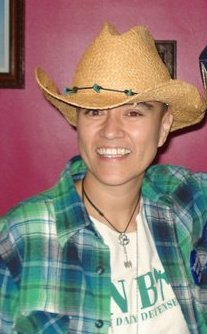
Last week I successfully defended my dissertation, “A Feminist Analysis of the Emerging Church: Toward Radical Participation in the Organic, Relational, and Inclusive Body of Christ.” Two days ago I had the last class section that I will ever teach as TA (teaching assistant) – next time I teach I will be doing so as a professor of religious studies at Cal State Northridge.  Finally, because I am one of the students who will be graduating this year, I was invited to participate in the last chapel service of the year and be a speaker for the “This I Believe” service – themed after the NPR series by the same name. Yesterday, I was one of six students who were given three minutes each to share what we believe – which, let me tell you, is not a small task!  Continue reading “What “I Believe” and Found Worth Sharing by Xochitl Alvizo”

The Case of Mary’s Decency by Xochitl Alvizo

Incarnation, Goddess spirituality, Xochitl Alvizo, god became flesh

This post builds on yesterday’s post on Marcella Althaus-Reid’s indecent theology.

In her book, From Feminist Theology to Indecent Theology, Marcella Althaus-Reid states that liberation theology has two dominant characteristics: the familiar ‘preferential option for the poor,’ with its suspicion of class structures and the influence these have on faith and church teachings to perpetuate and preserve its unjust systems of oppression and domination; and  for its praxis of transformation of said unjust systems (FFTIT, 11). Marcella Althaus-Reid credits liberation theology for “systematically and structurally using the concept of ideological formation in order to unveil class economic interests embedded in theology” (FFTIT, 11).

To build on this, Althaus-Reid uses the concepts of ‘decency’ and ‘indecency’ to challenge theology’s obsession to regulate and control “sexual performances, roles and behavioral patterns of people…through a sexually based patriarchal hierarchy based in a particular androcentric understanding of life according to predetermined identities” – in other words, heterosexism. Indecent theology, then, aims to strip away theology’s false claim to sexual neutrality and its obsession to control, and instead aims to develop a theology free from the heterosexism that confines it (FFTIT, 83). One key place in theology she seeks to indecent (she used the word as a verb) is the “legend of Mary” (IT, 40).

Continue reading “The Case of Mary’s Decency by Xochitl Alvizo”

A Little Indecency with Marcella Althaus-Reid by Xochitl Alvizo

Incarnation, Goddess spirituality, Xochitl Alvizo, god became fleshInspired by the conversation following Vanessa Rivera de la Fuente’s post yesterday, I offer here a little synopsis of Marcella Althaus-Reid’s work in Indecent Theology: Theological Perversion in Sex, Gender, and Politics.

Marcella Althaus-Reid opens her book by recalling a question she received from one of her colleagues: “What has sexuality to do with a Feminist Liberation Theology?” To answer she reflected on early liberation theology when it was still in formation and later liberation theology as it gained its place in the academy and the church:

[T]imes change and subversive theology becomes incorporated: church leaders claim that they themselves have always been liberation theologians. They guarantee to the state that there is no danger here…It is acceptable in the academy, entertaining to the wider public and a valuable commodity to publishers. Having reached calm waters, why would I as a feminist liberation theologian risk rocking the boat by introducing such a scandalous theme as sexuality, especially when it is not the theology of sanctified sexuality? (Indecent Theology, 2)

Continue reading “A Little Indecency with Marcella Althaus-Reid by Xochitl Alvizo”

The Work of Justice-Making by Xochitl Alvizo

Incarnation, Goddess spirituality, Xochitl Alvizo, god became fleshWritten two weeks ago on December 5, 2014, but offered still as some food for thought:
I’m supposed to be writing my dissertation. Hand on the plow, no looking back. I have even left town for the whole month of December in order to minimize the everyday distractions that are part of my life in Boston and increase my focus on writing. I’ve set up shop in my friends’ living room, surrounded by multiple windows, perfect natural lighting, and festive Christmas decorations. But, two days in, and I have yet to get into my dissertation writing groove.

So I am writing this blog post instead in an effort to work my way back to the dissertation. I read somewhere that writing is thinking – which is why dissertations, and every other kind of writing project, often change direction along the way. If writing is thinking, then, I’m hoping that writing this post will help me think my way back to the dissertation, because at the moment, all I can of think is, I can’t breathe, I can’t breathe, I can’t breathe. Continue reading “The Work of Justice-Making by Xochitl Alvizo”

We are Worth the Time it Takes to Create a Practice by Xochitl Alvizo

Incarnation, Goddess spirituality, Xochitl Alvizo, god became fleshRecently, in response to the excellent conversation following Nancy Vedder-Shults’ post on the goddess Kali, Carol Christ commented to Nancy, “I too love our conversations, wish there was more in depth talk on our blog [FAR], maybe there will be.” Carol’s comment* struck a deep chord within me. One of the main objectives that the FAR co-founders had in creating Feminism and Religion was that it be a place where we could and would engage with one another across a diversity of feminist issues and the broad range of feminist passions and work – where we could discuss, critique, and build upon on each other’s efforts.

So two things came to mind as I reflected on Carol’s comment. The first was my personal lament that I have not been as actively participating in the discussions that follow the FAR blog posts as I did when we first started Feminism and Religion. FAR has such rich and valuable material – it really does provide a great opportunity for conversation and dialogue – and sadly I have been a passive participant as of late. I read and learn from the discussions, but I have not been joining in. I lament that. FAR is definitely a place where I could engage with others in deep conversations, but how actively am I actually doing this? Continue reading “We are Worth the Time it Takes to Create a Practice by Xochitl Alvizo”

Systemic Violence and the Killing of Michael Brown by Xochitl Alvizo


Xochitl
Photo by Chris Pinkham

Oppression is systemic. Injustice is systemic. It pervades the whole – it seeps into everyday actions and becomes habits and patterns that function as default. As a result, the actions that fall within these patterns hardly need justifying. If anything, the questioning of them is what is put on the defensive. And those who stand against injustice must usually do so in the face of militarized policing, before vast forces that serve to preserve the status quo.

I can’t help but see the similarities between the everyday existence of young black men, of boys in this country, and that of women. The lack of safety in public places; the need to always be aware of one’s surroundings; the lack of trust in the intentions of another; living with the knowledge that people like you experience violence at much higher rates than others. It is a racist, violent, patriarchal world we live in. And, yes, it is also other things, good and beautiful things, but sometimes the hard reality of everyday life blocks out that light. Continue reading “Systemic Violence and the Killing of Michael Brown by Xochitl Alvizo”

Using the Listening Guide to Leave Oneself Open to Discovery by Xochitl Alvizo

I am deep in the throes of writing my dissertation. Writing started in earnest, in its most recent stretch, in mid-July when I came out to write in isolation in my home city of Los Angeles.* If all goes as scheduled (so far, so good), I will be submitting the first chapter to my editor today, the same date of publication as this blog post. Of course, after my editor’s suggestions, the chapter then goes to my advisor and will inevitably have a life of its own after that. For now, I am enjoying the moment of being on the cusp of completing my very first chapter. I’m a big believer in celebrating every moment of success!

Last month I was in the throes of data analysis. My dissertation involves qualitative research with twelve Emerging Church congregations across the United States. From that research I ended up with 40 audio -hours of transcriptions from the interviews I conducted. I spent the whole month of June – again, in isolation –in San Diego at Point Loma Nazarene University* focusing on the task at hand. Analyzing data is a completely different challenge than writing, and finding the best method of analysis based on one’s own commitments particularly so. Luckily, I found a method of analysis that allowed me to ‘listen deeply’ to my data and leave myself open to discovery.

I have written before about Nelle Morton’s feminist principle of ‘hearing each other to speech’, its importance in my own life, and how valuable I think it could be for those of us in academentia and for the way we do our work. There is a logic that sometimes dominates in the academy of finding the fault in the argument of the other and building one’s own argument in opposition to it. That is not, however, the manner in which I want to do my own work. Nelle Morton proposes a model of engaging one another in which we commit to ‘hearing all the way’, to “depth hearing.” The practice is of a kind of hearing that engages the whole self to the point that you might find yourself holding your breath in order to allow the coherence of someone else’s story to form and come together. Her claim is that this kind of hearing evokes “a new speech – a new creation” because it enables the speaker to be heard to their own story, thereby creating the possibility for new imagining, an imagining that contributes to the mutual empowerment and transformation of both hearer and speaker. Continue reading “Using the Listening Guide to Leave Oneself Open to Discovery by Xochitl Alvizo”