A Next Wave of Scholarship By Kwok Pui Lan

I came to the United States in 1984 to begin my doctoral studies at Harvard Divinity School. It was an exciting time to do feminist theology and religious studies. Womanist ethics just began to emerge, as Dr. Katie Geneva Cannon has just completed a dissertation on the subject at Union Theological Seminary in 1983. I count it as a blessing that she was teaching at the Episcopal Divinity School, just on the other side of the Cambridge Common.
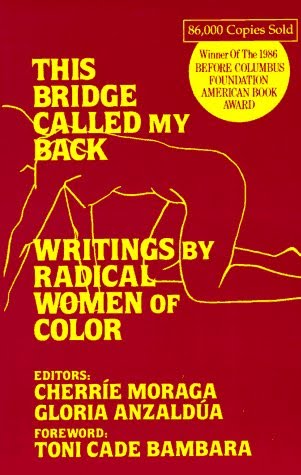
The mid-1980s saw the paradigm shifts in feminist studies in religion, as womanist, mujerista/Latina, Asian and Asian American women began to articulate their own theological understanding. If Womanspirit Rising (1979) was a reference text for our field, which contained essays by white women, we had the first reader by radical women of color, This Bridge Called Our Back(1981).

We began to discuss multiple oppressions and multiple identities, and the need to integrate race, class, and gender into our analyses. We challenged white women who have universalized their middle-class, white experience as if women were all the same. Continue reading “A Next Wave of Scholarship By Kwok Pui Lan”

Forty Years and Counting: Women and Religion in the Academy By Carol P. Christ

Carol P. Christ is a founding mother in the study of women and religion, feminist theology, women’s spirituality, and the Goddess movement.  She teaches in the Women’s Spirituality program at CIIS and through Ariadne Institute offers Goddess Pilgrimages to Crete. Her books include She Who Changes and Rebirth of the Goddess and the widely used anthologies Womanspirit Rising and Weaving the Visions.

The receipt of an invitation to the Fortieth Anniversary Celebration of the Women’s Caucus in the American Academy of Religion and the Society for Biblical Literature this week, takes me back to the summer of 1971.  At the first meeting of Women Theologians at Alverno College (which was followed up at Grailville in succeeding years), I proposed that we form a feminist caucus in the field of religion, as had already been done by feminists in several other fields.

Since I was one of the few women at Alverno who had attended the annual meetings in the field of religion, I was delegated to call Harry Buck, then director of the AAR, to ask for space on the program.  Harry, who continued to support the work of women in the field through lecture series at Wilson College and the magazine Anima which he founded, offered not only space at the meetings, but a print-out of the names and addresses of all of the members of the AAR who were not obviously male.  I invited all of them to come to a feminist meeting at the AAR in Atlanta. It is hard to imagine now, but before 1971, the women who attended the AAR in any given year could probably have been counted on one hand. Continue reading “Forty Years and Counting: Women and Religion in the Academy By Carol P. Christ”

Undermining Our Own Authority by Grace Yia-Hei Kao

“I’ll be the first to admit that it can be difficult, if not exhausting, for women professionals to discern how to be strong and assertive (and thus be taken seriously) without coming across as arrogant or b*tchy. But there is indeed room for play between over-deference and cockiness, and the ability to code-switch while in formal settings would be a good step in the right direction for many of us.”

Whatever your take is on Madonna’s feminist bona fides, she was definitely on to something in her 2001 hit “What it Feels Like For a Girl.”  Madonna sang about the tremendous pressures females of all ages face to conform to gendered norms of physical appearance and demeanor. I want to use her lyrics to discuss some ways I have seen young women in academe subtly undermine their own authority.

Continue reading “Undermining Our Own Authority by Grace Yia-Hei Kao”

Diminished Quality of Catechesis as a Basis for Limiting the Role of a Catholic Theologian: An Examination of the Controversy Surrounding Elizabeth Johnson’s Book The Quest for the Living God By Michele Stopera Freyhauf

The biggest mistake people make is to use theology and catechesis interchangeably.  This is an important distinction that impacts the scholarly community of Catholic Theologians.  So what is the difference?  Catechesis in the Catholic tradition is an “echoing” of the faith.  Theology on the other hand, using St. Anselm’s definition, is “faith seeking understanding.”  Michael G. Lawler and Todd A. Salzman, in “Beyond Catechesis: What is the Proper Role of Theology”, states that catechesis can be included in theology, but theology is distinguished from catechesis because it “uses scholarly principles not only to communicate the truths of faith but also to explore the meanings of those truths and contemporary ways of articulating them.”  Also the theologians’ role is seen as mediator between the magisterium and the faithful. Richard P. McBrien states that the required role of a theologian is to investigate and examine the whole of the Christian tradition; what it means, how it fits, how it is developed, and how it relates to the outside the world in theory and in practice.   Ex Corde Ecclesiae also emphasizes community and dialogue, which is not always realized in practice.  Continue reading “Diminished Quality of Catechesis as a Basis for Limiting the Role of a Catholic Theologian: An Examination of the Controversy Surrounding Elizabeth Johnson’s Book The Quest for the Living God By Michele Stopera Freyhauf”

Hearing Each Other to Speech in the Academy By Xochitl Alvizo

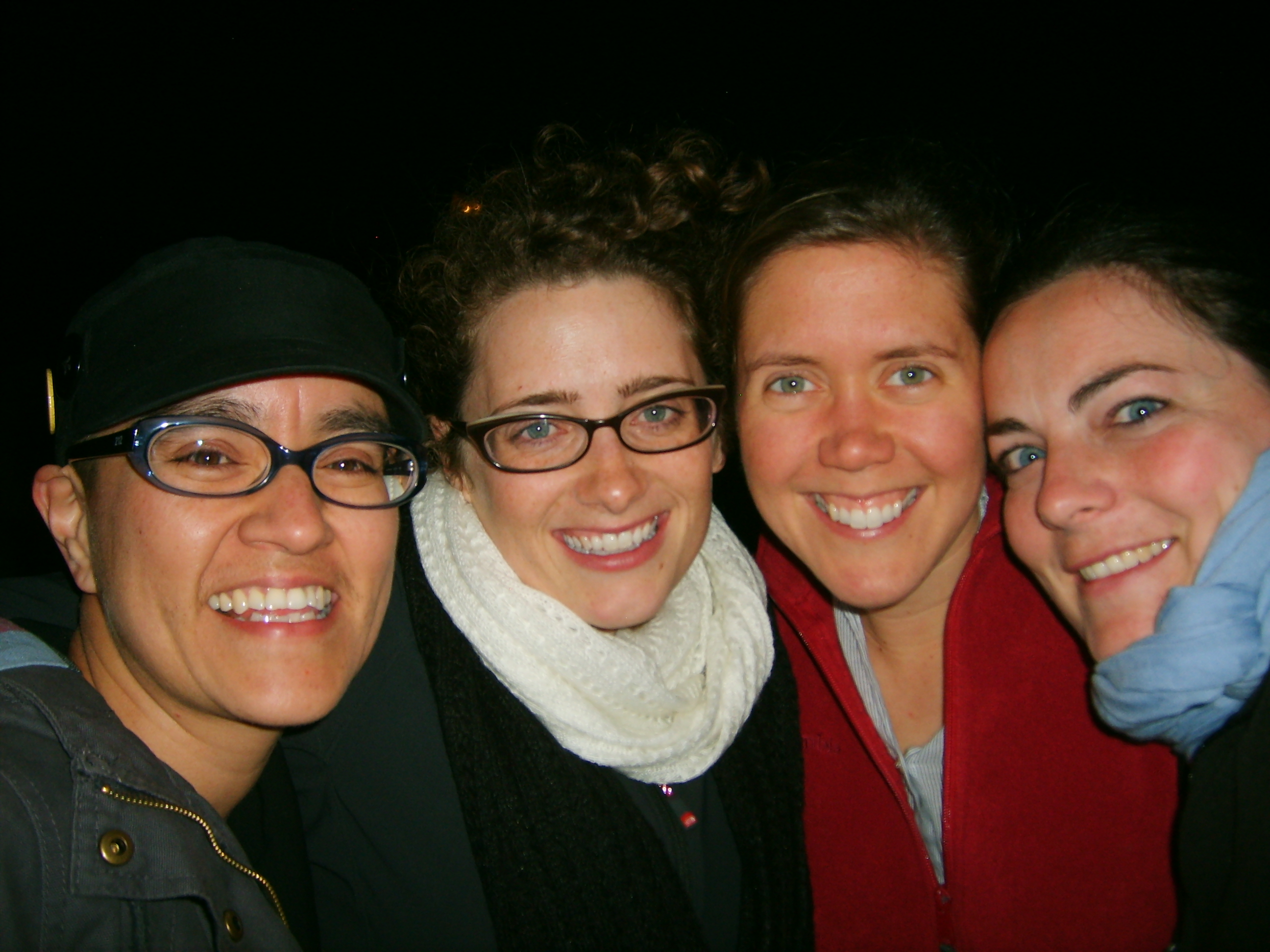
Sometimes when I write, especially when I am writing an academic paper but even when I am writing for this blog, I imagine that I am writing it to my feminist peer-group.  I am part of a group of four feminist women who have intentionally decided to stay involved in our religious traditions.  We are Unitarian Universalist, American Baptist, Presbyterian, and Disciples of Christ, and we started our peer-group in order to enCourage, support, and inspire each other as we participate in our churches with our full feminism selves. We get together regularly and we listen deeply to each other, we celebrate, we cry, we mourn, we rage, we laugh, and, of course, we eat together. On many occasions we have each expressed that we are better versions of ourselves because we are part of each others lives.

One of the reasons it is easier for me to write to my peer-group instead of my academic audience is because I know that my peer-group is invested in my empowerment, my liberation, and my continual be-coming – they understand that my well-being contributes to theirs, and vice versa. Thus, when I write for them, I do not fear; I trust that my peer-group will truly hear me and encourage me, and that when they raise questions and point out weaknesses in my writing, they do so not in an attempt to tear down my work but in order to strengthen it and build on it.

My peer-group

My peer-group, while being able to point out the blind spots and shortcomings on my work, never fail to recognize, honor, and express appreciation for my contribution as well. They hear me to speech and understand the importance of that for bringing out my academic best. Continue reading “Hearing Each Other to Speech in the Academy By Xochitl Alvizo”

“I’m in love with Judas”: Names and Taboos within the Scholarly Arena of Religion and Biblical Studies By Michele Stopera Freyhauf

Names provoke opinions, responses, and even controversy.  Lady Gaga’s song “Judas” is a perfect example of this.   Before this song was released, the title “Judas” stirred controversy throughout the nation just because of its name.  If one takes the time to read the lyrics, you find a human struggle summed up with the phrase, “Jesus is my virtue but Judas is the demon I cling to.”   To look beyond the name, a deep theological fight that is relevant to every one of us emerges; struggling between what you know is right but being drawn to what you know is wrong.  Within this song lays a fundamental dichotomy of betrayal and forgiveness that is overlooked because of a name, Judas, or what Mary Elizabeth Williams calls a “Christian taboo.”

The word “taboo” refers to something that is inappropriate or unacceptable by society , and can also indicate ostracizing.  It seems strange to apply this word to female scholars in the field of Religion and Biblical Studies; but it fits.  Scholarship that is identifiably authored as female brings about scrutiny and opinions of inferior quality or lack of creditability; after all “what does a woman know?”  Women and scholarship, especially in the male-dominated fields of Religion, Biblical Studies, and Archaeology, are in fact “taboo;” unaccepted, improper, ignored, and shunned.  This issue was first brought to my attention at a Women’s Luncheon at the annual meeting of the Society of Biblical Literature (“SBL”) in 2008.  Carol Meyers, a professor of Religion at Duke University, was being honored for her mentorship to women in the field of biblical studies.  Amy-Jill Levine, an earlier recipient of this award, introduced Meyers. Continue reading ““I’m in love with Judas”: Names and Taboos within the Scholarly Arena of Religion and Biblical Studies By Michele Stopera Freyhauf”