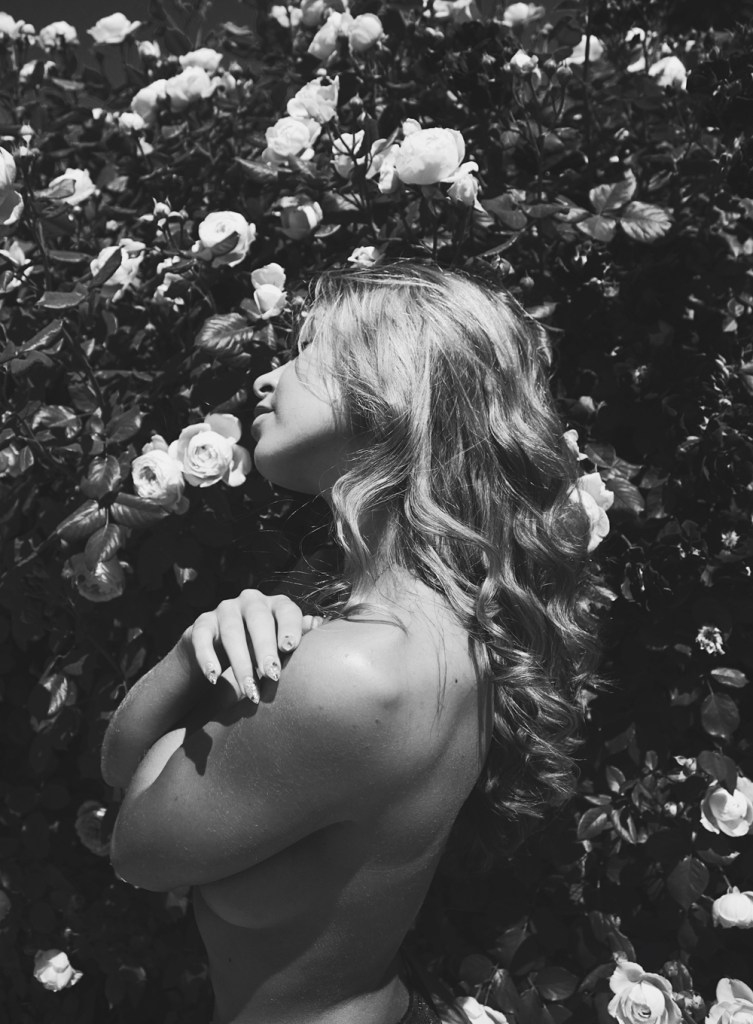
Opening All the Windows and Returning the Goddess to Her Rightful Place by Caryn MacGrandle

The quote that describes Jesus as the “front door of God” is found in the Bible, John 10:7, where Jesus says, “I am the door of the sheep”; essentially meaning that the only way to access God is through Jesus, as he is the entrance point to God’s presence.

I have been calling on Hathor, and last night, She came.

Ah, let me back up a few steps.

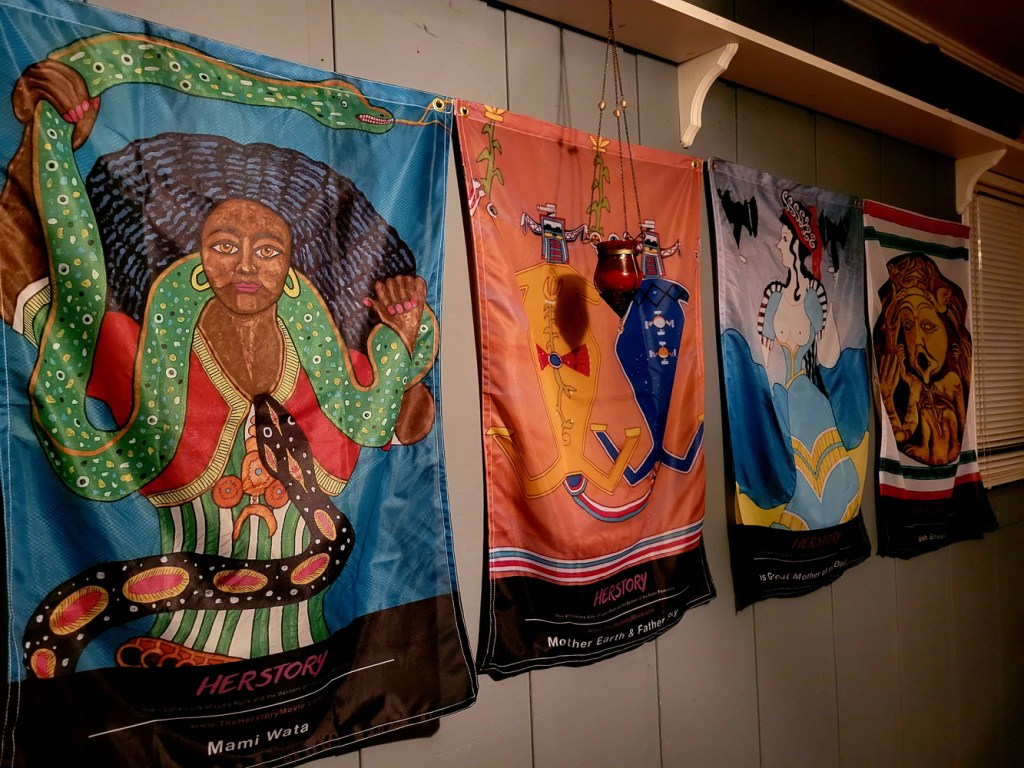
I have up to now not given much thought to Egyptian Goddesses instead preferring my Celtic and Greek ones. But a few days ago, I attended this lovely workshop by Tahya who has developed a modern day systrum, the percussion instrument used by Priestesses in honor of Hathor.  And as so often happens on my path, when you crack the window, She comes. 

The last two days I have been listening to Hathor meditations, the Mother of all creation, the Goddess of Love, an Egyptian Goddess whose worship may have begun in the Predynastic Era over 5,000 years ago.

Continue reading “Opening All the Windows and Returning the Goddess to Her Rightful Place by Caryn MacGrandle”

The Need for Roots: Mutual Aid by Beth Bartlett

In those first few days after the holidays, when the togetherness, warmth, and happy times with family and friends came to an abrupt end, a song my son used to sing as a small child kept running through my mind:

Keep Christmas with you all through the year.
When Christmas is over, save some Christmas cheer.
These precious moments, hold them very dear
And keep Christmas with you all through the year..

The simple glee of my 21-month-old grandson finding ways to scoot and slide down the small icy slope in our backyard was enough to keep the grief over the loss of my sister and my recent loss of my dearest friend at bay.  But in the days after their departure, as I spent time with my friend’s family planning her memorial gathering and visited another dear friend who has chosen to enter hospice in her final days of a terminal illness, coupled with the hooded ogre of the approaching Project 2025, saving Christmas cheer has had its challenges.

But my son found a way.  He and his wife decided they didn’t want the precious times to end, and within a week had decided to pull up stakes from their home 150 miles away, found and signed on to buy a house just five minutes from our home so that the precious moments could continue.

Continue reading “The Need for Roots: Mutual Aid by Beth Bartlett”

“Now I Will Have Respect”; “Now I Will Be Looked Up To” – Women Assert Their Worth in the Christmas Story by Liz Cooledge Jenkins

“The Giver of Breath has looked upon me with kindness and has taken away my shame. Now I will have respect in the eyes of my people.” -Elizabeth (Luke 1:25, First Nations Version [FNV])

“From deep in my heart I dance with joy to honor the Great Spirit. Even though I am small and weak, he noticed me. Now I will be looked up to by all. The Mighty One has lifted me up!” -Mary (Luke 1:46-49a, FNV)

Two women, one older, one younger. Both unexpectedly pregnant. Both key players in the Christian Advent story. Both living in a world, not unlike ours today, where women were not fully acknowledged as complete human beings, with all the strength and agency this entails. And both, for this reason, starving for the respect of their loved ones and communities.

Continue reading ““Now I Will Have Respect”; “Now I Will Be Looked Up To” – Women Assert Their Worth in the Christmas Story by Liz Cooledge Jenkins”

Gardens Bloom Between our Wombs by Chaz J.

For years, I have dedicated my life to empowering and uplifting all women in all ways. I have loved women as mothers, aunties, sisters, friends, cousins, teachers, mentors, daughters, God, and most recently myself. The depth of sweetness and emotion for women runs as deep as my life’s work. My life’s work centers and finds a deep well of inspiration in women and women’s lived experiences. My feelings concerning women were confusing for a long time and for a long time I have loved women in every way, except two: sexually and romantically. Giving myself permission to love women in every way has been one of the most liberating personal experiences of my life. It is one of my most radical revolutions. It is self-acceptance and self love in totality. 

The object of my desires is fluid and delicate. She is intuitive  and evasive. She is real and ethereal. She is Wombman. She created and is the fundamental elements that constantly gives birth to the world around us. She has given birth to all of us. She is fire and fury. She is Mother Gaia. She is the winds of change. She is water’s depth and grace. She is the sunlight after a storm. She IS the storm purging impurities. She is a creator and she is destruction. She simply IS…

Continue reading “Gardens Bloom Between our Wombs by Chaz J.”

You Lied to Me About God, a memoir by Jamie Marich, PHD, book review by Janet Maika’i Rudolph

This was a hard book for me to review. Perhaps because she writes about such difficult issues and yet she does so in a compelling and at times even humous manner.  I feel a responsibility and yet find it hard to capture how she manages a breezy manner while discussing heavy material. Perhaps, even though our backgrounds are vastly different, I was also relating to so much of what she said. Jamie also covers so much ground; it is hard to pick out individual aspects to discuss.

As a child Jamie Marich was caught in the web of different religious systems, Catholicism from her mother and Evangelical from her father. They were at soul-hurting odds with each other (both parents and religions). Each one proclaimed they were the one true path so there was the ever-present threat of choosing the wrong one and facing a parent’s wrath along with that of eternal damnation. She labels this spiritual trauma. It cuts to the soul of a person being trapped into a no-win situation. It’s a conflict-driven, shame-filled, guilt-ridden way to grow up.

Continue reading “You Lied to Me About God, a memoir by Jamie Marich, PHD, book review by Janet Maika’i Rudolph”

Harris Could Not Outrun 2000 Years of Patriarchy by Janet Maika’i Rudolph

I made this poster 8 years ago and am devastated to have to dust it off again. The safety pins came from a British idea when Brexit was passed. People would wear the safety pins on their clothes to let anyone feeling vulnerable know that they would be “safe” with them.

The political finger pointing for Harris’ loss is beyond noxious. I have heard all manner of scapegoats; Biden, the Obamas, VP candidate Walz, Harris for saying too much of one thing, not enough of another, the progressives, Liz Cheney and even George Clooney. . . .blah blah blah

How can we make sense of a world where women voted for a misogynistic abuser. Black and brown people voted for a white supremist. Latinos voted for a policy of mass deportations targeting their brethren. Youth voted for a climate denier affecting their future. And so on. Think of all the women who voted for a world where they, their daughters and their granddaughters can be denied basic healthcare. It’s a true-to-life Cinderella scenario whose stepmother cut the toes off her own daughters to please a prince. Or Chinese mothers who would bind their own’s daughter’s feet, thereby crippling them in the service of marriage.

Continue reading “Harris Could Not Outrun 2000 Years of Patriarchy by Janet Maika’i Rudolph”

Legacy of Carol P. Christ: Forty Years and Counting: Women and Religion in the Academy

This post was originally published on Oct. 21st, 2011

Carol P. Christ is a founding mother in the study of women and religion, feminist theology, women’s spirituality, and the Goddess movement.  She teaches in the Women’s Spirituality program at CIIS and through Ariadne Institute offers Goddess Pilgrimages to Crete. Her books include She Who Changes and Rebirth of the Goddess and the widely used anthologies Womanspirit Rising and Weaving the Visions.

The receipt of an invitation to the Fortieth Anniversary Celebration of the Women’s Caucus in the American Academy of Religion and the Society for Biblical Literature this week, takes me back to the summer of 1971.  At the first meeting of Women Theologians at Alverno College (which was followed up at Grailville in succeeding years), I proposed that we form a feminist caucus in the field of religion, as had already been done by feminists in several other fields.

Since I was one of the few women at Alverno who had attended the annual meetings in the field of religion, I was delegated to call Harry Buck, then director of the AAR, to ask for space on the program. Harry, who continued to support the work of women in the field through lecture series at Wilson College and the magazine Anima which he founded, offered not only space at the meetings, but a print-out of the names and addresses of all of the members of the AAR who were not obviously male. I invited all of them to come to a feminist meeting at the AAR in Atlanta. It is hard to imagine now, but before 1971, the women who attended the AAR in any given year could probably have been counted on one hand. Continue reading “Legacy of Carol P. Christ: Forty Years and Counting: Women and Religion in the Academy”

The Wisdom of the Beguines: The Forgotten Story of a Medieval Women’s Movement by Laura Swan, part 2 by Theresa C. Dintino 

Part 1 was posted yesterday

Praying people out of purgatory

Beguines excelled at this. By the Middle Ages, the belief in many Christian circles was that one did not go directly to heaven but to a sort of “holding place” after death to be cleansed of their sins before being allowed into heaven. Eventually “the medieval church also taught that people could pray for the souls in purgatory and that their prayers would effectively aid those souls in their transition from purgatory to heaven”(108).

It’s important to note that these women were esteemed by the communities they lived in as spiritually gifted, able to intercede with God on their own without permission from the church, clergy or men. This is radical for the time.

“Beguines, as we have seen, were understood to have extraordinary spiritual powers. People believed that having a beguine intercede before God on their behalf was an assurance that their petition was heard by God—and perhaps in no instance more than for “those poor souls in purgatory.” And beguines believed that they did indeed exercise the authority to release countless souls from purgatory. Many of the stories included in the vitae of beguines grapple with the fate of the deceased in purgatory (or hell)”(109).

Continue reading “The Wisdom of the Beguines: The Forgotten Story of a Medieval Women’s Movement by Laura Swan, part 2 by Theresa C. Dintino “

The Wisdom of the Beguines: The Forgotten Story of a Medieval Women’s Movement by Laura Swan, part 1 by Theresa C. Dintino 

Moderator’s Note: This piece is in co-operation with The Nasty Women Writers Project, a site dedicated to highlighting and amplifying the voices and visions of powerful women. The site was founded by sisters Theresa and Maria Dintino. To quote Theresa, “by doing this work we are expanding our own writer’s web for nourishment and support.” This was originally posted on their site on July 5, 2022. You can see more of their posts here. 

Around 1200 AD in Europe, communities of women often called beguines began to form. These women were not nuns, they were devout and devoted to the tenets of Christianity but did not belong to any church. They were independent communities of women who often created their own industry, trade or other means to produce income. They were self-sufficient and generally concerned with helping the poor, especially women. They lived in convents. This was the origin of that word.

“These women were essentially self-defined, in opposition to the many attempts to control and define them. They lived by themselves or together in so-called beguinages, which could be single houses for as few as a handful of beguines or, as in Brugge, walled-in rows of houses enclosing a central court with a chapel where over a thousand beguines might live—a village of women within a medieval town or city”(2).

Continue reading “The Wisdom of the Beguines: The Forgotten Story of a Medieval Women’s Movement by Laura Swan, part 1 by Theresa C. Dintino “

Dear Anti-Harris Progressives: Here’s how to help Palestine (and the economy, and everything else) by Trelawney Grenfell-Muir

First, understand without doubt: I agree with the anti-genocide protesters (and the progressives who are frustrated about our rigged economy). I couldn’t agree more that we need an arms embargo against Israel. I support the progressives who are protesting at Harris rallies, saying they refuse to vote for any candidate who does not commit to an arms embargo, so that no more US arms will be sent to wage ethnic cleansing against the civilians (mostly women and children) of Palestine. Harris has advocated for a ceasefire, she has met with the protesters, and she has responded politely to their protests against the genocide. But when they continue to chant that they won’t vote for her, she responds, “You know what? If you want Donald Trump to win, then say that. Otherwise, I’m speaking.”

I do not like the hand we’ve been dealt. Our democracy, always deeply flawed, has become increasingly weak and unstable. In fact, many professors and analysts increasingly define the US as a plutocracy – governed by and for the top 1%, in which the average citizen has little to no voice or impact on policies. Monopolies have consolidated in order to help destroy democracy, driving costs of living up and wages down. The Military Industrial Complex, with its staggering domination of the international markets, has locked the US into endless war, often in support of autocracies over democracies. And the same billionaires who are causing climate change, are investing in high tech solutions to save themselves from the apocalypse while the rest of us go extinct or become their slaves. 

Continue reading “Dear Anti-Harris Progressives: Here’s how to help Palestine (and the economy, and everything else) by Trelawney Grenfell-Muir”