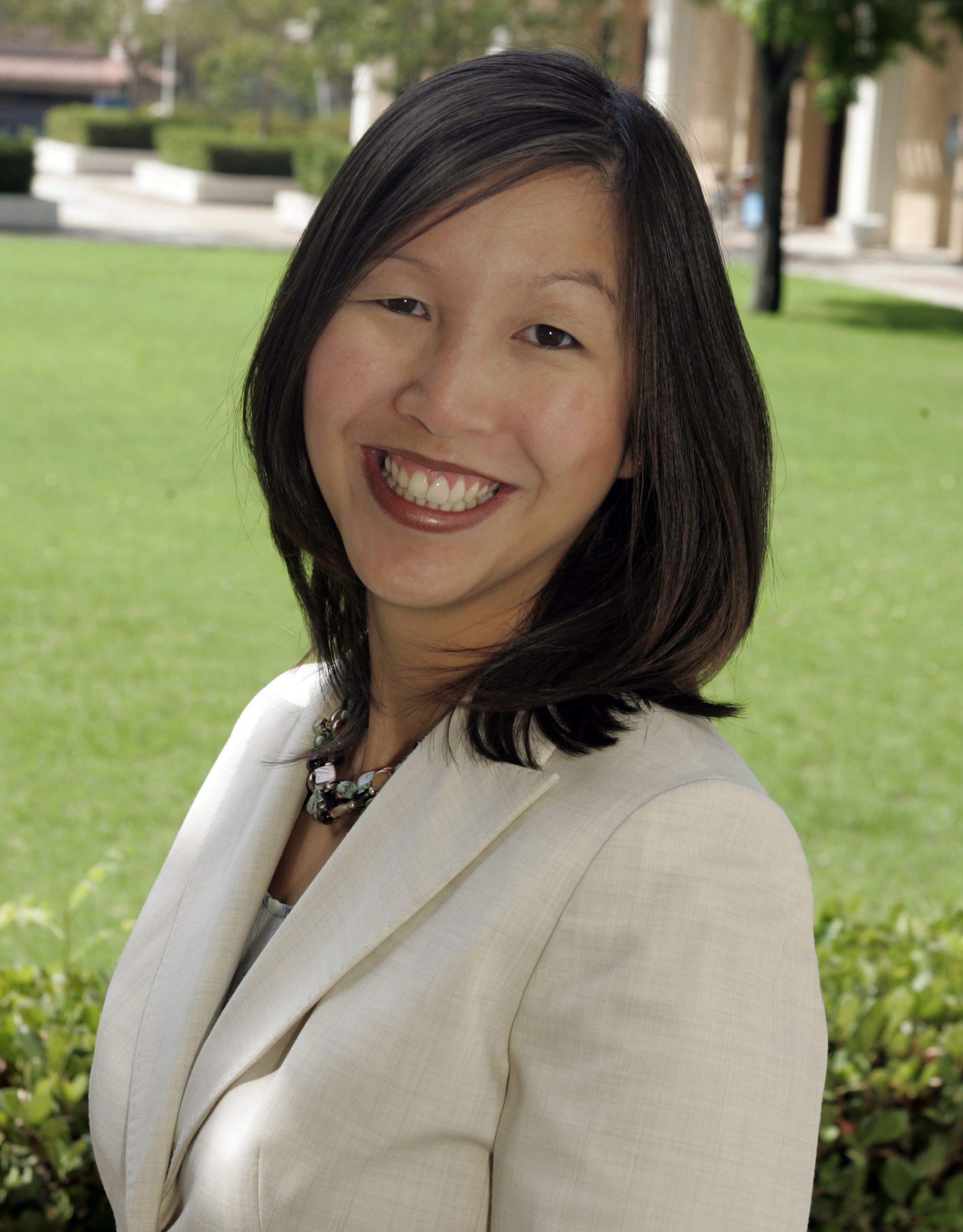
Exciting New Research on Matriarchal Societies By Carol P. Christ

The following is a guest post written by Carol Christ, Ph.D., a pioneer and founding mother of the Goddess, women’s spirituality, and feminist theology movements, and director of the Ariadne Institute.  She is also the author of multiple books including Rebirth of the Goddess.

Although there are some of us who disagree, the “party line” in the fields of Religious Studies and Archaeology—even among feminists– is that there never were any matriarchies and that claims about peaceful, matrifocal, sedentary, agricultural, Goddess-worshipping societies in Old Europe or elsewhere have been manufactured out of utopian longing.

I myself and most other English-speaking scholars defending Marija Gimbutas’s theories about Old Europe have studiously avoided the word “matriarchy” (speaking rather of “matrifocal, matrilineal, and matrilocal” societies) because the very word “matriarchy” conjures up the image of female-dominated societies where women ruled, waged wars, held men as slaves, and raped and abused men and boys. In fact, this fantasy tells us far more about patriarchy than about it does about matriarchy. Continue reading “Exciting New Research on Matriarchal Societies By Carol P. Christ”

“I’m in love with Judas”: Names and Taboos within the Scholarly Arena of Religion and Biblical Studies By Michele Stopera Freyhauf

Names provoke opinions, responses, and even controversy.  Lady Gaga’s song “Judas” is a perfect example of this.   Before this song was released, the title “Judas” stirred controversy throughout the nation just because of its name.  If one takes the time to read the lyrics, you find a human struggle summed up with the phrase, “Jesus is my virtue but Judas is the demon I cling to.”   To look beyond the name, a deep theological fight that is relevant to every one of us emerges; struggling between what you know is right but being drawn to what you know is wrong.  Within this song lays a fundamental dichotomy of betrayal and forgiveness that is overlooked because of a name, Judas, or what Mary Elizabeth Williams calls a “Christian taboo.”

The word “taboo” refers to something that is inappropriate or unacceptable by society , and can also indicate ostracizing.  It seems strange to apply this word to female scholars in the field of Religion and Biblical Studies; but it fits.  Scholarship that is identifiably authored as female brings about scrutiny and opinions of inferior quality or lack of creditability; after all “what does a woman know?”  Women and scholarship, especially in the male-dominated fields of Religion, Biblical Studies, and Archaeology, are in fact “taboo;” unaccepted, improper, ignored, and shunned.  This issue was first brought to my attention at a Women’s Luncheon at the annual meeting of the Society of Biblical Literature (“SBL”) in 2008.  Carol Meyers, a professor of Religion at Duke University, was being honored for her mentorship to women in the field of biblical studies.  Amy-Jill Levine, an earlier recipient of this award, introduced Meyers. Continue reading ““I’m in love with Judas”: Names and Taboos within the Scholarly Arena of Religion and Biblical Studies By Michele Stopera Freyhauf”

Speaking of Sacrifice and Rape Culture…by Xochitl Alvizo

Recently Gina Messina-Dysert, on this blog, wrote about rape culture and the church’s role in preserving it instead of challenging the norm of violence against women and victim blaming. And in my last post, after having just watched the last installment of the Harry Potter movies, I wrote about Lily’s love for Harry as being what saves Harry and not the sacrifice of Lily’s life; my point being that we need to give more credit to love as salvific and redemptive and not to sacrifice or suffering. For too long within Christianity,  Jesus’ death and ‘sacrifice’ have been held up as the core, the essence, the heart of Christianity – wrongly giving it a necrophilic emphasis that I do not believe is actually faithful to the Christian tradition. All this reminds me of why feminism is critical to my ability to stay within Christianity and that without feminism I would not be able to be a Christian-identified woman.

Every day in both small and enormous ways I see the effects and embedded patterns that result from the long history and dominance of patriarchy/kyriarchy. Everything from sexism and racism, to capitalism and the destruction of our world, these destructive systems are part of our daily environment and affect the quality of all our lives in devastating ways. And perhaps it is because I am a woman and I am directly and existentially affected, but, sexism, misogyny and violence against women are the things that most crush my spirit and break my heart. As I see these insidiously at work in many aspects of our society, and see the effects these have on us, women and men alike, I am saddened and angered to a level for which I have yet to find words to express. I feel it, the insidious trauma of sexism, misogyny, and violence against women, I feel their effects on me and others, but do so usually in silence or in tears. Lump in my throat. No words to speak. All I can do is continue in my commitment to live in a way that is different from these – in a way that is biophilic and affirming of all people as sacred and divinely in-Spirited. Continue reading “Speaking of Sacrifice and Rape Culture…by Xochitl Alvizo”

On the Murders in Norway: The Need for a Multicultural Vision By Starhawk

The following is a guest post written by Starhawk, lifelong activist in peace and global justice movements, a leader in the feminist and earth-based spirituality movements, and author or coauthor of ten books, including The Spiral Dance, The Fifth Sacred Thing, Webs of Power: Notes from the Global Uprising, and her latest, The Last Wild Witch.

Cross posted at Dirt Worship.

This summer has been a whirlwind of teaching permaculture and working on making a movie from my novel, The Fifth Sacred Thing.  But a few days ago I took a break to attend a performance of Guys and Dolls put on by SF Arts Education, in which my fifteen-year old Goddess-child Kore was singing and dancing. SF Arts Ed runs a wonderful program where students from middle schools and high schools put on Broadway musicals, complete with singing, dancing, and a full jazz orchestra.  We had balcony seats behind the stage, so I was looking down on these bright and beautiful young people of all different backgrounds and ancestry, reflecting the multicultural nature of San Francisco itself.   They are a talented bunch, but I also know how hard they work, how much time they rehearse and the discipline they develop.  What a gift it is to have such wonderful youth growing up in our city! Continue reading “On the Murders in Norway: The Need for a Multicultural Vision By Starhawk”

What about “the final frontier?” Saying goodbye to the Space Shuttle Program By Sara Frykenberg

The following is a guest post written by Sara Frykenberg, Ph.D., independent scholar and graduate of the Women Studies in Religion program at Claremont Graduate University.

“It all started when they messed with Pluto,” my husband joked to me as we listened to the NPR report last week about the end of NASA’s Space Shuttle Program.  I imagined a slighted god of the underworld smiting our exploration of the heavens!  “How dare you tell me that Pluto doesn’t count,” he yells, dragging our shuttles out of the sky.  But joking aside, I am really, truly bummed about this new “development” is US space exploration.  The idea that human beings have the ability to travel in outer space is a great source of hope and inspiration for me— but why?  And why am I so bummed?  I decided that I needed to examine these feelings from both a feminist and a spiritual dimension.

Does feminism care about the Space Program?  That is a question, because I really don’t know.  I know particular feminists do.  I know some don’t. Continue reading “What about “the final frontier?” Saying goodbye to the Space Shuttle Program By Sara Frykenberg”

Matriarchy By Peggy Reeves Sanday

The following is a guest post written by Peggy Reeves Sanday, Professor of Anthropology at the University of Pennsylvania. She is one of the founders of the anthropology of sex and gender and author of several foundational books including Women at the Center: Life in a Modern Matriarchy.

2008. Oxford Encyclopedia of Women in World History. See below for full citation at end of article.

Matriarchy

The role of matriarchy in women’s history has been obscured by the stereotypes used within male-centered Western social theory regarding the nature of power. In the late nineteenth century the concept of matriarchy played a role in discussions of presumed stages in the cultural evolution of society from “primitive” female rule to more advanced male rule. In the late twentieth century this definition of matriarchy was rejected in favor of a comparative and ethnographically based approach that yielded a more nuanced understanding of the logic of gendered responsibilities in particular societies. By the beginning of the twenty-first century, this new approach was the basis of the burgeoning field of matriarchal studies.

Matriarchy has changed from being thought of as merely a prepatriarchal evolutionary stage to being applied to women-centered societies founded on principles of gender balance and a gift-giving economy. This new definition reflects a maternal social philosophy for a global culture that seeks peace and stresses the importance of nurturing the young, the old, the sick, and the poor. Continue reading “Matriarchy By Peggy Reeves Sanday”

Rape Culture and the Church By Gina Messina-Dysert

Rape culture – a culture where violence against women and victim blaming is the norm –  is alive and well in our society.   Women are taught from a young age that rape is the worst thing that could possibly happen in our lives.  As a patriarchal institution, the Church supports rape culture.  Although texts, traditions, and teachings can be a resource for women who have been victimized, they can also serve as a roadblock and encourage further victimization.

There has been a long history of women and girls being taught by the Church that their lives are of little value once their hymens are broken.  Citing the rape of Roman matron Lucretia, Church father Jerome stated that rape is the one exception for suicide. In fact, according to Jerome, “Although God is able to do all things, he cannot raise up a virgin after a fall.”*  Although he argued that at the time of the resurrection of the body every affliction and mutilation would be healed, Jerome claimed that not even the power of God could repair a broken hymen.  Likewise, Tertullian commended Lucretia for her suicide and claimed she was an example for Christian women.

Harmful ideas about women, rape, and victimization have been promoted by biblical rape texts and their interpretations.  These “rape texts” of the Bible have been utilized to typify how “real” rape victims behave and suggest that women who claim rape are suspect.  From the story of Ms. Potiphar (Genesis 39), that offers the image of a woman crying rape as one not to be trusted, to the story of Susanna (Daniel 13) that presents the notion that a rape victim should be silent, biblical texts set forth images of women and sexual violence that support rape culture. Continue reading “Rape Culture and the Church By Gina Messina-Dysert”

A Christian Theologian’s Perspective on Feminism By David Buhrow

The following is a guest post written by David Buhrow,MA, Theology Instructor at Notre Dame College.

I am a Christian. Not a “Catholic” Christian or a “Protestant” Christian, just a Christian. I spent most of my early life thinking we (Christians) were making a fairly good effort doing what Jesus would do. I never thought much about this whole feminism thing until I happily, discovered that my firstborn was a girl. Then, everything changed. This little one, this new life, arrived into our world and our world was not ready for her. At the prospect and the potential of her venturing into the world and being able to discover everything for the first time, I found myself frightened and grieved by the ill-fated history of women and the little that the Church has done to resolve the problem. My once ideal and naive understanding of Christianity as being liberating and freeing was dashed to pieces in the hopes of my daughter finding a place in this world and within my Christian faith.

I cannot understand how we have come so far in “Christendom” just to learn that we have not yet begun to “fight the good fight.” When you read the Gospels, you quickly learn that Jesus was a Liberator. He sought to liberate anyone and everyone to free us from each other and ourselves. Paul quoted in Galatians a primal Christian baptismal creed that cries out for freedom and liberation: “There is no Jew or non-Jew, slave or free, male and female.” In this he saved the best for last. He doesn’t say “male or female” as if we should be identifying the differences within Christianity, but “male and female” identifying the unity within our diversity. Paul later writes a series of epistles and letters that seem to have forgotten the basic principles that he allegedly set forth in the Letter to the Galatians. 1 Corinthians 15 mentions a myriad of “witnesses” to the resurrection of Jesus Christ without ne’er a mention of a female. But, when we look back to the 4 canonical (i.e. chosen by men at the leading of god) Gospels, that are supposed to be foundational to our faith, the women were the first and some of the only witnesses to Jesus’ posthumous physical appearances. The men were gone, scared away from Jerusalem, in abstentia, AWOL, missing. Hence, Jesus in his resurrected condition, after enduring hours of debilitating torture and death, and then a shocking-to-the-system resurrection, had to travel on foot all the way to Galilee to “find” his disciples who were “hiding” some 65 miles away. Continue reading “A Christian Theologian’s Perspective on Feminism By David Buhrow”

Catherina Halkes – In Memory and Appreciation By Mary Grey

The following is a guest post written by Mary Grey, Ph.D., Professor of Feminist Theology at St. Mary’s University College, in Twickenham, London, and author of thirteen books including A Cry for Dignity: Religion, Violence, and the Struggle of the Dalit Women in India.

On April 21, 2011  Catherina Halkes, the founding mother of Feminist Theology in Europe, inspiration to me and countless others,  prophet, mentor – and much else – died in her home city of Nijmegen, the Netherlands. She certainly changed my life: I arrived in Nijmegen desperately searching for books in Feminist Theology when writing my Ph.D. thesis. I had read everything that England had to offer, (not a lot in 1986!) I could not afford to go to America, so the Netherlands was my only option. Catherine Halkes, (or Tine, as we all called her), welcomed and encouraged me: later she would come to the public defence of my thesis in Louvain – after which I became her successor to the chair of Feminism and Christendom in Nijmegen, 1988. Life was never the same again!

Catherina Halkes

Tine blazed a trail  for women’s role in theology in the Roman Catholic Church, as well as for all women in Feminist Theology in Europe in its key developing stages. She embodied the hopes and dreams of countless women – and men- beyond the boundaries of her small country. She influenced the development of Women Studies as an academic subject in the Universities of the Netherlands and wider. Her influence cannot be restricted to a single category. Rooted in the progressive theology of the Second Vatican Council, she developed a wide-ranging pastoral theological influence on theology. It could be said  – although an evaluation is still too early-  that her legacy will be seen as opening up different areas of theology and related disciplines to the feminist lens, and being at the forefront of developments in many fields, always with a critical eyes of a Christian faith that has never wavered, despite continuing disappointment and personal suffering at the unflinchingly repressive attitudes of the Roman Catholic Church, to which she remained consistently loyal. Continue reading “Catherina Halkes – In Memory and Appreciation By Mary Grey”

My Body Image: Between Perception and Incarnation By Cynthia Garrity-Bond

No matter what shape or size, the words “body image” conjure-up pictures of the self that are like looking into those funny mirrors which distort and expand the body.  With few moments of relative slimness in my life, I have struggled with a poor self-image. It started when I was a child, who while deeply wanted, was not the hoped for frail and delicate daughter my parents had imagined.  My mother, all 5’ 100 lbs was forever reminding me that I took after my father’s Swedish side of the family, more akin to “peasant stock,” you know, those larger boned women who could birth a baby one day and return to the fields the next—you get the picture.  This is the image I came to accept of my own body, which was far from the wispy, delicate girl I longed to be.

And then my baptism into feminism, with all its corrections of the androcentric world to which I belonged. Of the many hopes within feminism, it was the release from my own body image that I longed for.  I wanted to feel at home and at one with what I was, not what I hoped to be.  Truth be known, it has never happened.

A few years back in my Medieval Theology course we were examining the Catholic doctrine of the Resurrection of the Body through such thinkers as Irenaeus, Aquinas and Bonaventure. In what my instructor thought was an affirmation of the body, she interpreted the doctrine to mean that after death we will take on our bodies as they were in life, meaning, we would look pretty much the same as we did while tromping around on earth.  In contemplating her words I sought clarification.  “So” I asked, “the body I have now will be the body I carry with me throughout eternity?”  “Well, yes” my slight and thin professor responded. Letting her words sink in for a moment I finally responded with a resounding, WTF!”   I don’t want this body to haunt me in the next life, I want Ashley Judd’s, or Jennifer Aniston’s, hell, I’ll even consider an anonymous model from the LL Bean catalog, but not THIS body!” Continue reading “My Body Image: Between Perception and Incarnation By Cynthia Garrity-Bond”