Painting Miriam by Angela Yarber

 We are your subtlest instruments:
no music branches to your breast
that does not sound in us,
no music dies away from you,
that in us lives not,
and even in your absence
your cadence journeys…

Allen Mandelbaum, Chelmaxioms

The path to freedom is often muddy.  Water sloshes through your sandals and the soles of your shoes stick, clinging to the past, weighing down the future.  No one said dancing in wet sand was easy.  But it is very holy.  Just ask the brave prophetess who celebrated liberation by dancing on the shores of a reedy sea.

Often relegated to the submissive role of sister, the character of Miriam is typically overshadowed by the triumphs of her younger brother. Like many of her canonical contemporaries, Miriam receives little attention in scripture. Her name is only mentioned twice and the story of her song is left unsung by the writers of Exodus.  Yet she is there, her song hidden in the crevices of the canon, her dance demanding that we notice the ritual event of liberation, her courageous voice prophesying, leaving a legacy for all the dancing women who will follow in her intrepid food steps. Continue reading “Painting Miriam by Angela Yarber”

Painting Isadora Duncan By Angela Yarber

A dancing woman stands center stage, her arms outstretched in natural, free, and unbound movement, as her heart cries out to us…

In May of 1877 a dancing, feminist, revolutionary was born.  She was not constrained by the corsets, morals, or traditions of her time.  Barefoot, clad in flowing garments, with a diaphanous scarf in hand, she stepped onto the stage and rocked the world: the world of dance, the world of women, and the world of religion.

Born in San Francisco as Dora Angela Duncan and known to us as Isadora Duncan, or Holy Isadora.  This wild woman rejected the rigidity of ballet, conventional roles for women, and traditional religion.  After feeling constrained by the pointe shoes, corsets, and unyielding technique of American ballet, Duncan left for Europe, intent on revolutionizing the world through dance.  She claimed, “I have come to bring about a great renaissance of religion through the dance, to bring the knowledge of the beauty and holiness of the human body … (Duncan quoted by Terry Walter in Isadora Duncan).” Continue reading “Painting Isadora Duncan By Angela Yarber”

Painting Jarena Lee By Angela Yarber

When we gender the pulpit in the direction of justice, we ordain her spirit with gratitude for the many miles she walked and the countless sermons she preached.

This month I celebrate the release of my second book, The Gendered Pulpit: Sex, Body, and Desire in Preaching and WorshipAs I celebrate the privilege I have as queer feminist to stand behind the pulpit each Sunday—to gender the space in the direction of justice—I must also recall the myriad holy women who have gone before me.  I think of many of my Holy Women Icons with a folk feminist twist: Virginia Woolf , the Shulamite, Mary Daly, Baby Suggs, Pachamama and Gaia, Frida Kahlo, Salome, Guadalupe and Mary, Fatima, Sojourner Truth, Saraswati, and so many others.  And this month I think specifically of my sister preachers, those who raised their voices in bold proclamations when the road was long and unimaginably difficult.  I think of preachers like Jarena Lee.

Jarena leeLee spent thirty years as an itinerant preacher and was the first black woman to be licensed to preach through the African Methodist Episcopal (AME) church.  Despite the fact that the AME issued a definitive ruling that women were not permitted to preach in 1852, Lee spent the bulk of her adult life preaching.  Jarena Lee’s struggle to preach is a familiar story in nineteenth-century American Protestantism, even though the Second Awakening ushered in a period of intense religious revival; with camp meetings around every corner, there was an unprecedented opportunity for women to preach.  Like Jarena Lee, though, they weren’t paid, ordained, or protected. Continue reading “Painting Jarena Lee By Angela Yarber”

What Is Love? by Jassy Watson

Jassy_Agora1-150x150I asked this question at the family dinner table, on facebook, and by e-mail.  Many heartfelt responses were offered, all insightful. Some spoke of romantic love, sexual love (eros), self-love, spiritual love, the love a parent has for a child, unconditional love (agape), primal love, authentic love, universal love, divine love, the source of love, friendship (philia), love of nature, and love of a pet, while others considered the destructive nature of love. What was demonstrated by these conversations was that not only are the possibilities of love’s expressions endless, but there can ultimately be no right or wrong answer when it comes to the meaning of love. Our cultural, familial, religious and spiritual backgrounds all play a part in the way we think and feel about love.

I was raised in a secular, middle-class, two parent, two children, cat, and sometimes a dog kind of family. Despite the usual ups and downs, our family life was full of love. I remember having feelings of love as a child that were so incredibly overwhelming I would be brought to tears. I loved everything and everybody. Mum still reminds me that if I could have, I would have brought every elderly person along with every stray animal home to look after. After reading about the process view in Carol Christ’s book She Who Changes: Re-Imagining the Divine in the World, I see now that this love I felt was born out of feelings of deep sympathy.

Because we did not have a religious or spiritual background, I had no idea what divine love meant. My idea of the divine was the male, Christian, biblical God that our family rejected. It is said that Christian love is selfless and is best seen in actions such as compassion and kindness. This may be so. But selflessness, compassion and kindness are not limited to Christian values. They are human values. In his book The Art of Happiness, the Dalai Lama says that “love and compassion are necessities, not luxuries. Without them humanity cannot survive”. All religious, spiritual and philosophical traditions speak of the values of love. They say that love encompass compassion, kindness, selflessness, acceptance, gratitude, sympathy, sharing, grace, justice, charity, and liberation. They also speak of tension, wrath, discomfort, unkindness, loss, and judgement. For me, love is all these things and more.

Ancient myths address these values of love through tales of passion and devotion. Diane Wolkstein celebrates some of these myths in her book The First Love Stories. Each story expresses a distinct aspect of love. For instance: the tale of Isis and Osiris represents love that is stronger than the forces of nature, Innana and Dumuzi expresses the cyclical quality of love; Shiva and Sati reveals the eruption of passion and the taming of the mind; the Song of Songs celebrates love’s yearning; the story of Psyche and Eros portrays the forging of the self. All of these stories emphasize the sacred nature of love.

For me, having children awakened a love so very deep within. When I gazed into the eyes of my first born son at the tender age of 18, I was so overwhelmed by love I thought my heart would burst. I now have four children a husband and a loving extended family and friends who all teach me much about the true nature of love. They teach me above all else that love is patient, non-judgmental, and unconditional. It is through the growing awareness of my spiritual being and my journey with the Goddess that love has become something deeper than I ever thought possible. Love, for me has become a union with something higher than my individual self. My love extends beyond the family to include every living being on this planet and beyond. It is not just all about giving and receiving, but rather it is a state of being. It is personal yet universal and comes from deep within my sub-conscious. Love for me, not unlike the tales woven in ancient myth, is profoundly sacred.

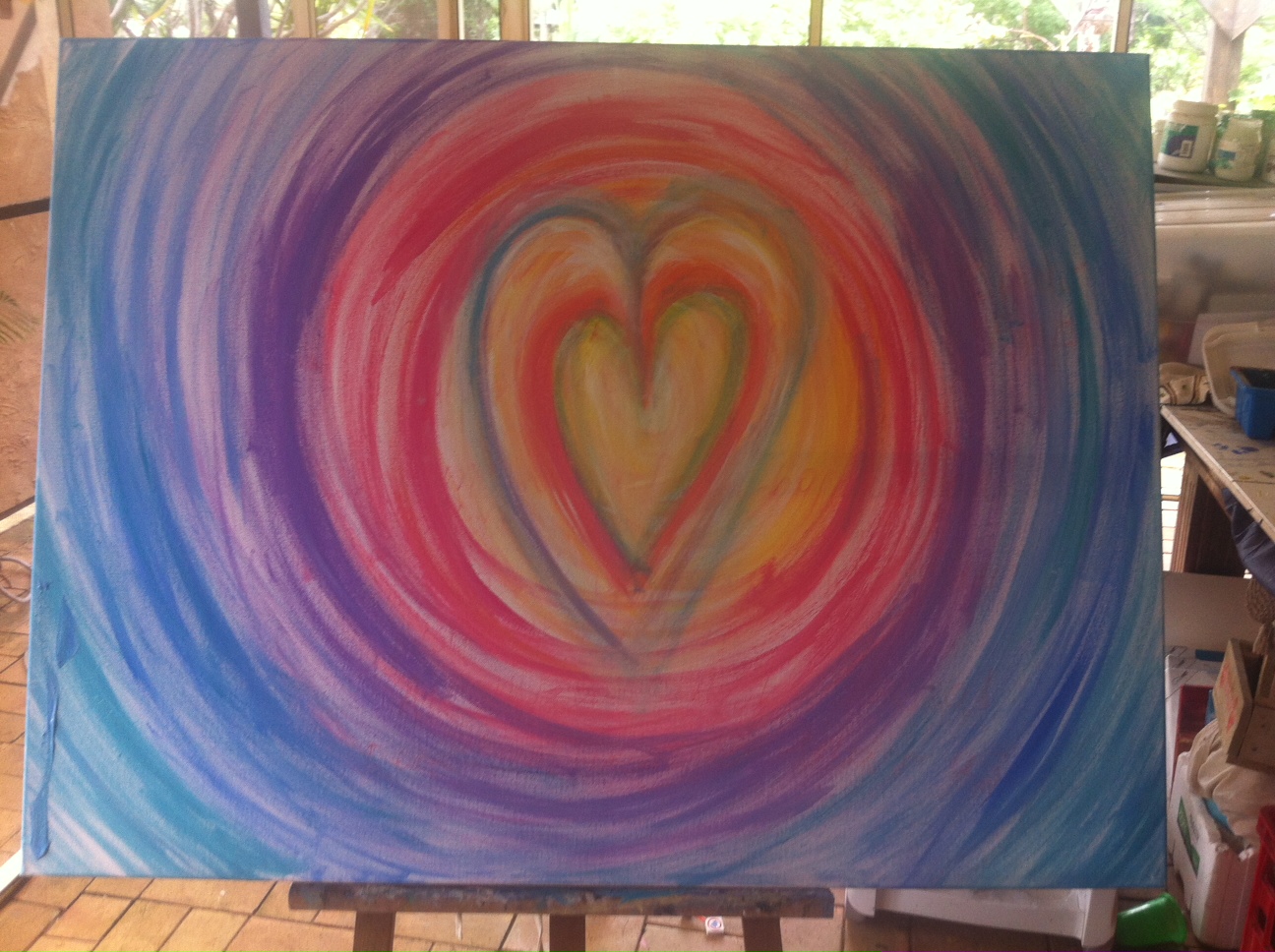
Embodied with love I set out to create my next painting. Out of this portal of love:

Portal of love, WHAT IS LOVE?  by Jassy Watson

Aphrodite, Goddess of love, pleasure and relationships, in all her glory was born. Continue reading “What Is Love? by Jassy Watson”

Painting Saraswati By Angela Yarber

Saraswati reminds me that the divisions between fields are our construction; that academics can be creative, art can be holy, and preaching can engage the mind. 

I was precariously perched atop a file cabinet tacking a giant cloth to the wall when another staff member entered my office.  “What’s that?” she asked, puzzled, and pointing to the massive cloth now covering my wall.  “Saraswati,” I responded, hopping off the file cabinet, “the Hindu goddess of arts, creativity, and learning.”  She raised her eyebrows.  “Our previous Baptist preacher didn’t have any Hindu goddesses hanging on the wall,” she said with a wry smile.  “I guess I’m not your average Baptist preacher,” I chuckled.

For years I have been searching for Saraswati, claiming her as my patron saint, the one who guides my path as I navigate three seemingly disparate callings: artist, scholar, and preacher.  In Saraswati, these three callings merge.  Naturally, I hang a giant image of her on my office wall and wear a pendant bearing her likeness around my neck.  She reminds me that the divisions between fields are our construction; that academics can be creative, art can be holy, and preaching can engage the mind.  These three seemingly disparate callings do not have to be mutually exclusive.  Saraswati certainly wouldn’t see them this way. Continue reading “Painting Saraswati By Angela Yarber”

Miracles Of The Great Mother by Jassy Watson

Jassy under the Holy Myrtle tree Paliani conventjassy Panagia in tree

I was brought up in a household where attitudes to God and church were quite negative. My Nanna, however, was deeply religious, and I can still remember sitting in her dining room as a very young child staring up in awe at a painting of  ‘The Last Supper.’ I was completely mesmerised, there was something haunting about that painting that left a lifelong impression. Art became a passion very early on in life, and whenever I came into contact with images of a religious nature emotions stirred. I was spellbound by divine mystery. The most profound feelings were engendered when I met with images of Mother Mary and the infant Jesus. Continue reading “Miracles Of The Great Mother by Jassy Watson”

Narrative Textiles and Women’s Stories by Mary E. Hunt

Art, like religion, is a window into cultures. Women’s stories often find expression in narrative textiles, a medium I have long admired but never quite understood. I encountered the fabric art of Esther Nisenthal Krinitz recently. She was a Holocaust survivor who created stunning needlepoint pictures of her and her sister’s escape from Nazis in 1942. They left their Jewish parents behind and pretended to be Catholic girls from the country in order to survive. In 1977, she began to create 36 works of needlepoint in which she stitched the heart-wrenching episode with power and beauty, color and force, the memory of a child now seared in the heart of a woman.

Her daughters, Bernice Steinhardt and Helene McQuade, set up a foundation, Art and Remembrance, to show the “power of personal narrative in various forms of art to illuminate the effects of war, intolerance, and other forms of social injustice on its victims.” Their mother’s story is now available both in a book and a riveting film as well as in the art itself. These are narrative textiles of the most precious sort. Continue reading “Narrative Textiles and Women’s Stories by Mary E. Hunt”

When Music Touches Your Soul by Elise Edwards

It’s incredibly liberating to have the co-mingled sensation of being elevated by aesthetic delight, affirmed by words that reflect the life experiences of you and your loved ones, and honored by another’s desire to relate to you.  This type of liberation is spiritual.

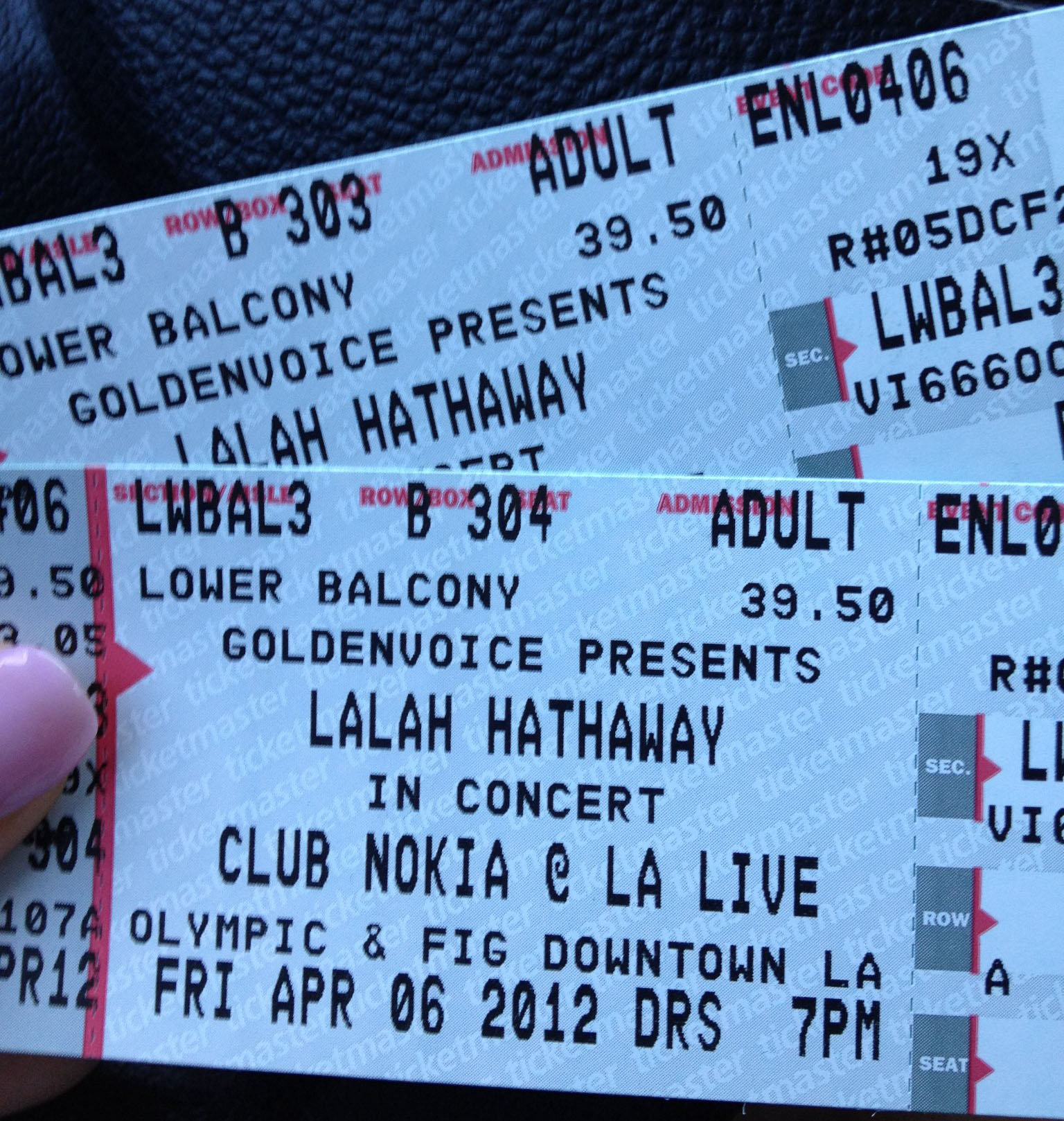
Last month, I attended a Lalah Hathaway concert, the first live concert I think I’ve attended in about a year.  For those of you who don’t know, Lalah Hathaway is an R&B singer and daughter of the late Donny Hathaway.  It was my first time hearing her perform and the audience’s response to her artistry sparked some thoughts in my mind about authenticity, soul, and participation in the black church.

I should probably admit that my favorite genre of music is R&B/soul because of what its name suggests – the ability of the music to connect to the innermost parts of my being, the spirit inside of me that recognizes what is true.  Whether they are speaking about joy or pain, love or loss, soul singers have a way of making me feel the authenticity of their souls conveyed through their music and lyrics.  Because I agree with the feminist principle that the personal is political, I believe that feminists must take the time to recognize what is personally true for them and what is most real.  This is so that feminists’ energies directed toward making the world a more just place can be sustained during times of struggle, and maintained with integrity, regardless of what sphere they’re located within.  Soul music helps me remember who I am. Continue reading “When Music Touches Your Soul by Elise Edwards”