Humpty Had A Mother by Barbara Ardinger

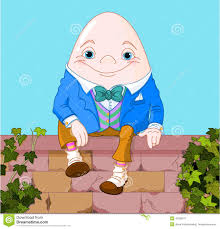
Humpty Dumpty sat on a wall,
Humpty Dumpty had a great fall;
All the king’s horses and all the king’s men
Couldn’t put Humpty together again.

From her mouth to our ears.

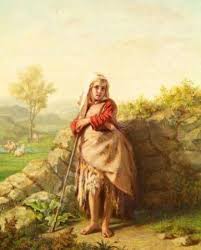
Humpty1You see that kid sitting over there on the wall? The one wearing the Jester’s hand-me-down suit? The Jester also gave him that funny name. That kid is looking for his father. That kid is my son.

My father the King is a tyrant, and he has more bastards than any other king in our nations history except for one other King, a long time ago. (Maybe these Kings try to populate the land all by themselves.) I’m one of his bastards. My mama travels with the Players, and after I was born, she traveled on and left me here. Oh, the Players come back every year, and she always tells me about her adventures, like when they went to visit that Prince up north, the one who was pretending to be crazy and got killed in a duel. My father the King lets his sons take the name Fitzroy, but us girls? What do we get? We’re lucky we get to live in the palace. That’s thanks to the Queen, who is kind and protective of all the King’s children, legitimate or not. I’m part of her court. A minuscule part, but she knows who I am and has answered my prayers several times. I’ll never rise in society. But I’m making plans for my son. Continue reading “Humpty Had A Mother by Barbara Ardinger”

Practical Lessons in Kindness from the Grasshopper and the Ant by Barbara Ardinger

Barbara Ardinger(With apologies to Jean de La Fontaine for significant changes to his fable)

“Curses on that grasshopper!” exclaimed the ever-busy Madame Fourmi. “All he ever does is play. He’ll be sorry when winter comes.”

And so it went. Every day, Mme. Fourmi spent the morning scrubbing her front steps. And Monsieur Cigale?

“Partaaaaayyyyy!” Every day, he sped by on his skateboard. “Hey, Auntie Ant, stop cleaning the concrete and come and play with us. We’re gonna start a band!”

Grasshoppper and ant“Not on your life,” muttered this grandmother, most of whose conversations with her many daughters and granddaughters consisted of instructions on how to properly clean their homes and hills and how to prepare and store food for the winter. “Life is serious business, it is, it is. We need to plan ahead.”

“Oh, Auntie Ant,” Cigale called back, “lighten up!” Then he called his friends. “Yo, dudes! Let’s rock!” Continue reading “Practical Lessons in Kindness from the Grasshopper and the Ant by Barbara Ardinger”

Mary, Mary, Quite Contrary by Barbara Ardinger

Barbara ArdingerMary, Mary, quite contrary,
How does your garden grow?
With silver bells and cockleshells
And pretty maids all in a row.

From her lips to our ears.

Who wrote that poem? I’ve heard that some so-called scholars think it’s about a queen of England named Mary Tudor (slandered as “Bloody Mary” because she stuck to her religion after her father declared himself head of his own bloody church) or Mary Queen of Scots (slandered for other reasons, and then murdered). Well, much as I feel sorry for those two queens, the poem’s about me, and I don’t grow any little garden. I am a gentlewoman farmer. The fellow who wrote that silly poem probably works for one of those corporations that want to buy my land and plant their engineered crops on it and create monocultures that murder the land. Continue reading “Mary, Mary, Quite Contrary by Barbara Ardinger”

How the Outdoors Got on Us by Barbara Ardinger

Barbara ArdingerI read some wonderful posts last spring and summer about the beauties of the outdoors. One that especially inspired me was by Molly MeadeIf you missed Molly’s description of how she goes out to the “priestess rocks,” read it now.

But as much as I admire people who like to spend time outdoors in gardens or the wilderness or national parks or anywhere else without kitchens and bathrooms…well, I just don’t like to get the outdoors on me. Most Pagans I know like to camp and hold grand outdoor rituals. Not me. I get lost. I trip over tree roots and get allergic in some large gardens. I don’t like to climb or hike and I stay away from the beach because it’s got all that icky, dirty sand all over it. Although I send money to the Wilderness Society and Friends of the Earth, the wilderness does not need my footprints in it.

So here’s another of my weird little stories. This one’s a fable I wrote several years ago for a friend who was holding regular ceremonies at Joshua Tree National Park in the SoCal desert. (I went to some of those ceremonies. My friends were very proud of me.)

Continue reading “How the Outdoors Got on Us by Barbara Ardinger”

Mother Hubbard Speaks Her Mind by Barbara Ardinger

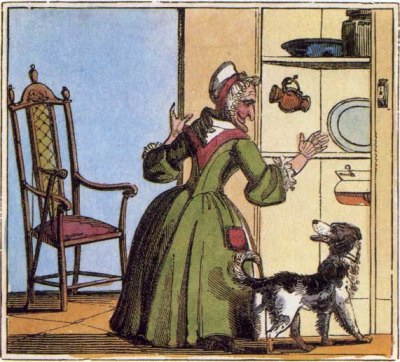
Old Mother Hubbard
Went to the cupboard
To get her poor dog a bone;
But when she came there
The cupboard was bare,
And so the poor dog had none.

hubbard-01

From her lips to our ears.

Ya wanna know why my cupboard’s bare? It’s because we’re poor! Well, not all the time. Mr. Hubbard gets a good job from time to time, and then him n me an the kids an the animals have enough to eat. But those jobs never last long enough. And ya wanna know why? It ain’t just the economy (which is, yeah, pretty stupid). It’s on accounta we don’t quite look like everybody else ’round here. On accounta we don’t speak the “normal” language at home. We obviously came from someplace else. An’ the folks ’round here are so worried about themselves they don’t care about us. Some of ’em don’t like us at all. (And, I ask you, where’s the folks who look like me in the schools n the gov’mint an on the police force?)

Now we don’t live way out in the sticks like my friend Mrs. Shoe does with all her children. We live in the outskirts of this big city, and we can grow a lot of our own food. Lotsa times, though, we march into the big city and look around for more food. There’s lotsa food that got thrown away, perfectly good food goin’ to waste every day. That’s how I get bones for the old dog an good stuff for the cats, too. An, of course, for the kids an the hubby n me. An for the homeless folks who show up from time to time. Share ’n’ share alike, that’s my motto. We do what we can for who we can.

And we don’t share the “normal” religion of the folks in the big city. Most of them never heard of the Mother Goddess. Or any goddess at all, for that matter. No, they’re all enthralled by that greedy Mammon or by those other old bearded guys who stand up on top o’ that metaphorical mountain and yell down at their favorite men about invadin’ some foreign land r other. An ya know what? When the folks in the city are havin their prayers and we happen to be there, we stand quiet-like and bow our heads (politeness counts, doncha know) and wait till they’re done before we walk away and go lookin’ for more good thrown-away food ’n’ other stuff to take home with us. But would they stand respectful-like if we started prayin’ in the city to our Mother Goddess? (That’s what they call a rhetorical question. Don’t need no answer.)

Continue reading “Mother Hubbard Speaks Her Mind by Barbara Ardinger”

No Man Can Spin Gold (Part 2) by Barbara Ardinger

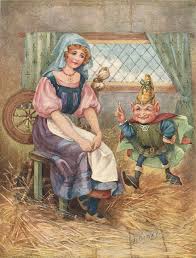
RumpelstiltzskinPerdita was in a panic. She looked this way and that, but all she saw was a towering pile of straw. She sat down to breathe deeply and think deeply. While she was breathing and thinking, the little man held is peaked green hat in his hands and marched anticlockwise around the room, whistling a jolly marching song she’d never heard before. He marched around the room three times.

Finally Perdita said to herself, Who knows what can happen in a year? That’s a long time. I can promise anything now. And then, well, I know I’ll be able to think of something to do. I’ll study all year! Aloud she said, “Kind Sir, you are miraculous, for no man can spin gold, and yet—here you are, spinning gold! You can have what you ask for.

And so the little man smiled a smile that showed all his teeth and sat down at the wheel and—whirr, whirr, whirr—the whole roomful of straw was soon spun into the finest gold thread imaginable, twice as fine as the finest silk thread the merchants sold at the harvest festival.

As soon as the Queen arrived back at her palace the next day, her Nephew introduced his betrothed to her. The Queen was much older than Perdita thought she would be, and she was as wise as she was old. She took Perdita into her private chamber and asked her several questions. She learned more about Perdita than the girl realized, also about her mother and stepfather and young traveling scholars. Nevertheless, the Queen gave her royal blessing to the marriage, for she wanted her Nephew to be married to someone with a quick mind, good manners, and some ambition so the land would be well cared for after her death.

The wedding took place on the day following the summer solstice, and guests were invited from lands all around. Perdita’s mother and stepfather were invited, too, and they were both given new clothes to wear. The stepfather tried to have a private conversation with the Queen, but the major-domo led him into the map room and showed him some extremely dependable treasure maps.

After the wedding banquet of roast peacock and candied goldfish and artichoke hearts and rosewater dumplings, the Queen and Perdita’s mother walked together in the gardens and talked of many things. Pretty soon, after the stepfather had memorized several of the treasure maps and borrowed enough money to rent a ship and set off to claim his treasure, the mother was invited to move into the palace, where her healing and domestic arts would be appreciated.

A year and a day later, Perdita gave birth to a daughter who was the most beautiful baby in the whole land. The royal birth was celebrated with fireworks and parades and festivals and rituals in the temples that lasted three whole days without pause. Perdita’s mother was appointed chief nursemaid and immediately hired a wet nurse who had the creamiest milk in the whole land.

On the third night after the baby’s blessing and naming day, Perdita was alone in her chamber, brushing her long, curly hair, when she heard a noise behind her.

“Well then. I have come for the baby.”

“What?” Perdita pretended not to recognize the little man. “And just who are you? And what are you doing in my private chamber? Get out immediately or I shall call the guards.”

“You know who I am. You know why I’m here.”

“Yes, yes, I confess it. I do.” She allowed a tear to roll down her cheek. “Oh, but please don’t take my baby. I have never loved anyone before, and I love this baby more than anything I have ever possessed. Here—take my jewelry. All of it. Take my jeweled toys. Take the tapestries from the walls. Take my richly embroidered clothes. Take my royal robes. Take my golden coronet. Take these books I’ve read. Take anything you want, but please, Kind Sir, oh, please don’t take my daughter.”

“We made a bargain. I have spun the gold for you. No man can spin gold, but I can, and I spun for three nights. Because of my spinning, you are now the heiress of the throne of this land. You must keep your part of the bargain.”

“No, no!” Perdita cried, glad that the baby was in her mother’s watchful care. “I cannot give up my daughter! She is more precious to me than gold.” And Perdita began to cry, to really cry, and her crying was so heart-rending that the little man finally began to take pity on her.

Continue reading “No Man Can Spin Gold (Part 2) by Barbara Ardinger”

No Man Can Spin Gold (Part 1) by Barbara Ardinger

PerditaIn a land not too far away there once lived a widow who was so poor and who worked so hard day and night to make a bare living that she had almost no time to teach her daughter the things a girl needs to know to be a proper wife. The girl, whose name was Perdita, had learned how to do a few useful things around the house, but when she laid the fire she always mixed green wood with the dry, when she made the soup she always forgot the salt and pepper, and when she swept she inevitably forgot to sweep under the bed. When she sewed she always pricked her fingers and left little red spots on the fabric, and when she spun she always made huge knots and horrible tangles in the new thread. Although she wasn’t very good at these important homely tasks, she had somehow learned to read and study numbers and she had even learned about Panglossian optimism. Her parents had no idea how this learning had come to her, unless it had something to do with the scholars who regularly passed through the town and with whom Perdita spent a lot of time. In her own opinion, the girl more than made up for her lack of useful skills with her brilliant mind and quick tongue…not to mention her beauty.

One day, although her mother had ordered her to finish the washing and hang the clothes in the sun to dry, Perdita left them soaking in the tub and went out and about with her mother’s second husband. On the road they happened to meet the Queen’s eldest Nephew. Now since the Queen had borne no daughters and was now too old to do so, everyone knew that one of her Nephews would inherit the throne when she died. As soon as he spotted the young man, Perdita’s stepfather saw an opportunity.

“Here’s your opportunity,” he murmured to the girl. “Do what you can to attract this fellow. If you do, things will go well for you and your mother.”

Perdita saw an opportunity, too. An opportunity to raise herself socially and find a life that was not so filled with laundry and other mind-numbing hard work. So she tossed her curls and swung her hips, she gazed up at the Royal Nephew, and soon she had his attention, for this young nobleman was interested in the things that have always interested the upper-class men. During their ensuing conversation, Perdita said coyly, “I may have a poor mother, but I’m quite clever, you know. I can read and write. I can cook and clean. I can sew and spin.

“I’m interested in girls who can do useful things,” said the Queen’s Nephew. “Are you good at all things you do?”

“Oh, yes, I am very, very good,” the girl replied demurely. “I have a great many talents.”

“And,” said her mother’s second husband, “some of this girls talents no one has uncovered yet.”

“I see,” said the young man with a wink. “And may I learn what your hidden talents are, my dear?”

“Why,” said Perdita with a pretty blush, “why I can…I can

“She can spin straw into gold,” said the stepfather. Who do you know who can do that?”

“No one at all.” The Royal Nephew took Perdita’s hand. “It’s well known that no man can spin straw into gold.

And she works very fast,” said the stepfather. “See how soft her hands are! Her fingers are as nimble as my own. Even though we’re not even related by blood, I have taught her all she knows!”

“Indeed,” the Royal Nephew said, “nimble…” And after he thought for a moment, he added, “My dear, would you like to come to my Aunt’s palace with me and show me—show us your talents?”

So with an unnecessary push from her stepfather, Perdita, who was sure she would be moving into the best of all possible worlds, went to the palace with the Queen’s Nephew. But the Queen was not there, for she was visiting one of her Sister Queens in a nearby land. When the Royal Nephew asked Perdita to show him how she spun straw into gold, she batted her eyelashes at him and, remembering what she’d seen other girls do, shrugged her linen bodice just a little bit off one shoulder. A little while later, when the Royal Nephew asked again about spinning straw into gold, she shrugged her bodice a little bit off her other shoulder. When he asked a third time about spinning straw into gold, however, she finally understood that he expected a reply.

She had to think fast. “Oh,” she said disingenuously, “oh, I only do it at night, when the moon is full, and I can never do it if anyone is watching. I can spin straw into gold only when I am left absolutely alone with my work.” She was feeling quite sure that the Royal Nephew would never leave her alone, especially with her soft linen bodice falling off both shoulders.

But Perdita hadn’t noticed that the moon was full that very night, and when the Royal Nephew offered to let her stay in the palace, she was loath to refuse the invitation. I’ll think of a way out of this predicament, she said to herself. I always do, for I’m very clever.

The young nobleman was keenly interested in gold, as nobles always are, and so he ordered a room at the far, far end of the farthest corridor to be filled one third full with straw. Then he got his aunt’s best spinning wheel and put that in the room, too.
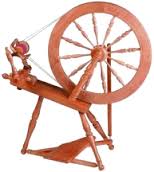
Spinning wheel“Here is a fine and private room,” he said to Perdita, “and I guarantee that no one will disturb you. Just spend the night here and show me how you can spin straw into gold, and I’ll give you a lovely reward in the morning.” And he winked at her.

What could the girl do? She watched the Royal Nephew close the door. She heard the key turn in the lock. She began to walk about the room. At last she sat down beside the wheel. But she didn’t have the least idea about how to spin straw into gold, for she couldn’t even spin flax into decent linen thread without getting huge knots and horrible tangles in it. She began to cry. “I’m lost!” she wailed. No one is here to advise me. No scholar I’ve ever met has considered this situation. No man can spin straw into gold, but I can’t, either. Oh, woe is me.”

“Well now.”

Suddenly she heard a voice, and when she peeked between her fingers, she saw a little man wearing a peaked green hat and a long brown jacket and wide brown trousers. He had a long white beard and big strong hands.

“Good evening,” he said. “Why are you crying?”

“I’m supposed to spin straw into gold, but I don’t know how.”

Continue reading “No Man Can Spin Gold (Part 1) by Barbara Ardinger”

All Saints Day and All Souls Day by Barbara Ardinger

In the Roman Catholic calendar, today is All Saints Day, tomorrow, All Souls Day. The following slightly edited paragraphs are from my book Pagan Every Day (RedWheel/Weiser, 2006), which is obviously not just about Pagan topics. (I couldn’t find goddesses for every day of the year, so I widened my view.)

November 1: All Saints Day

All Saints Day

During the persecutions of Diocletian (245–313), the number of martyrs became so great that separate days could not be assigned to honor them. They were given common memorial days. All Saints’ Day, the Catholic Encyclopedia informs us, was instituted in the fourth century when dioceses began to divide up and exchange the relics of martyr-saints. At first, only martyrs and St. John the Baptist were recognized, but in 609 Pope Boniface IV consecrated the Pantheon to the Blessed Virgin and all martyr-saints. The vigil for All Saints’ is Hallows Eve, which was also first celebrated in the fourth century. By the 13th century, All Saints’ Day was solemnly celebrated to honor “all saints known and unknown” and to remedy any deficiencies by the faithful in remembering the saints on their proper days. In other words, it became a sacerdotal catch-up day. If a saint was neglected on his assigned day, he could be honored today.

Continue reading “All Saints Day and All Souls Day by Barbara Ardinger”

From Her Lips by Barbara Ardinger

Barbara Ardinger

There was an old woman who lived in a shoe,
She had so many children she didn’t know what to do.
She gave them some broth without any bread;
She whipped them all soundly and put them to bed.

Look! Here she comes. Like most old women, she has a lot to say. Let’s listen in:

“Well, that’s what an old nursery rhyme says. But I’m that old woman, and I can tell you for sure that the only thing ‘true’ about that rhyme is that I’m old. I’m older than anyone I know. Oh, I see you there, eavesdropping. That’s okay. You’re welcome here.

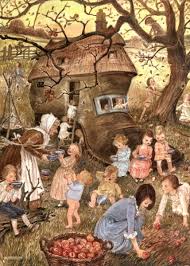
Old woman...shoeYou know what? I’ve been called many names by the (mostly) men who make up those rhymes and stories. I’ve been the old witch in the candy house who serves pie to children and then serves the children in the pie. (But did that German guy who wrote that opera about me ever say who eats those pies?) I’ve been the thirteenth old woman at the christening who wasn’t invited and brings a curse that’s as big as the blessings from the first twelve. I’ve been the evil, wicked, mean stepmother.

Continue reading “From Her Lips by Barbara Ardinger”

Knossos: The Truly True Story by Barbara Ardinger

Barbara Ardinger(Note: this story was inspired by a blog written by Carol P. Christ. But she’s not responsible for the nonsense I write.)

Once upon a time there was a woman named Carol who lived in the largest house on the Island of Crete and had the largest flower garden and the largest herd of cattle. Because of her riches, not to mention her common sense, she had been elected chief of the Council of Mothers, the government of the island. The Council had searched and searched for a proper title for their leader and finally, reluctantly, decided that Queen was as good as anything else…as long as everyone remained politically correct and understood that Queen was merely a handy title. Queen Carol had a husband named Minos who tried and tried to assume the title of King, but no one ever paid any attention to his pretensions. Because he had nothing else to do, he spent most of his time lounging in the front parlor and reading the Knossos Times-Myth-Dispatch.

“Look here,” he said one day, waving the newspaper at his wife. “The Greeks are ramping up for a war over in Troy. They’re calling for kings and armies to join them.”

Carol laid her feather duster aside for a minute. “Well, if you really want to,” she said, “you can go. It’ll be better for you than sitting around here all the time and complaining that you’re bored. But you’d better not come back here and set yourself up as a warrior king! None of those huge statues like they’ve built in Egypt. None of those huge temples with carvings of conquering armies on them, either. We mothers won’t stand for it!”

Continue reading “Knossos: The Truly True Story by Barbara Ardinger”