


The story so far. In the ancient land beside the river, the God-King lies in what appears to be death. No one can awaken him. In the house of a court Magician, the peasant girl Ubastet is dusting and conversing with a magical stork when two minor miracles occur. The Magician consults the Hierophant, but they cannot explain the miracles. Now the Queen has come into the room. She is determined to figure out what’s going on. (Where do they fly to? Romania, another land of great enchantment.)
Before the sun set that day, the Queen of the golden land called a convention of priests and wizards and magicians and astrologers and seers and prophets and physicians. When they had all assembled in the throne room, she set the matter before them. Day after day, the learned ones debated, night after night, they performed their high magics and gorgeous rituals. In their secret places, the animals gathered together as well and performed their own rituals. But the mirror, whose thousand pieces had been gathered up and cleansed and set back into the frame in a sublime mosaic, the mirror refused to speak again. The golden beetle remained cold and silent.
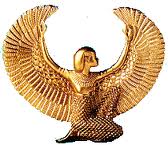
Continue reading “The Child of the Bog (continued) By Barbara Ardinger”
 Hildegard, who lived from 1092 to 1179, was the tenth child of a family of minor nobility in the Holy Roman Empire. She’s a sturdy child who loves the outdoors and enjoys running through the forest with her brother. But early in the novel, she learns that she is to be her family’s tithe to the church. Her mother has already arranged for this bright and curious eight-year-old child to be the companion to Jutta von Sponheim, a “holy virgin” who yearns to be bricked up as an anchorite in the Abby of Disibodenberg. Being an anchorite means that, like Julian of Norwich (about 250 years later), this girl and her magistra are bricked in. There is a screened opening in the wall through which their meager meals are passed and through which they can witness mass and speak to Abbott Cuno, the other monks, and visiting pilgrims, but they can never go out. Never. In the Afterword, Sharratt writes that “Disibodenberg Abbey is now in ruins and it’s impossible to precisely pinpoint where the anchorage was, but the suggested location is two suffocatingly narrow rooms and a narrow courtyard built on to the back of the church” (p. 272). As Sharratt vividly shows us, Hildegard survived in that awful place for thirty years.
  Feminism and Religion