

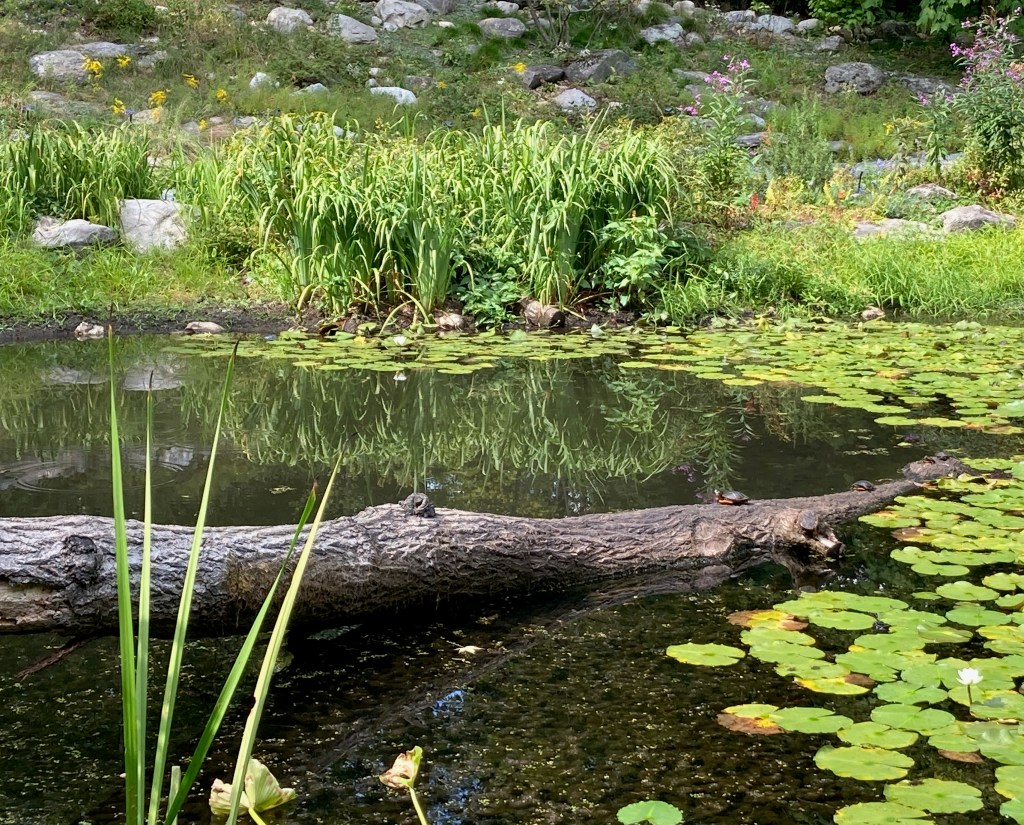
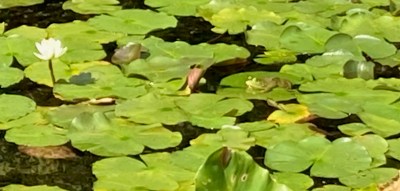
On a recent tranquil Sunday afternoon I was wandering around a lily pond in a nearby botanical garden, fully immersed in that liminal time between summer’s outbursts of nature’s abundance and the peaceful contentment of fall. The late goldenrod and delicate white wood asters danced a hued duet in the wind among the turtleheads and cardinal flowers, while hydrangeas shifted from white to the vibrancy of their last red passion. The lilies in the pond poked their heads above the water while frogs lay in repose on the pads. They were joined on nearby logs by a family of turtles, parents on one side and two babies on the other, close enough for security but far enough to enjoy some independence. A long dark brown watersnake was curled up unmoving on a boulder. All seemed to be basking in the sun, napping now and then. Around the pond were wanderers like me and human caretakers, silently tending to wildflowers and trees and occasionally stopping to watch if one of the beyond-human inhabitants plopped into the water for a little late afternoon swim.
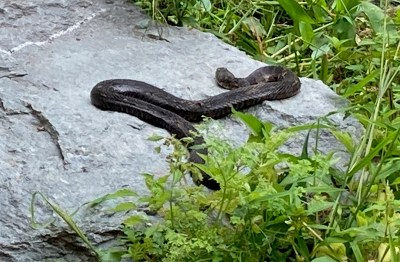
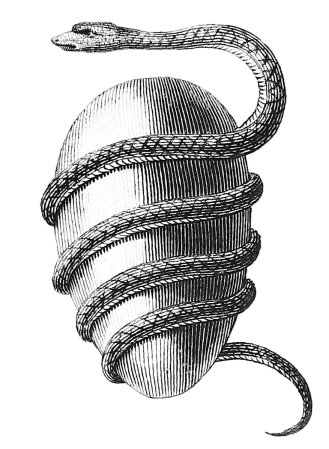
Of course, I also knew that the peacefulness of this snapshot moment would not last forever because what do watersnakes eat? Frogs, fish and other beings that live around ponds. And what do frogs and fish eat? Insects, snails, and other beings, and so on up and down the food chain. But even this is part of the wholeness of the pond, as each being fulfills its place in the cycle of birth, life, death, and rebirth so that all of us can, in our own time, enjoy these short times of contentment living on the face of our magnificent planet.
Continue reading “Lessons in Community at the Lily Pond by Carolyn Lee Boyd”

 Feminism and Religion