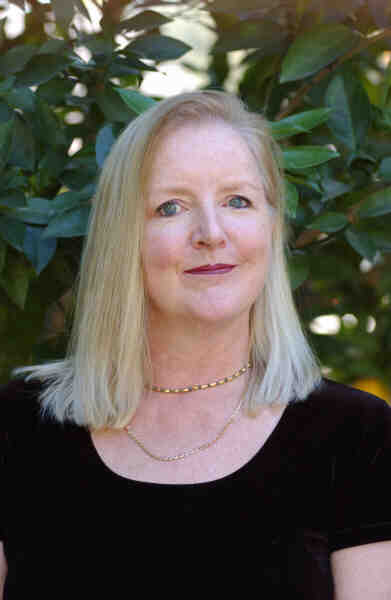
Gaia by Jassy Watson

JassyWe have come to a point in the history of our civilisation where our relationship to nature seems to be more of one of destruction than of nurturance and respect. Humankind has steadily distanced itself from nature, our homes are filled with dead things, plastics, metals and chemicals. Everything around us is synthetic and manufactured in factories. Some people live their lives never touching nature – the soil, the plants, the grass. I have even met people who have a deep fear of being in nature.  This distancing from nature is a reflection of distancing from our Divine Earth mother, not just as the outside world, but also as the energy of the archetypal Earth Mother within our own psyche.

Many cultures and traditions herald a Great mother, Mother Earth or Mother Nature but our connection to her, especially recently in the Western world, has been severed. In the Greek mysteries, Gaia or Gaea, the Divine Mother, was one of the primal elements who first emerged from cosmic chaos at the dawn of creation.  All the later Pantheon of Gods and Goddesses are said to have descended from her initial union with Ouranos (the sky) and Pontos (the sea). Her geneology and her presence in Greek myth is full of complexities, conflicts and contrasts. Her worship in Ancient Greece did in fact decline, for her role was supplanted by the Gods of Olympus. Some scholars such as Harris and Platzner (Greek Mythology: Images & Insights, 2011), maintain that the decline in her worship and the demonizing and slaying of the snake or serpent – one of Gaia’s primordial symbols and a symbol of archetypal feminine energy, represents the death of the sacred feminine brought about by the insidious reign of a patriarchal pantheon of male gods.

Gaia is not only a figure in Greek myth however. In the 1960s, James Lovelock (2000) formulated the Gaia hypothesis. Lovelock states that all life, and all living things on this planet, are part of a single, all-encompassing global self-regulating system (he avoided the word consciousness) which he named Gaia. It is this global system of interconnection that makes our planet capable of supporting life. Further, he believes, if you live in balance with Mother Nature, health and healing are yours; violate Her laws and tip the balance, you pay the price in suffering and disease. Thus Gaia does not only represent the Ancient Greek Mother Earth and the physical planet, she also represents the forces of nature: laws and intelligences that function on every level of the cosmos. She is the very fabric of existence. Glenys Livingstone says it beautifully:  “She is the eternal pulse, in which each one of us flows. Gaia is Earth, is Universe, is Ultimate Mystery, is you, is me – She is multivalent.” (from her Essay ‘Gaia as a Cosmic Name‘, 2014)

I recently taught two workshops for women ‘Painting Gaia – Exploring our Connection to the Earth’  based in my belief that disconnection and distancing from nature is an issue that needs attention. We need more than ever, at this time in history to re-connect deeply with the earth and with the feminine –  regardless of faith of tradition.  This re-connection that will aid in deep ways in the healing of the planet and of the self. If we are not connected, how can we care about the plight of the planet and all sentient beings? And if we are not caring, how can we take action to make a difference?

I am dedicated to taking action, raising awareness and making a difference in the ways that I know how. The intention for these workshops is to connect to Gaia through the process of visioning, painting and inquiry. Our Gaias were birthed from the cosmos and as we brought her into being we deepened our connection to Her, within and without. We also strengthened our commitment to healing the earth in a capacity that is manageable. Some, including myself, expressed feelings of being overwhelmed by all the atrocities we are flooded with on the news and in social media forums.  In this context, our goal was to become more mindful of our actions and choices. The workshop also called us to a deep, primal remembering of Her eternal presence, from the cosmos to the core.

It was apparent in our discussions is that Gaia represents paradox – life/death, chaos/order, creation/destruction, beauty/ugliness, peace/fury. Connecting deeply with Gaia is ultimately about living in paradox; we must accept both life and death to truly know her nature. Marion Woodman (Dancing in the Flames, 1996) states that “paradox is the core of wisdom and the core of the goddess”. The balance of both must be held.

In Greek art Gaia was often represented “tamed,” presented as a beautiful voluptuous woman, half risen from the Earth as can be seen here:

img_gaia
Gaia rising from the earth, Athenian Red-figure Kylix, 5th c BCE – image from http://www.theoi.com

Following are two of my recent paintings of Gaia in all her elemental power.  I hope you feel and appreciate the difference!
Continue reading “Gaia by Jassy Watson”

SACRED RHYTHMS OF THE OLIVE HARVEST by Carol P. Christ

carol-christOlives are being harvested in the fields outside my town these days.  We have been having the first rains of the season.  The roads are wet and muddy, and the trees are partially shrouded in mist.  The fields are spread with black plastic nets, and people are hard at work, the men hitting the trees to make the olives fall, and the women picking up the olives from the nets.  The harvest will continue throughout the winter.

The olive press is busy. Cars and trucks come and go, unloading heavy bags filled with olives.  These days the bags are white, made of sturdy woven plastic. In Crete this fall several of us bought canvas olive bags, hand-woven by women.  These, along with baskets hand-woven by men, were still in use only a few decades ago.

olive harvest in Lesbos early 20th century by Theofilos Hajimichael

A friend who died a few years ago told me that “in the old days” there were no nets. The women and the children had to pick the olives up from the ground, often cutting their hands on thorns and stones.  The nets are a Goddess-send.  Between harvests, the nets are simply folded up and placed in the crotch of the tree. Here no one steals them.

In the fields where I walk some of the trees have enormous trunks. Some of them have two trunks, growing like sisters.  Many of them are 300, some perhaps 500, years old.  A man emerges from a field that has some particularly old trees.  I ask him how old they are. “Older than I am,” he replies. “They were here before I was born.  They will be here after I die.” Continue reading “SACRED RHYTHMS OF THE OLIVE HARVEST by Carol P. Christ”

Our Mother Whose Body Is The Earth by Carol P. Christ

carol p. christ 2002 colorThis prayer came to me recently in waking sleep:

Our Mother whose body is the Earth,

Blessed are you,

And blessed are all the fruits of your womb.

You give us this day our daily bread,

And we share it with others.

Our Mother whose body is the Earth,

We love you with all our hearts,

And our neighbors as ourselves.

Continue reading “Our Mother Whose Body Is The Earth by Carol P. Christ”

How To Find Those Lost Ancestors by Carol P. Christ

 carol p. christ 2002 color

Over the past year I have written several blogs on ancestor connection.  In this blog I will share what I have learned about how to find ancestors.

I recommend the popular television series Who Do You Think You Are? which has US, UK, and Australian, and other versions, and the PBS series hosted by Henry Louis Gates, African American Lives and Finding Your RootsWhile you might think, as I did, that genealogical research is about finding the names and birthplaces of ancestors, these programs set the genealogical quest in the great flow of history.

Records show that I have ancestors who immigrated to the United States from Ireland, Scotland, Prussia, and Germany in the early 1850s.  Historical research tells me that more than a million people left Ireland and Scotland in the 1850s due to the “potato famine,”* which affected the rest of Europe as well.  History explains why ancestors emigrated.

Begin your search by asking parents, grandparents, aunts, and uncles, for names, dates, places of residence, stories, and other information they remember.  Continue reading “How To Find Those Lost Ancestors by Carol P. Christ”

Connection to Ancestors in Earth-based Theology by Carol P. Christ

carol p. christ 2002 color“I am Carol Patrice Christ, daughter of Jane Claire Bergman, daughter of Lena Marie Searing, daughter of Dora Sofia Bahlke, daughter of Mary Hundt who came to Michigan from Mecklenburg, Germany in 1854.  I come from a long line of women, known and unknown, stretching back to Africa.”

Like many Americans, my ancestral history was lost and fragmented due to emigration, religious and ethnic intermarriage, and movement within the United States.  Though one of my grandmothers spoke proudly of her Irish Catholic heritage and one of my grandfathers acknowledged his Swedish ancestry, I was raised to think of myself simply as “American,” “Christian” and “middle class.”  Ethnic and religious differences were erased, and few stories were told. 

Over the past two years, I have begun to discover details of my ancestral journey, which began in Africa, continued in the clan of Tara, and was marked by the Indo-European invasions.  In more recent times, my roots are in France, Holland, England, Germany, Ireland, Scotland, and Sweden.  In the United States, my family has lived in tenements in New York City and Brooklyn, in poverty in Kansas City, and on farms in Long Island, Connecticut, upstate New York, Michigan, and Pennsylvania.  My parents and grandparents settled in northern and southern California during the 1930s.  I have lived in southern and northern California, Italy, Connecticut, New York, Boston, and now Greece.

Learning details about family journeys has created a shift in my sense of who I am.  Continue reading “Connection to Ancestors in Earth-based Theology by Carol P. Christ”

Touching Roots: An Incredible Lightness Of Being by Carol P. Christ

carol p. christ 2002 colorA few days ago, a German-speaking friend spoke with an Eiloff relative of mine who lives in St. Nikolaus, Saarland.  My relative remembered hearing the story that Heinrich Eiloff, my 2x great-grandfather, emigrated to the United States in the mid-1800s.  Since we connected, I am experiencing an incredible lightness of being.

This is the first time my two years of genealogical research have led to a “Kunta Kinte” moment, a connection with a relative in “the old country.”  I have been unable to trace most of my ancestors back to the places of their birth. 

My relative in St. Nikolaus was perplexed by a call from Greece from a woman claiming to represent his American relative. But when she explained that I only want to find my roots and perhaps visit relatives in St. Nikolaus, he said, “that would be very nice.”  He promised to speak with other living relatives and said we should call in a month or two and he would tell us what he found.

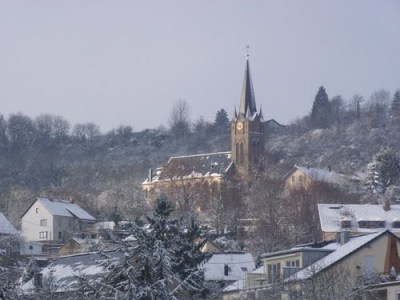
According to my research, my 2x great-grandfather Heinrich Eiloff was born in 1820 in St. Nikolas, Saarland, in Prussia (now in Germany).

st nikolaus saarland

Continue reading “Touching Roots: An Incredible Lightness Of Being by Carol P. Christ”

On the Murders in Norway: The Need for a Multicultural Vision By Starhawk

The following is a guest post written by Starhawk, lifelong activist in peace and global justice movements, a leader in the feminist and earth-based spirituality movements, and author or coauthor of ten books, including The Spiral Dance, The Fifth Sacred Thing, Webs of Power: Notes from the Global Uprising, and her latest, The Last Wild Witch.

Cross posted at Dirt Worship.

This summer has been a whirlwind of teaching permaculture and working on making a movie from my novel, The Fifth Sacred Thing.  But a few days ago I took a break to attend a performance of Guys and Dolls put on by SF Arts Education, in which my fifteen-year old Goddess-child Kore was singing and dancing. SF Arts Ed runs a wonderful program where students from middle schools and high schools put on Broadway musicals, complete with singing, dancing, and a full jazz orchestra.  We had balcony seats behind the stage, so I was looking down on these bright and beautiful young people of all different backgrounds and ancestry, reflecting the multicultural nature of San Francisco itself.   They are a talented bunch, but I also know how hard they work, how much time they rehearse and the discipline they develop.  What a gift it is to have such wonderful youth growing up in our city! Continue reading “On the Murders in Norway: The Need for a Multicultural Vision By Starhawk”