
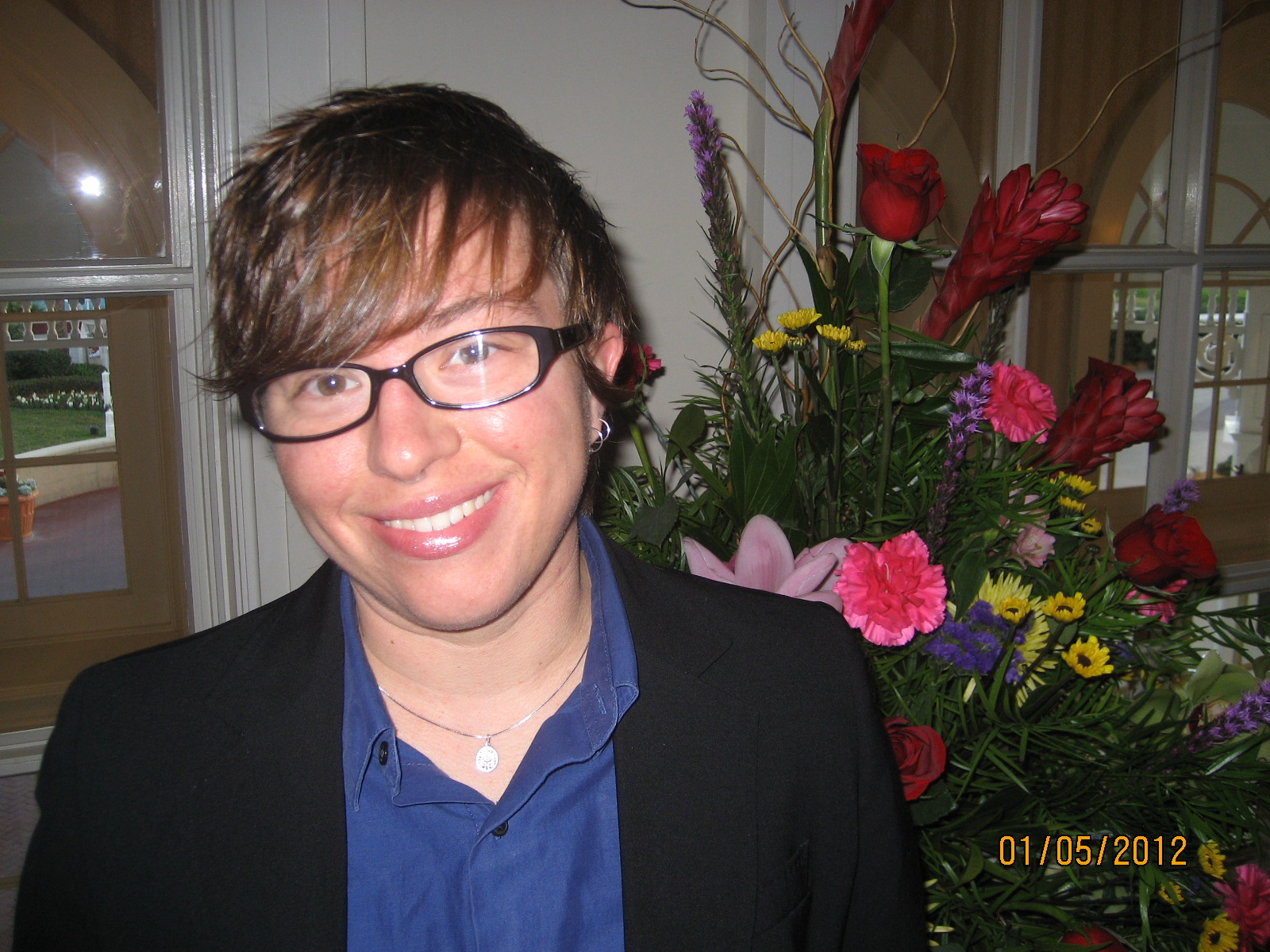
Why a Kippah Reminds Me that Rationality Should Not Be Our Only Imago Dei By Ivy Helman

Neil Gilman in his book Sacred Fragments writes, “Since our faculty of reason is G-d-given, since it is the quality that distinguishes us from the rest of creation, and since all human beings share that same innate faculty, what better way to establish the veracity of a religious tradition than by demonstrating its inherent rationality?”  To be fair, Gilman is not the only and definitely not the first to support this position.  Many theologians, especially those influenced by various Greek philosophers like Socrates, Plato and Aristotle, have said the same thing.  In the Roman Catholic tradition, Thomas Aquinas is adamant that rationality is humanity’s imago dei, how we are made in the image of God – what the beginning of Bereshit (Genesis) suggests.  Descartes argues, “I think therefore I am.

Patriarchy emphasizes rationality as divinely given over and above other attributes that humans share with non-human life – like instinct, growth and maturity, life and death, memory, caring, empathy, dependence, interconnectedness, relationality, and communication (in all its forms, not just speech).  Continue reading “Why a Kippah Reminds Me that Rationality Should Not Be Our Only Imago Dei By Ivy Helman”

A Personal Journey of Embodiment by Stacia Guzzo

My struggle and fascination with the subject of embodiment began at a young age. Perhaps my first sense of the nuances of being an embodied being began with the realization that my younger brother was considered “different” as a result of being born microcephalic (having an abnormally small head and brain) and therefore having lifelong developmental delay. I remember wondering: How is it that the body can work so perfectly sometimes and yet have so many complications other times? What had happened to make his development so starkly contrast my own? And why can’t it fix itself?

As a high school student, my struggle manifested in the forms of anorexia and bulimia. The anorexia came first, and began almost as if a switch had been thrown. I dieted severely and dropped 60 pounds in a little under 3 months, in the end making it a goal to lose a pound a day. My cheeks sunk in. I slept through lunch. I found little occasion to laugh. And still I could not see an ounce of beauty or satisfaction when I looked at my body. I poked at the jutting bones of my pelvis and wished my bones were smaller. I saw my body as a devious enemy. During my junior year, I became bulimic as a means of coping with increasing pressures by family and friends to eat. Continue reading “A Personal Journey of Embodiment by Stacia Guzzo”

A Different “Right to Choose”: America’s Cultural Denial of True Choice in Childbirth By Stacia Guzzo

The first time I became aware about my birthing choices was during a call to a local midwife to inquire about her practice. By this time, I had been diagnosed with PolyCystic Ovarian Syndrome, uterine fibroids, a possible uterine septum, and had experienced a miscarriage two months before becoming pregnant with my son. On spiritual and psychological levels I didn’t trust my body, and certainly wasn’t experiencing the empowerment and holy wonder that I expected pregnancy to bring. Instead of feeling the strength of my ability to bear life, I felt the frailty of the threshold between life and death, and struggled with my body’s role in that space. I acutely felt my body’s assumed “brokenness.” I couldn’t access my inherent dignity, nor could I grasp the “hope [that] does not disappoint” (Romans 5:5). I was willing to let anyone tell me what I needed to do because I felt I couldn’t trust myself. I just wanted to be able to bring my baby to term and to have a healthy son.

During this time I didn’t even consider how the pregnancy or labor would affect me—emotionally, physically, psychologically, or spiritually. Yet my discussion with that midwife made me realize how deeply the experience of pregnancy was shaping me. The space God was carving out within me was incredibly powerful, and the closer I got to birthing my son, the more I realized how spiritually and psychologically charged the birth experience could be. It was laden with the potential for either transformative beauty or despair. Continue reading “A Different “Right to Choose”: America’s Cultural Denial of True Choice in Childbirth By Stacia Guzzo”