Ariadne & Me – Betrayers by Arianne MacBean

Two of the most well-known aspects of mythical Ariadne are the way she betrays and is betrayed. Hers is the ultimate ancient Greek karma story. She casts off the burden of her father’s narcissism, her mother’s bewitchment, her half-brother’s torment. No one thinks she has it in her. But she does. In the thick night, she holds the thread for her lover while he makes his kill and flees with him into the dark open sea. Then, in the most vulnerable space between sleep and wakefulness, she finds herself abandoned. Here, on an island in the middle of nowhere, she cries out and is moved. Did the ancient Greeks tell this tale as warning for women, or advice?

What kind of woman would do what Ariadne did – leave everything – her inheritance, her kingdom, her role as a priestess – for the unknown other? Why would a daughter do that?

She wanted to exist.

Continue reading “Ariadne & Me – Betrayers by Arianne MacBean”
Ariadne & Me – daughters of narcissist fathers by Arianne MacBean

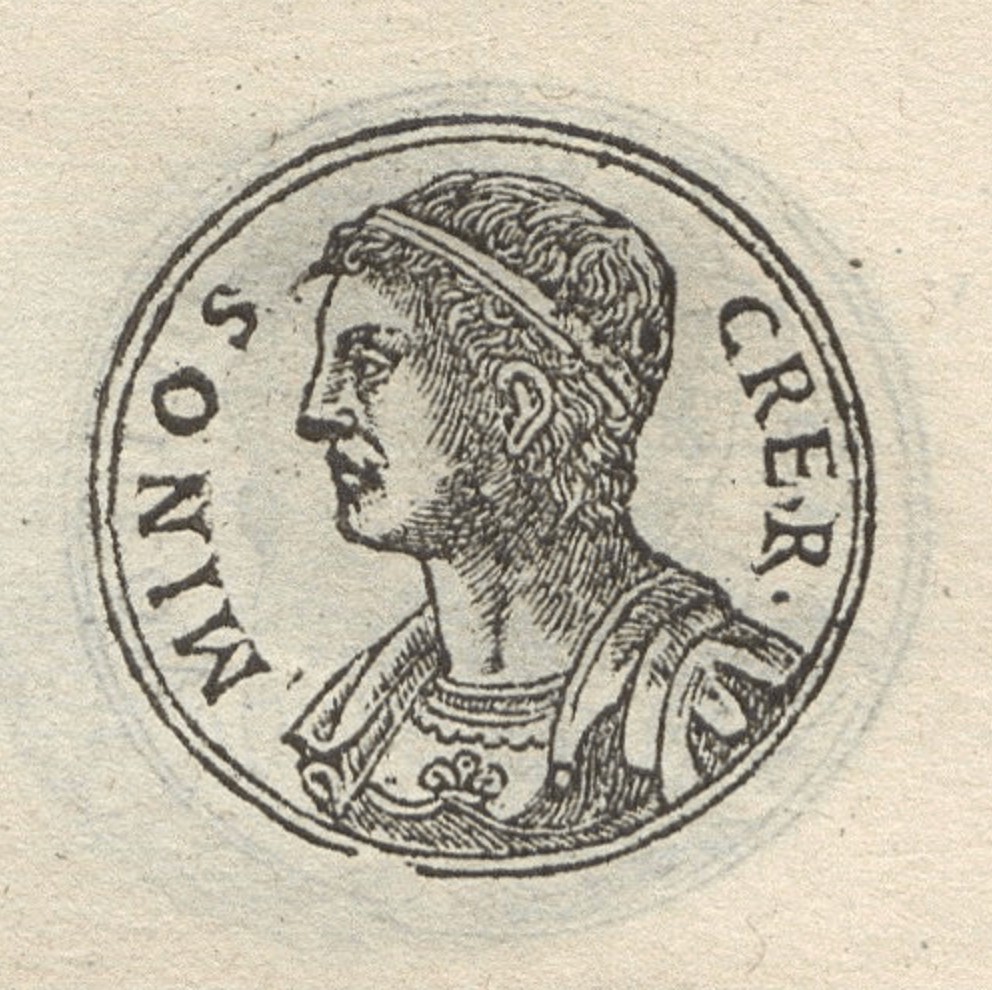
Portrait of Minos, king of Crete, from the Promptuarium Iconum Insigniorum

As the Ancient Greek myth is told, Ariadne’s father, Minos, is a powerful brute. The offspring of rape by the God Zeus of the Phoenician Princess, Europa, Minos’ violent origins reflect his development as a man, ruler, and father. He conquers and plunders while harboring secrets and wreaking havoc on his family. In the mythic world he is the definition of a victorious king. In today’s world, we call Minos a narcissist.

Half divine and half mortal, Minos moves between sacred and profane spaces to his advantage. He gains his throne as King of Crete with the support of the Sea God, Poseidon. When given a giant white bull as a congratulatory gift, Minos chooses not to sacrifice the bull as he promises Poseidon, but to keep it for himself. It is this choice that reveals Minos’ shadow narcissism. To Minos, the bull is his greatness, not a symbol of it. In a rage, Poseidon punishes Minos for his choice by cursing his wife, Pasiphaë, to become enraptured with the magic bull. While Minos is away from Crete conquering other lands and other women (he fathered several children outside his marriage), Pasiphaë under possession of Poseidon’s spell, convinces the inventor, Daedalus, to build a contraption to lure the bull into her. Ariadne’s half-brother, the Minotaur, is born out of this union.

Continue reading “Ariadne & Me – daughters of narcissist fathers by Arianne MacBean”

The Beast at Our Door: Fenrir Wolf and ICE by Janet Maika’i Rudolph

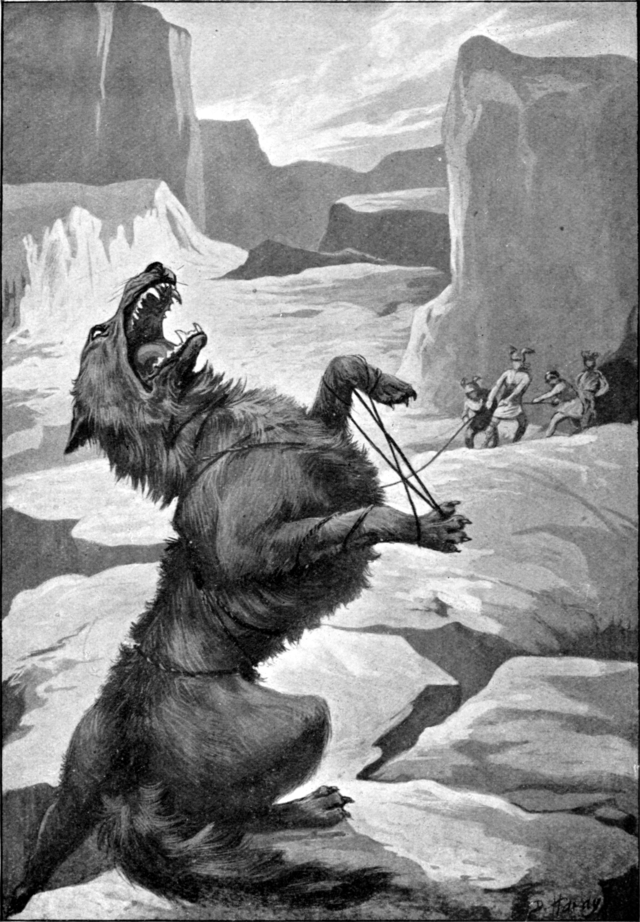
Binding of the norse mythological wolf, Fenrir. From Guerber, H. A. (Hélène Adeline) (1909). Myths of the Norsemen from the Eddas and Sagas. London : Harrap. This illustration is on page 92. Digitized by the Internet Archive Wikimedia Commons

When I was a shamanic trainee, our group spent a lot of time and focus on the “beast within” This concept has had many expressions in different circumstances – the shadow side (Jung), the dark side (Star Wars), letting loose the “dogs of war” (William Shakespeare), reptilian instincts (psychology). 

Mythology has many stories about this phenomenon. In our group, we studied the stories as a way to learn what we must do in our own lives to tame the beast so we had this energy available to use the energy without letting the crueler destructive aspects of the beast run rampant. Here are two of the stories as we discussed them.

Fenrir Wolf

Fenrir Wolf is a deity from the Norse tradition who was known and feared as a great monster. Tyr was the only God in Asgard brave enough to tend to Fenrir. For a long time, Tyr fed and cared for him. Eventually, though, Fenrir grew too large to handle and began running throughout the land called Midgard, killing both gods and people. Odin called a council to discuss how Fenrir could be slain. 

Continue reading “The Beast at Our Door: Fenrir Wolf and ICE by Janet Maika’i Rudolph”

Ariadne and Me – The .5% by Arianne MacBean

When I travelled to Crete on a Goddess Pilgrimage last year, we were asked to introduce ourselves by our matrilineal lines. I am Arianne, daughter of Bernadette, granddaughter of Helen and a long line of women, known and unknown, stretching back to Africa. Many of the women in the group were able to intone long lists of names in their matrilineal lines. I was not able to go further than my Grandmother, Helen. No one in my mother’s large Polish family could remember my Great Grandmother’s name.

My journey toward Ariadne has been as circuitous as the labyrinth itself. In many ways, I have been searching for her since those first bedtime stories my father used to tell me as a child, when Theseus was the main character and Ariadne, merely a stop on his road. I longed for her, even then, to have her own heroine’s journey. I tried to imagine what that might look like but, without models, could not conjure anything beyond holding the red thread so others could triumph. Later, I began a more conscious search for Ariadne as I became curious about the connections between her choices, feelings, expressions and my own longings, betrayals, and outbursts. Since then, there have been moments when I let myself fantasize about being connected to her in some real way, beyond being named after her, or feeling and acting as she may have. In these fleeting moments when I imagine we are bonded, I am awash in an intense sense of belonging, something I never felt as an only child of divorced parents. But then in a flash, my mind takes a sharp turn, as in a labyrinth, and I negate those feelings with logic. You want to be connected to Her, so you are finding ways to make it true.

Continue reading “Ariadne and Me – The .5% by Arianne MacBean”

The Ferryman by Daniel Cohen

 She’s changeable in Her ways. She is power, love, justice, mercy, and also rage, anger, sometimes even despair and misery, and more besides. She once said, “I am all that is, was, and ever will be”.

~~~~~~~~~~

Would I like a change from rowing this ferryboat? No, sir, I would not, and you folks wouldn’t like it if I did change. Why wouldn’t you like it? I was created for this job when the first human being came into existence, and I’ll continue in it till the last human dies – the way you people go on that may not be long.

Yes, many people do think they are going to go a different way, but they all take this boat in the end. What about near-death experiences? Those people may have been near Death, but they hadn’t got far enough to be anywhere near me.

Do I mind that they used to bring money for me but have stopped doing so? No, sir, I do not mind – that was just their own idea, that all ferrymen should be paid. Still, it was a nice thought, but they might have considered that there was nowhere for me to spend the money. In fact, getting rid of it used to be a bit of a bother. Continue reading “The Ferryman by Daniel Cohen”