The Eleusinian Mysteries:  Alchemical Grain, Part I by Sally Mansfield Abbott

This post is dedicated to the memory of Mara Lynn Keller, who passed away on 12/23/23. Mara was an expert on the Eleusinian Mysteries, and much of this post is based on her scholarship. Mara was a life-long friend and ally of Carol Christ’s, going back to their days in the Ph.D. program at Yale. She co-founded the Women’s Spirituality program at the California Institute of Integral Studies (CIIS) with Eleanor Gadon (The Once and Future Goddess). Mara was an unusually warm, welcoming, and generous presence, and must have been a fabulous teacher.

The Eleusinian Mystery Rites were practiced in Athens and Eleusis from 1450 BCE to 329 CE, a period of almost 2,000 years, before they were expressly forbidden by the newly Christian Roman Empire, and years later the temple was destroyed. The Rites had originated on Crete, and continued to be practiced in Knossos and in the caves there for many centuries. It is likely no coincidence that the origin of the Mysteries in Eleusis in 1450 BCE is the same date as the fall of Knossos.

Continue reading “The Eleusinian Mysteries:  Alchemical Grain, Part I by Sally Mansfield Abbott”

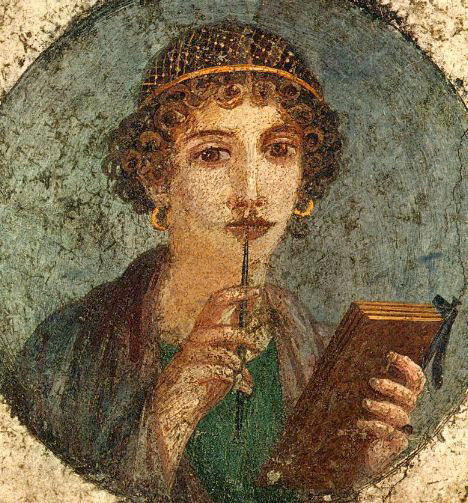
The Legacy of Carol P. Christ: Sappho Chose Love Not War, What Will You Choose?

This was originally posted on November 12, 2012

We have been taught to speak of war and the heroes of war in hushed tones. We have been told that evil Helen’s choice was the cause of the Trojan war.  2600 years ago Sappho, known as the greatest lyric poet of ancient Greece, spoke truth to power and unmasked the lies told at the beginning of western tradition.

*

In a poem addressed to Anactoria, Sappho writes:

            Some say a cavalry corps
            some say infantry, some, again,
            will maintain that the swift oars
            of our fleet are the finest
            sight on dark earth …

Here, Sappho invokes the heroic tradition celebrated in the epic poems of Homer that shaped the values of ancient Greek culture and all the cultures that followed it, including our own.  This tradition tells us that to serve in a war and to be remembered as a hero is the highest goal to which a man can aspire.  Sappho does not agree:

             …but I say
             that whatever one loves, is.

Continue reading “The Legacy of Carol P. Christ: Sappho Chose Love Not War, What Will You Choose?”

Recognizing Our Mentors by Joyce Zonana

Ever since I first read it when I was sixteen, I have loved Homer’s Odyssey. For many years I was lucky enough to teach it almost every semester, and so I came to know it intimately. Despite the valid feminist critique of the ancient Greek epic—that it glorifies patriarchy, justifying and perpetuating men’s control over women—I still find it to be an inspiring evocation of female autonomy and power, both human and divine. Especially divine.


At the close of the introduction to her exquisite new translation of Homer’s Odyssey, classical scholar Emily Wilson directly addresses the reader. “There is a stranger outside the house,” she tells us:

He is old, ragged, and dirty. He is tired. He has been wandering, homeless, for a long time, perhaps many years. Invite him inside. You do not know his name. He may be a thief. He may be a murderer. He may be a god. He may remind you of your husband, your father, or yourself. Do not ask questions. Wait.

There is much to explore in this passage and the lines that follow. But what strikes me today is Wilson’s simple sentence: “He may be a god.” 

The stranger may be a god. Or a goddess.

Ever since I first read it when I was sixteen, I have loved Homer’s Odyssey. For many years I was lucky enough to teach it almost every semester, and so I came to know it intimately. Despite the valid feminist critique of the ancient Greek epic—that it glorifies patriarchy, justifying and perpetuating men’s control over women—I still see it as  an inspiring evocation of female autonomy and power, both human and divine. Especially divine. Continue reading “Recognizing Our Mentors by Joyce Zonana”

Sappho Chose Love Not War, What Will You Choose? by Carol P. Christ

*

We have been taught to speak of war and the heroes of war in hushed tones. We have been told that evil Helen’s choice was the cause of the Trojan war.  2600 years ago Sappho, known as the greatest lyric poet of ancient Greece, spoke truth to power and unmasked the lies told at the beginning of western tradition.

*

In a poem addressed to Anactoria, Sappho writes:

            Some say a cavalry corps

            some say infantry, some, again,

            will maintain that the swift oars

            of our fleet are the finest

            sight on dark earth …

Here, Sappho invokes the heroic tradition celebrated in the epic poems of Homer that shaped the values of ancient Greek culture and all the cultures that followed it, including our own.  This tradition tells us that to serve in a war and to be remembered as a hero is the highest goal to which a man can aspire.  Sappho does not agree:

             …but I say

             that whatever one loves, is.

Continue reading “Sappho Chose Love Not War, What Will You Choose? by Carol P. Christ”