

This was originally posted on March 26, 2015
 Last week, Supreme Court Justice Ruth Bader Ginsburg was in the news again, but not for reasons you would expect. She, along with Rabbi Lauren Holtzblatt, penned a feminist essay about the Exodus title “The Heroic and Visionary Women of Passover.” Finding this story was exciting, especially because I am so drawn to the Exodus story (the intrigue and curiosity of which caused me to return to school and study, as one of my main areas of focus, Hebrew Scriptures – along with Archaeology and Ancient Near Eastern History). Now women’s roles in this story are being elevated thanks to Justice Ruth Bader Ginsburg and Rabbi Holtzblatt.
Before I discuss the message and the importance this message brings, I think it is important to know an important fact about Justice Ginsburg. Ginsburg is not observant, but does embrace her Jewish identity. When her mother died, she was excluded![Ruth_Bader_Ginsburg_official_portrait[1]](https://feminismandreligion.com/wp-content/uploads/2015/03/ruth_bader_ginsburg_official_portrait1.jpg) from the mourner’s minyan because she was a woman; an event in Judaism that is meant to comfort the mourner, brings a sense of community, and is considered obligatory – a means of honoring our mother/father. This important event left an impression and sent a loud message that inspired and influenced her career path – she did not count – she had no voice – she had no authority to speak. No wonder her life and career focuses so much on women’s rights and equality.
from the mourner’s minyan because she was a woman; an event in Judaism that is meant to comfort the mourner, brings a sense of community, and is considered obligatory – a means of honoring our mother/father. This important event left an impression and sent a loud message that inspired and influenced her career path – she did not count – she had no voice – she had no authority to speak. No wonder her life and career focuses so much on women’s rights and equality.
As many of us know, the story of Exodus is focused on two things 1) Moses and 2) liberation from the bonds of servitude and enslavement; women are rarely discussed. In the essay co-authored by Ginsberg, women are described as playing a crucial role in defying the orders of Pharaoh and helping to bring light to a world in darkness. In the Exodus event, God had partners – five brave women are the first among them, according to Ginsburg and Holtzblatt. These women are: Continue reading “From the Archives: Passover and the Exodus: A Feminist Reflection on Action, Hope, and Legacy by Michele Stopera Freyhauf”
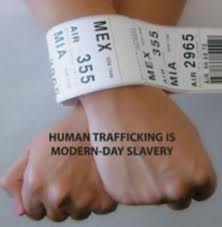
 Over the summer, I started at a new job, which I’ve decided I can safely describe as a “dream job” – one to which I can bring my full self, and in which I can use all my gifts and strengths. Whereas my old job focused primarily on anti-sexual violence work from an advocate perspective, my new job focuses primarily on sexual violence occurring in the context of human trafficking from an advocate, trainer, and policy perspective. Sex trafficking exists along and as part of the spectrum of gender violence, and yet the history of the modern movements against sexual violence and human trafficking have had very different drives and trajectories.
 Recently I saw

 Feminism and Religion