

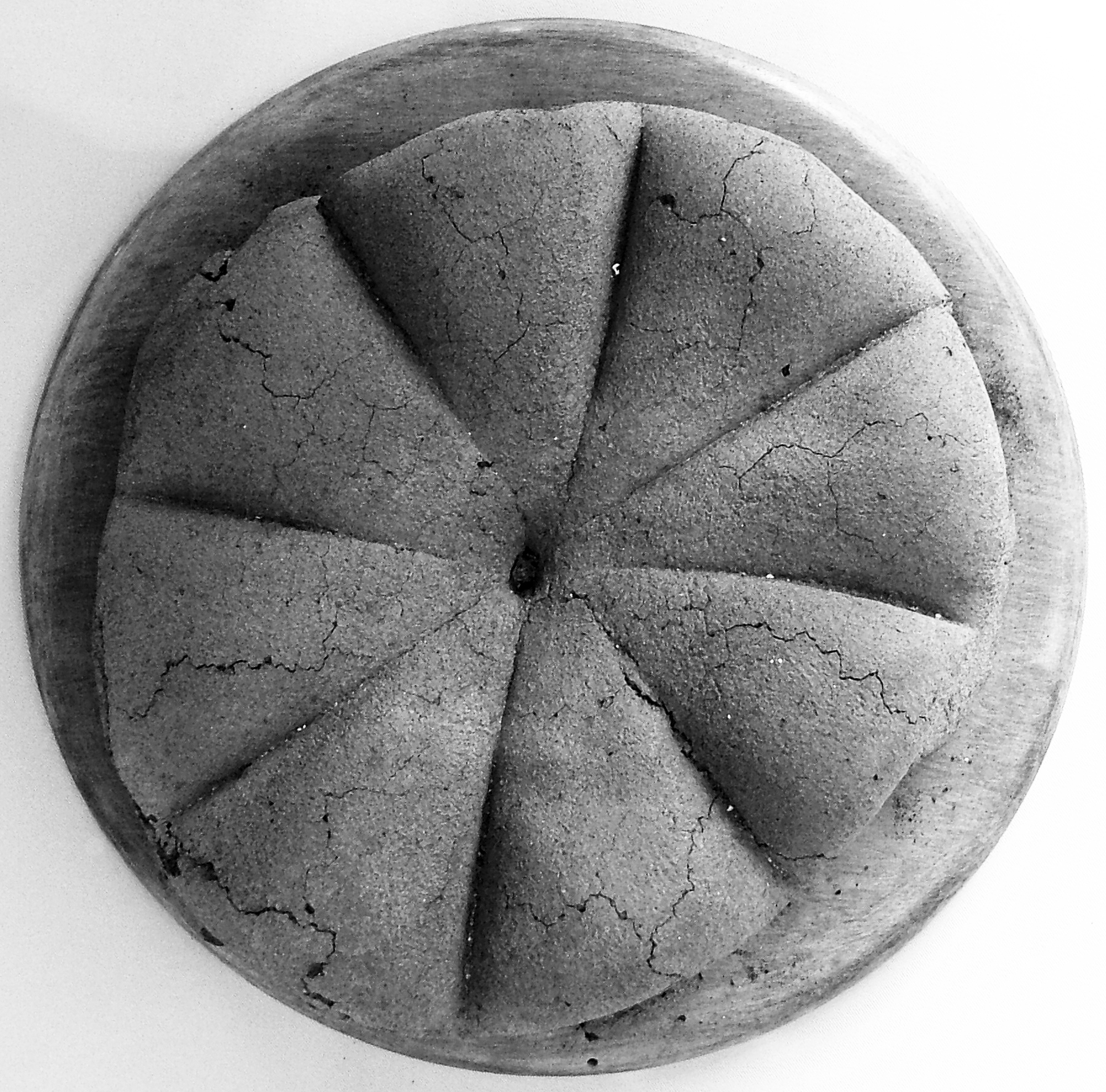
carbonized in the eruption of Vesuvius in 79 CE
The poem Moretum (discussed in my last post) narrates the preparation of a meal that can be characterized in modern English as ‘pizza.’ Round flatbread is baked; to go on it, a cheese spread is mixed. The details of the narration are such as to create a recipe of its ingredients and related cooking instructions.
The most important ingredient, however, is not an ‘ingredient’ as such, but a shape. The bread, the cheese, and the cheese spread are all round. That by itself might not seem remarkable, but the Latin terminology (words from which ‘orbit’ and ‘globe’ derive) is identical to then contemporary astrological terminology. The bread is even scored into quadrants, symbolizing, among other things, the four elements and the quadrants of an astrological observer’s circle.
The ancient audience of Moretum would have recognized in all this the world view of the Italian poet from southern Campania, Parmenides. Though the only poem he is known to have composed is in Greek, the combination of the fact that he likely wrote it while in Italy and that it had over the centuries since its composition become one of the most influential philosophical works of pre-Christian antiquity meant Parmenides had special importance to Romans. It is not surprising Moretum has the same meter and many of the poetic images as are found in the poem of Parmenides. Continue reading “Why Is Pizza Round? The Black Goddess of Rome by Stuart Dean”

 Feminism and Religion