On Being in the Moment By Ivy Helman

Time.  We mark years, months, days, hours, minutes and seconds. We mark seasons.  We mark life events.  We live our lives in time: both circular and linear.  Time began before we did and time will continue after we cannot experience it any further.   Some say we repeat time with rebirth.  Others suggest that we only have one lifetime of which we should make the most.  Still others suggest there is existence outside of time with concepts like infinity and eternal life.  We sure do write, discuss and ponder time a lot, but do we ever really experience it?  Meaning: what would it be like to live in the moment, to be aware of and completely conscience within an instance of time, not thinking of the past, not worrying about the future, but being fully present in the here and now?

Sci-fi geek that I am, I often recall the Star Trek: The Next Generation movie entitled Insurrection when Captain Picard and Anij discuss experiencing a moment of time.  Anij explains to Captain Picard, “You stop reviewing what happened yesterday. Stop planning for tomorrow. Let me ask you a question. Have you ever experienced a perfect moment in time?”  A few lines of dialogue later, she picks up the topic again by describing what being present is like. ”We’ve discovered that a single moment in time can be a universe in itself. Full of powerful forces. Most people aren’t aware enough of the now to even notice.”  The visual effects show water stopping and a butterfly’s slow flight if I remember correctly.  Captain Picard is obviously caught up in these moments of time as well as being mesmerized by Anij herself.  The power of both the moments of time and Anij herself is palpable. Continue reading “On Being in the Moment By Ivy Helman”

Peace Begins at Home by Gina Messina-Dysert

I began my career in the field of social services as a woman’s advocate for rape and domestic violence survivors.  The motto for an organization I was employed with early on was “peace begins at home,” a significant point that must be acknowledged. While much attention around women’s involvement in peacebuilding efforts have been focused at the macro level, there has been little consideration of women’s efforts towards peace at the micro level.  Certainly, women’s involvement in formal peacebuilding processes at the larger public level is crucial.  This being said, we must not undermine the leadership roles that women play in their homes, their families, and their religious and immediate communities, and how those roles can have an incredible impact on greater society.

I would like to start off by defining “peace.”  It is a word that we all use quite frequently and often with different meanings.  Some would claim that peace equates the cessation of conflict.  However, within our world conflict is inevitable; daily life is riddled with internal, interpersonal, intergroup, and international conflict. Thus, when defining peace, we must understand it as being able to deal creatively with inevitable conflict.  According to Jean Zaru, “It is the process of working to resolve conflicts in such a way that both sides win, with increased harmony as the outcome of the conflict and its resolution.  Peace is based on respect, cooperation, and well being.  Peace is the presence of social justice” (Occupied with Non-Violence, p. 81-2).

Zaru’s comments here are important in that she acknowledges a clear relationship between peace and justice.  In the words of Pope Paul VI, “if you want peace, work for justice.”  Because peace is not only the absence of war, but also the absence of poverty and disease, the access to clean water, the freedom from slavery; peace is the affirmation of the full humanity of every person. Peace is salaam, peace is shalom, peace is the well being of all.  Thus, there are many elements that come together in the word peace.  It is not simply government initiatives, it is not a patchwork solution to the conflicts of the world, nor is it submission or silent acceptance, rather we must understand peace as justice. Continue reading “Peace Begins at Home by Gina Messina-Dysert”

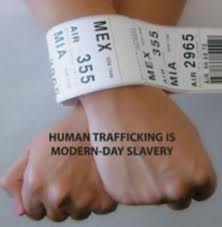
January 11th is National Human Trafficking Awareness Day

This information was originally distributed by WATER:

January 11th is National Human Trafficking Awareness Day. Human trafficking, referred to as modern-day slavery, is the fastest growing and second most profitable criminal industry in the world. More than 27 million women, men, and children have become victims of human trafficking for labor and sexual exploitation. Trafficking can and does occur in all parts of the world, including the U.S. Large sporting events like the Super Bowl attract human trafficking, especially for sexual exploitation of women. Read Mary E. Hunt’s new article on human trafficking entitled “Women and Children First.”

Stories of Trafficking
Excerpted from www.polarisproject.org

Amanda learned that her cousin was with a pimp who was advertising her for commercial sex on various websites.

A teacher became concerned about one of her students, a 14 year-old girl, and spoke with classmates who directed the teacher to multiple postings advertising the young girl for commercial sex on backpage.com. Continue reading “January 11th is National Human Trafficking Awareness Day”

The Paradoxical Perception of Midwifery in American Culture By Stacia Guzzo

This past Sunday night, midwife Robin Lim was named CNN Hero of the Year at a formal award ceremony in Los Angeles, California. The award, which was given after eleven weeks of public voting on CNN.com, came with $250,000 to support Lim’s quest to provide quality prenatal, labor, birth, and postpartum care for the poor and underserved in Indonesia.  She accepted the award amidst a standing ovation, and closed her words of acceptance by simply saying: “Every mother counts. And health care is a human right.”

The recognition of Lim—or Ibu (“Mother”) Robin, as she is called by those whom she serves— is well-deserved.  An American woman, Lim provides midwifery care at the Bumi Sehat clinics which she helped to establish. Each year, she helps thousands of Indonesian women get care and attention during their pregnancies and the births of their children.  She began her work in 1994, seeing pregnant women and children under five for free out of her home. As her reputation spread, supporters of Lim, along with local business and community leaders, helped to advance her cause. Today, the village-based Bumi Sehat clinics are located in both Bali and Aceh. They provide free prenatal and birthing care as well as breastfeeding support to any woman who needs it, regardless of her ability to afford it.  Ibu Robin’s words to CNN reflect that her commitment to her cause is an altruistic one: “”Every baby’s first breath on Earth could be one of peace and love. Every mother should be healthy and strong. Every birth could be safe and loving.” Continue reading “The Paradoxical Perception of Midwifery in American Culture By Stacia Guzzo”

A Different “Right to Choose”: America’s Cultural Denial of True Choice in Childbirth By Stacia Guzzo

The first time I became aware about my birthing choices was during a call to a local midwife to inquire about her practice. By this time, I had been diagnosed with PolyCystic Ovarian Syndrome, uterine fibroids, a possible uterine septum, and had experienced a miscarriage two months before becoming pregnant with my son. On spiritual and psychological levels I didn’t trust my body, and certainly wasn’t experiencing the empowerment and holy wonder that I expected pregnancy to bring. Instead of feeling the strength of my ability to bear life, I felt the frailty of the threshold between life and death, and struggled with my body’s role in that space. I acutely felt my body’s assumed “brokenness.” I couldn’t access my inherent dignity, nor could I grasp the “hope [that] does not disappoint” (Romans 5:5). I was willing to let anyone tell me what I needed to do because I felt I couldn’t trust myself. I just wanted to be able to bring my baby to term and to have a healthy son.

During this time I didn’t even consider how the pregnancy or labor would affect me—emotionally, physically, psychologically, or spiritually. Yet my discussion with that midwife made me realize how deeply the experience of pregnancy was shaping me. The space God was carving out within me was incredibly powerful, and the closer I got to birthing my son, the more I realized how spiritually and psychologically charged the birth experience could be. It was laden with the potential for either transformative beauty or despair. Continue reading “A Different “Right to Choose”: America’s Cultural Denial of True Choice in Childbirth By Stacia Guzzo”

Is the Prophetic Vision of Social and Ecojustice the Fruit of the Poisonous Tree? By Carol P. Christ

Carol P. Christ earned her BA from Stanford University and her Ph.D. from Yale University.  She is a founding mother in the study of women and religion, feminist theology, women’s spirituality, and the Goddess movement and work has revolutionized the field of feminism and religion.  She has been active in anti-racist, anti-war, feminist, and anti-nuclear causes for many years.  Since 2001 she has been working with Friends of Green Lesbos to save the wetlands of her home island.  She drafted a massive complaint to the European Commission charging failure to protect Natura wetlands in Lesbos.  In 2010 she ran for office in Lesbos and helped to elect the first Green Party representative to the Regional Council of the North Aegean.  She helped to organize Lesbos Go Green, which is working on recycling in Lesbos.

My hope for the new blog on Feminism and Religion is that it can become a place for real discussion with mutual respect of feminist issues in religion and spirituality.

I agree with Rosemary Radford Ruether who argued in a recent blog “The Biblical Vision of Ecojustice” that the prophets viewed the covenant with Israel and Judah as inclusive of nature. Indeed in my senior thesis at Stanford University on “Nature Imagery in Hosea and Second Isaiah,” in which I worked with the Hebrew texts, I argued that too. I also agree that the dualism Rosemary has so accurately diagnosed as one of the main sources of sexism and other forms of domination comes from the Greeks not the Hebrews. I agree that Carolyn Merchant is right that nature was viewed as a living being in Christian thought up until the modern scientific revolution. I agree with Rosemary that it is a good thing for Christians to use sources within tradition to create an ecojustice ethic. I am happy that there are Christians like Rosemary who are working to transform Christianity.  Finally, I am pleased to admit that I have learned a great deal from her.

Continue reading “Is the Prophetic Vision of Social and Ecojustice the Fruit of the Poisonous Tree? By Carol P. Christ”