
La Llorona by Sara Wright

The legend of La Llorona has been a part of Hispanic culture in the Southwest since the days of the conquistadores. Though the tales vary from source to source, the one common thread is that La Llorona is a woman named Maria who is always dressed in a white gown, the spirit of a young Mexican mother who drowned her children in the river in a moment of rage or abandonment by her lover and then took her own life in her deep shame and sorrow. La Llorona’s disembodied spirit is said to haunt the rivers at night – especially the Rio Grande – where she can be heard weeping in remorse for her dead children. Children are cautioned not to go out after dark because La Llorona might murder or drown them too. Because the tale of the Weeping Woman originated with the Patriarchal Spanish conquest I have always been suspicious of the various versions of this story believing that its meaning has been distorted.

Immediately what comes to mind is the Mater Dolorosa, Our Lady of Sorrows, or Mother of Sorrows. All refer to the Virgin Mary, the only goddess left in Christianity. Our Lady of the Seven Sorrows is another name used to refer to this goddess. The Mater Dolorosa is also a key subject for Marian art in the Catholic Church.
Continue reading “La Llorona by Sara Wright”

Bake the Damn Cake: Owning Up to and Mitigating Our Traditions’ Trauma Histories by Chris Ash

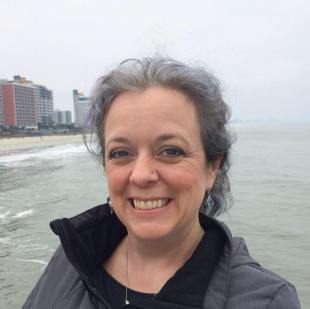
Christy at the beach

“We have learned that trauma is not just an event
that took place sometime in the past;
it is also the imprint left by that experience
on mind, brain, and body.
This imprint has ongoing consequences
for how the human organism
manages to survive in the present.”
— Bessel A. van der Kolk, The Body Keeps the Score: Brain, Mind, and Body in the Healing of Trauma

While I’m not a trauma therapist, I work in a field in which I regularly support people who have experienced trauma. Sometimes I’m accompanying a recent survivor of assault at the emergency room for a rape kit, speaking warmly, offering compassion, providing distraction. Other times, I’m holding space over the phone while a fifty-something year old survivor tearfully discloses, for the first time in her life, the things done to her during childhood. Recent or old, those experiences shape us and our responses to them, even those that might not serve our health, are efforts to protect ourselves, to avoid pain, and to seek an elusive sense of safety.

“Trauma isn’t what happened to us.
Trauma is what happened inside us as a result of what happened to us.”
— Gabor Mate, in his presentation “Addressing the Long-Term Effects of Childhood Trauma”
during the Healing Trauma Summit

Our attempts to resolve trauma, to escape it, may be labeled dysfunctional and may not, ultimately, serve our highest good. They are, however, the actions of someone who wants to feel secure, who wants to feel loved.

My desire to understand trauma and trauma recovery serves my professional development as well as my personal journey, and learning more about the how trauma relates to the body has proven helpful in both of these areas of my life. I’m not a mental health clinician — I’m a crisis advocate and consent educator. But the process, as I understand it, is something like this: Continue reading “Bake the Damn Cake: Owning Up to and Mitigating Our Traditions’ Trauma Histories by Chris Ash”

Carrying Our Mothers by Chris Ash

The past few weeks, I’ve been sitting with the many layers held by the concept, and the manifest reality, of mother, mothering, and motherhood. Mother is seen in the divine feminine, in the cosmos, and in the sea and the glow of the moon. She is held in our genes and our histories and the eyes of our children. She is found in archetypes of healing, nurturing, and comfort, as well as in stories of criticism, coldness, and abuse. She is the soft one who tends grief and holds hands and braids hair, and she is the unbreakable one whose labor and caregiving is taken for granted in most areas of her life. We carry our mothers with us in our DNA, in our stories, and in the way we navigate the impacts of intergenerational trauma.

She doesn’t always appear in our stories in simple or easy ways. Some of us mother children we did not or could not grow in our bodies; some of us birth babies who are now mothered by others. Some of us are not mothers at all. Some of us had mothers who could not love us unconditionally, or did not have mothers in our lives, or had mothers who brought us more pain and humiliation than comfort, from whose effects we are still recovering, are still healing. Others have mother wounds, mother blessings, that escape delineation in a single blog post restrained both by its word count and the sometimes-limited imagination of its author.

Mother is a tough concept for me. My own relationship with my biological mother was a source of confusion and heartache for years; the resolution of that internal conflict left me feeling cut off from my maternal grandparents, whose influence on my early life was wholly positive, loving, and stabilizing. Connecting with my ancestors is a part of my spiritual practice, so this loss was present with me, in my heart and waking meditations as well as in my rich dream life, which included frequent visits to my grandparents’ home. Each morning I’d awaken from a dream spent in that space to the stifling realization that their home – my childhood home for my earliest memories – had been torn down years ago. Continue reading “Carrying Our Mothers by Chris Ash”

A Beginning: Atonement Theology and the Feminist Critique by Katie M. Deaver

Since many of the comments on my last post expressed interest in my dissertation topic I will use my next couple of posts to talk a little bit more about my work and research in that area.  When we talk about theories of the atonement we are trying to describe a narrative structure of what took place within the Christian cross event.  Generally speaking, Christians believe that atonement serves at the reconciliation between God and humanity and that this reconciliation is realized through the person of Jesus Christ.  The three primary theories that try to explain this event are Substitutionary/Satisfaction, Moral Influence, and Christus Victor.

The Substitutionary/Satisfaction theory of atonement suggests that Christ takes on the guilt and punishment that humanity deserves because of our sinfulness and so becomes our substitute, paying the debt we owe for our sins.  Because of humanity’s sinfulness we deserve death, but instead of giving us what we deserve God instead offers God’s son as a sacrifice to pay our debt, to atone for our sinfulness, and to save us from the eternal punishment of death.

The Moral Influence theory of the atonement focuses primarily on the life and ministry of Christ rather than on his suffering and death.  This theory is centered on the belief that God loves God’s creation so much that God would hold back nothing from us, God would even give God’s own Son in order to save us and remain in relationship with us.  As a result this theory encourages Christians to live as Christ lived and focuses on imitating his life and ministry in order to bring about justice in our own world.

Continue reading “A Beginning: Atonement Theology and the Feminist Critique by Katie M. Deaver”

Reflections on Trauma, Part II: YOLOCAUST by Stephanie N. Arel

stephanie-arelIn light of the recent attacks on Jewish cemeteries —the desecration of Mount Carmel Jewish Cemetery in Philadelphia and the toppling of more than 150 gravestones at Chesed Shel Emeth Cemetery in Missouri — along with my reminiscing that a year ago today (March 1 as I am writing) I was en route to Jerusalem to work with a group of scholars for the Intercontinental Academia on Human Dignity, I wanted to once again confront trauma (building on Part I of this topic). In this case, I consider trauma as an affront to the dignity of ALL bodies and their memories, while simultaneously questioning how those who have not experienced trauma develop respect for its proximity – in individual lives, in sacred spaces, and in memorials.

The desecration of memory alive in the space of the cemetery presses me to repeat what I have said before: that the violation of bodies lies at the heart of traumas caused by human design — even if those bodies are inhumed. Continue reading “Reflections on Trauma, Part II: YOLOCAUST by Stephanie N. Arel”

Facing the Shame that Lingers: A. Denise Starkey and Michelle Obama Lead the Way by Stephanie Arel

stephanie-arelIn March of 2011, at a symposium on trauma, healing, and spirituality in Belfast, Ireland, I spoke about shame in the context of war, addressing the experiences of women survivors of rape during the Rwandan genocide, US soldiers returning from war with PTSD symptoms, and cultures, such as those in Belfast and Bosnia, steeped in war and violence. While discussing how theology has a responsibility to examine how the church talks about shame, guilt, and sin to help survivors of war trauma heal, I recognized A. Denise Starkey in the audience, a woman whose work was instrumental in the crafting of my own. Her book, The Shame that Lingers: A Survivor-Centered Critique of Catholic Sin Talk, published two years prior, provided a critical backdrop for my presentation, and would be foundational to my dissertation and subsequent book: Affect Theory, Shame, and Christian Formation.

Five years later, Starkey and I had a chance to meet and exchange stories about what inspired our writing about shame. I acknowledged her influence on my own work, and we discussed our current personal and professional commitments to continuing critical conversations we raise in our texts.  Continue reading “Facing the Shame that Lingers: A. Denise Starkey and Michelle Obama Lead the Way by Stephanie Arel”