
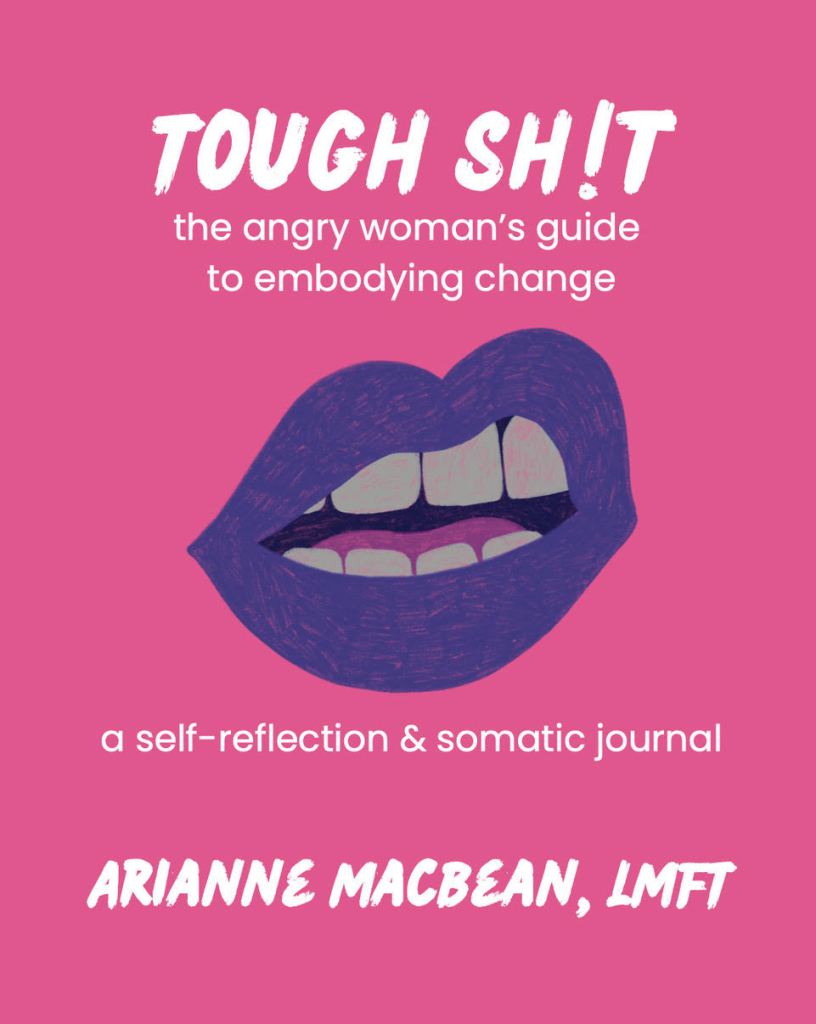
tough shit – a few words by Arianne MacBean

Cover Design by Kathleen Henrion

Before I knew what form my self-reflection and somatic journal for women would take, I knew what its title had to be. Through my work as a somatic psychotherapist, I understand how repressed anger, fear, sadness and hurt affects the psyche and the body. At best, suppressed emotional pain can show up as sensations that limit pleasure in daily life. At worst, unprocessed trauma can lead to chronic and debilitating illness. I wanted to create a journal that was not only anti-oppressive but also subverted the misnomer that divisive feelings are negative and should be stifled. Mostly, I wanted to expose how emotional censorship has its roots in its chief proponent: patriarchy.

Tough Shit. – the angry woman’s guide to embodying change is a journal that supports consciously tracing difficult feelings to understand one’s true self and make positive change. The title isn’t about being provocative or crass. I chose it because the phrase “tough shit” has a long history related to gender stereotyping and dominance—all of which my journal actively challenges. But the phrase is not just cultural; it’s personal. An iteration of this phrase was used against me growing up. As the concept of the journal became clearer, I felt my body insist on throwing “tough shit” back out, not as a degrading echo, but as a reclamation—a fierce refusal to silence valid emotional pain.

Continue reading “tough shit – a few words by Arianne MacBean”
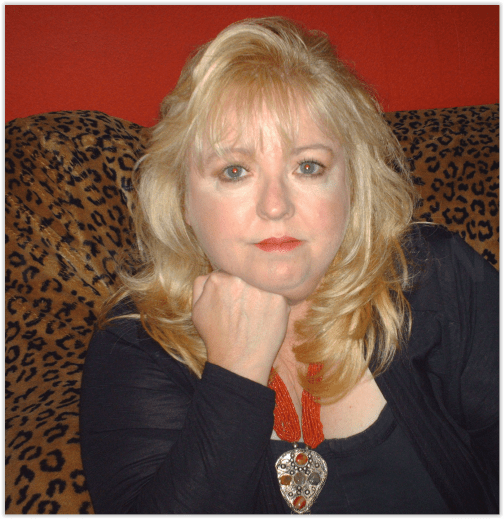
We Endure Abuse to Survive, Part 1 by Karen Tate

I considered myself savvy and educated and an advocate for peace, fairness and equality.  I thought abuse was something that happened to others, not me.  But it was happening to me.  It had happened to me and I didn’t see the danger signs as my life careened off the road.  I became aware abuse and the resulting trauma can happen to anyone.  I came to realize we have to examine all aspects of our lives for both blatant and insidious abuse.  We must recognize it and take steps to eradicate abuse from our lives and society.  That’s where I’ve been on for the last five years and I’m only now able to begin to share that journey.  To write a new book, Normalizing Abuse, and bring my radio show, Voices of the Sacred Feminine, back on the air after a long hiatus.

Part One

If you knew me before my unraveling, you might remember I was the hostess of the Voices of the Sacred Feminine podcast for more than a decade where I had the privilege of interviewing some of the most prominent thought leaders in spirituality, politics and academia. I’d published six books, gave talks at the Parliament of World Religions, the Academy of Religion and various other public and private associations. I had done dozens of interviews and was all over YouTube. I was out there and then gradually I wasn’t. I faded away and became a shadow of my former self.  And for a time I don’t think I cared if I ever came back. I had no motivation or inspiration.  I didn’t open my closet for three years. I didn’t care if I bathed or brushed my teeth. I was dreaming someone was trying to push me into a dark hole in the wall of a building. I’d hear floorboards creaking and feared the foundation of the house I was living in would collapse. I’d wake up with heart palpitations because the latest dream was one where our home had no ceiling or roof. I’d think cars slowly driving by my house were surveillance. 

Continue reading “We Endure Abuse to Survive, Part 1 by Karen Tate”

Traumatic Narrative on the Screen: Is there a Grey Area? by Stephanie Arel

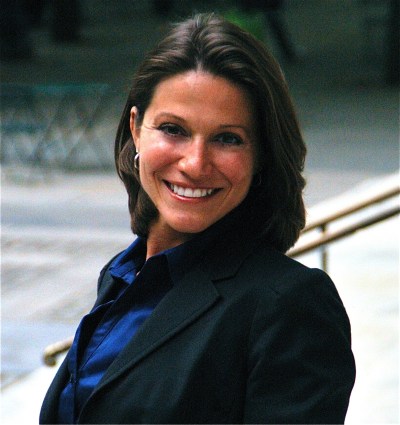
Arel - AAUW HeadshotOn May 8, Fifty Shades of Grey became available in DVD format. Marking its release, this post reflects on the mass consumer consumption of this provocative film and the abuse inherent in its script previously discussed here by Michele Stopera Freyhauf. Grossing $500 million dollars at the box office, Fifty Shades will most certainly sell as an unedited DVD. While some self-proclaimed feminists like Emilie Spiegel commend the story, feminists and conservatives slam it, often pressing viewers to reject the film and deny it financial support. Nonetheless, The Fifty Shade of Grey franchise will most probably have a sequel in 2016, continuing to amass hundreds of millions of dollars.

Concerns about the book and film include how the storyline presents a romantic ideal for women wrapped surreptitiously in abuse. Peering deeper at the narrative reveals the potential for conflicted emotional responses including feelings of guilt and shame, revulsion and interest, disgust and seduction. Confronted with the writing of this post, I responded in turn, torn between whether to watch the film or not. While wanting to deny the franchise any monetary gain, I also wanted to both know what I was rejecting and what, if any, value existed in viewing. Continue reading “Traumatic Narrative on the Screen: Is there a Grey Area? by Stephanie Arel”