Opening All the Windows and Returning the Goddess to Her Rightful Place by Caryn MacGrandle

The quote that describes Jesus as the “front door of God” is found in the Bible, John 10:7, where Jesus says, “I am the door of the sheep”; essentially meaning that the only way to access God is through Jesus, as he is the entrance point to God’s presence.

I have been calling on Hathor, and last night, She came.

Ah, let me back up a few steps.

I have up to now not given much thought to Egyptian Goddesses instead preferring my Celtic and Greek ones. But a few days ago, I attended this lovely workshop by Tahya who has developed a modern day systrum, the percussion instrument used by Priestesses in honor of Hathor.  And as so often happens on my path, when you crack the window, She comes. 

The last two days I have been listening to Hathor meditations, the Mother of all creation, the Goddess of Love, an Egyptian Goddess whose worship may have begun in the Predynastic Era over 5,000 years ago.

Continue reading “Opening All the Windows and Returning the Goddess to Her Rightful Place by Caryn MacGrandle”

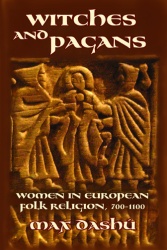
The Legacy of Carol P. Christ: Weaving and Spinning Women: Witches and Pagans by Max Dashu A Review

Moderator’s Note: This was originally posted on September 19, 2016

Max Dashu’s  Witches and Pagans: Women in European Folk Religion 700-1000 challenges the assumption that Europe was fully Christianized within a few short centuries as traditional historians tell us. Most of us were taught not only that Europe became Christian very rapidly, but also that Europeans were more than willing to adopt a new religion that was “superior” to “paganism” in every way. Careful readers of Dashu’s important new work will be challenged to revise their views. When the full 15 volumes of the projected series are in print, historians may be forced to hang their heads in shame. This of course assumes that scholars will read Dashu’s work. More likely they will ignore or dismiss it, but sooner or later–I dare to hope–the truth will out.

witches-and-pagans-cover

History has been written by the victors—in the case of Europe by elite Christian men. These men may have wanted to believe that their views were widely held, but Dashu suggests that they were not. Combing artistic and archaeological records, Dashu finds (to give one example) that images of Mother Earth nursing a snake are far from uncommon and can even be found as illustrations in Christian documents and on Christian monuments. Clerics rage against people—particularly women–who continue to visit holy wells and sacred trees and to practice divination and healing rituals invoking pagan powers. To paraphrase Shakespeare: “Methinks the cleric doth protest too much.” Were these things not happening and happening often, there would have been no need to condemn them.  Using these clues, Dashu provides intriguing new readings of the Poetic Edda and Norse sagas.

Continue reading “The Legacy of Carol P. Christ: Weaving and Spinning Women: Witches and Pagans by Max Dashu A Review”

In Search of Ancestral Wisdom by Max Dashu

Max 2011

 What is the preserving shrine? Níansa (not hard).
The preserving shrine is memory and what is preserved in it.
What is the preserving shrine? Níansa.

The preserving shrine is Nature and what is preserved in it.
Senchas Mór, Ireland

In a world in extremity, we are searching for the wellspring, the inexhaustible Source known to all our ancient kindreds. Many of us have been cut off from our deep roots, and especially from the ancient wisdom of women, and female spiritual leadership.

My long quest has been to discover the lost strands of my own roots, the old ethnic cultures of Europe, and to reweave those ripped webs. I have spent decades searching for authentic cultural testimony about women’s spiritual ways before Christianity, before the Roman empire, before men commandeered all positions of religious leadership. My book, Witches and Pagans: Women in European Folk Religion, brings together these ripped strands of the cultural web. Continue reading “In Search of Ancestral Wisdom by Max Dashu”